Description:
White marble
garland
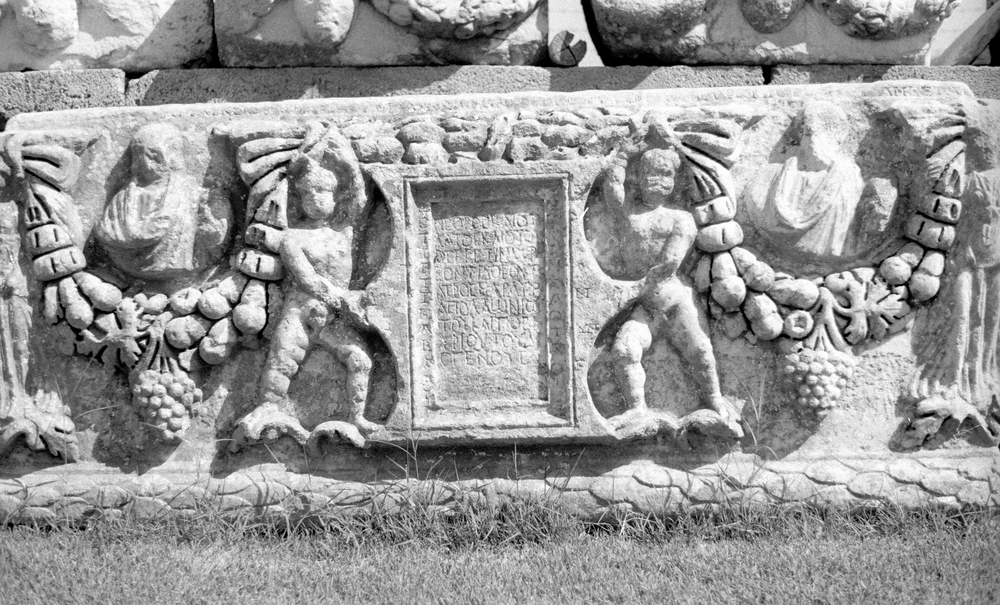
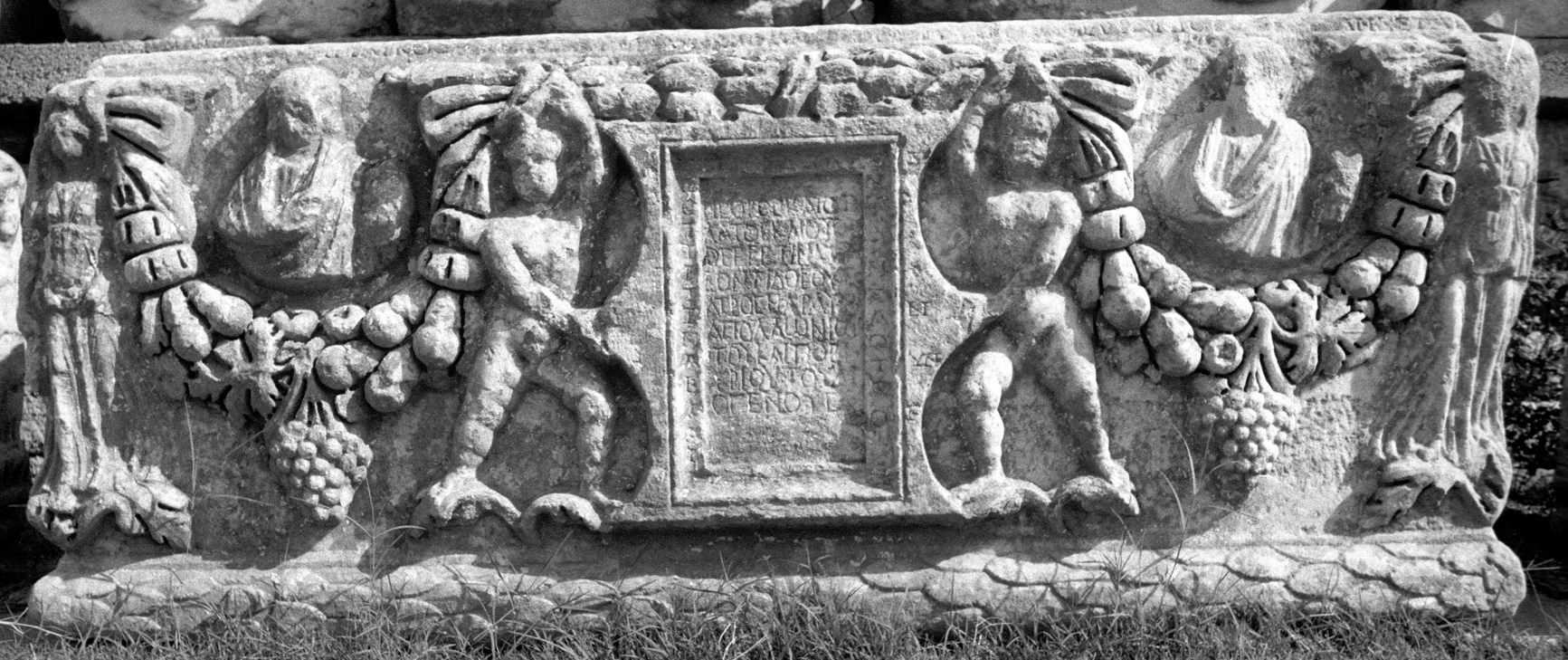
sarcophagus (w: 2.13 × h: 0.84 × d: 0.915). For further description see Işık 141.
Text: i. along the upper rim of the chest (badly worn) continued on the upper moulding of the tabula and originally within the tabula
with an overlap on either side onto the side mouldings and on the right hand side sometimes beyond that (with an awkwardly
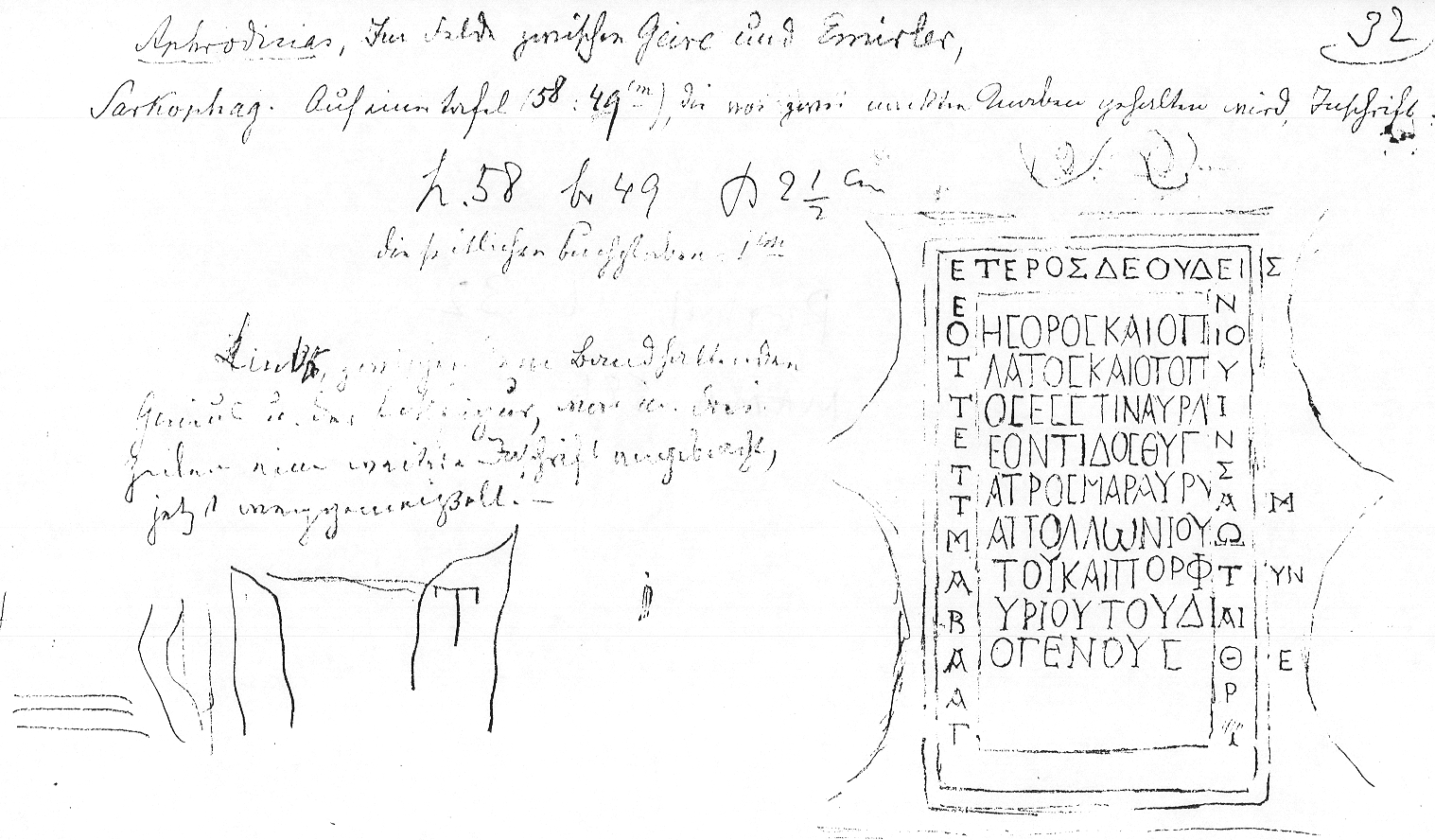
imprecise alignment), ii. within the tabula after the erasure of i from its surface. Text i may have begun on the lid.
Letters: i. Quite well-designed and cut in the second-to-fourth-century style without any exaggerated features, 0.02; ii in a distinctive
style, with oval theta, omicron and omega, for sigma, perhaps of the later third century, 0.025. Unconventional spelling in
ii, lines 2, 3.
Date: i. Perhaps towards the middle of the third century CE; ii. probably second half of the third century. (lettering, lettering)
Findspot: Aphrodisias:
Necropolis, North-east: in a field south of Eymir, south of the Karaçasu/Tabai road, with 13.147, 13.112 (=MAMA 553, 576)
Original location: Unknown: necropolis
Last recorded location: Museum (2000)
Interpretive
i
[c. 15] Μᾶρκος [c. 16]ωναι [.]τρα [c. 4]Ν [c. 6] Α [---]Ε [.] ΟΝ [c. 7] Ἀπολλώνιο[ς --- βουλ]ήσεται
ἕτερος δὲ οὐδεὶς
ἕ[ξει] ἐξουσίαν [ἐ]ν-
θ[άψαι c. 6]Ι̣Ο
5Τ[c. 10]Υ
Τ[c. 10]Ι
Ε[c. 10]Ν
Τ[c. 10]Σ
Τ[c. 10]ΑΜ
10Μ[c. 10]Ω
Α[c. 10]τυν-
β[ωρύχος ---κ]αὶ
ἀ[ποτεισάτω] θε-
ᾷ [Ἀφροδείτῃ ἀ]ρ-
15γ[υρίου?c. 5]Ι̣ ii
ἡ ϲορὸϲ καὶ ὁ π-
λάτοϲ καὶ ὁ τόπ-
οϲ ἐϲϲτὶν Αὐρ(ηλίαϲ) Λ-
εοντίδοϲ θυγ-
5ατρὸϲ Μάρ(κου) Αὐρ(ηλίου)
Ἀπολλωνίου
τοῦ καὶ Πορφ-
υρίου τοῦ Δι-
ογένουϲ
Diplomatic
i
[···············]ΜΑΡΚΟΣ[················]ΩΝΑΙ[·]ΤΡΑ[····]Ν[······]Α[---]Ε[·]ΟΝ[·······]ΑΠΟΛΛΩΝΙΟ[.---....]ΗΣΕΤΑΙ
ΕΤΕΡΟΣΔΕΟΥΔΕΙΣ
Ε[...]ΕΞΟΥΣΙΑΝ[.]Ν
Θ[....······].Ο
5Τ[··········]Υ
Τ[··········]Ι
Ε[··········]Ν
Τ[··········]Σ
Τ[··········]ΑΜ
10Μ[··········]Ω
Α[··········]ΤΥΝ
Β[......---.]ΑΙ
Α[.........]ΘΕ
Α[..........]Ρ
15Γ[.....·····]. ii
ΗϹΟΡΟϹΚΑΙΟΠ
ΛΑΤΟϹΚΑΙΟΤΟΠ
ΟϹΕϹϹΤΙΝΑΥΡΛ
ΕΟΝΤΙΔΟϹΘΥΓ
5ΑΤΡΟϹΜΑΡΑΥΡ
ΑΠΟΛΛΩΝΙΟΥ
ΤΟΥΚΑΙΠΟΡΦ
ΥΡΙΟΥΤΟΥΔΙ
ΟΓΕΝΟΥϹ
Apparatus
Throughout Reynolds has underdotted more letters than MAMA
i.1: Reynolds adds Α̣ after Marcus (raising the possibility of a Marcus Aurelius here) || [βουλ]ήσεται MAMA 8; [βου]λήσεται Reynolds, 2007
English translation
Translation source: Reynolds, 2007
i.- - - ?there has been (or shall be) buried in the sarcophagus Marcus A [ .. ? .. ?and those whom] Apollonios wishes. But
no one [else shall have the right to bury in it, for if he does so he shall be considered] a tomb-breaker [and shall pay ?to
the goddess Aphrodite ?silver denarii of which a third shall belong to the prosecutor - - -
ii: The sarcophagus and the platform and the plot (on which it stands) belong to Aurelia Leontis, daughter of Marcus Aurelius
Apollonios, also called Porphyrios, the son of Diogenes.
Bibliography
Recorded: Reichel, 1893 R.I.32; Calder, 1934; New York University expedition
Publication: MAMA 8 586 , whence McCabe, PHI, 1996 505 437; Reynolds, 2007 141 ; IAph2007 13.153.