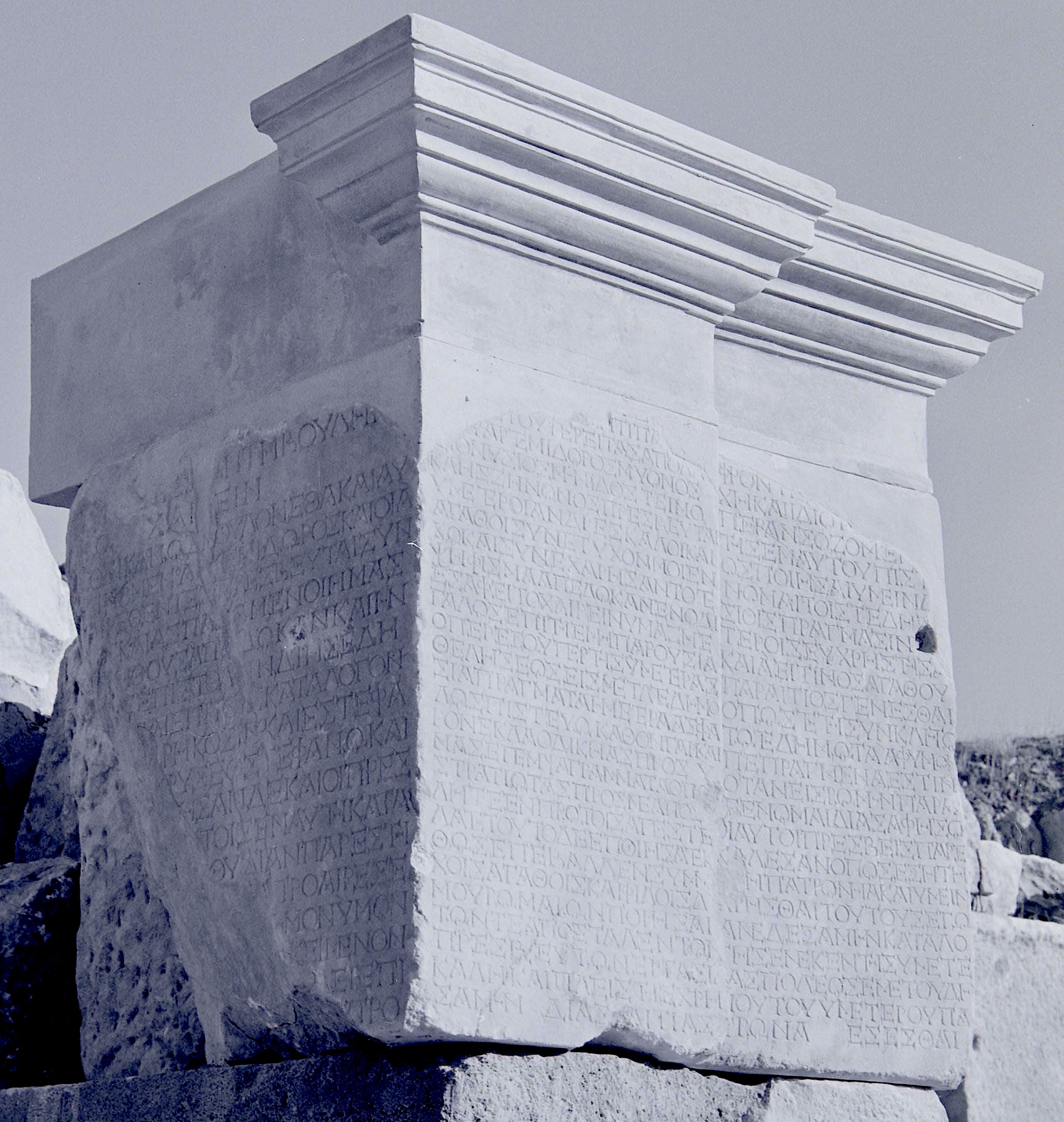
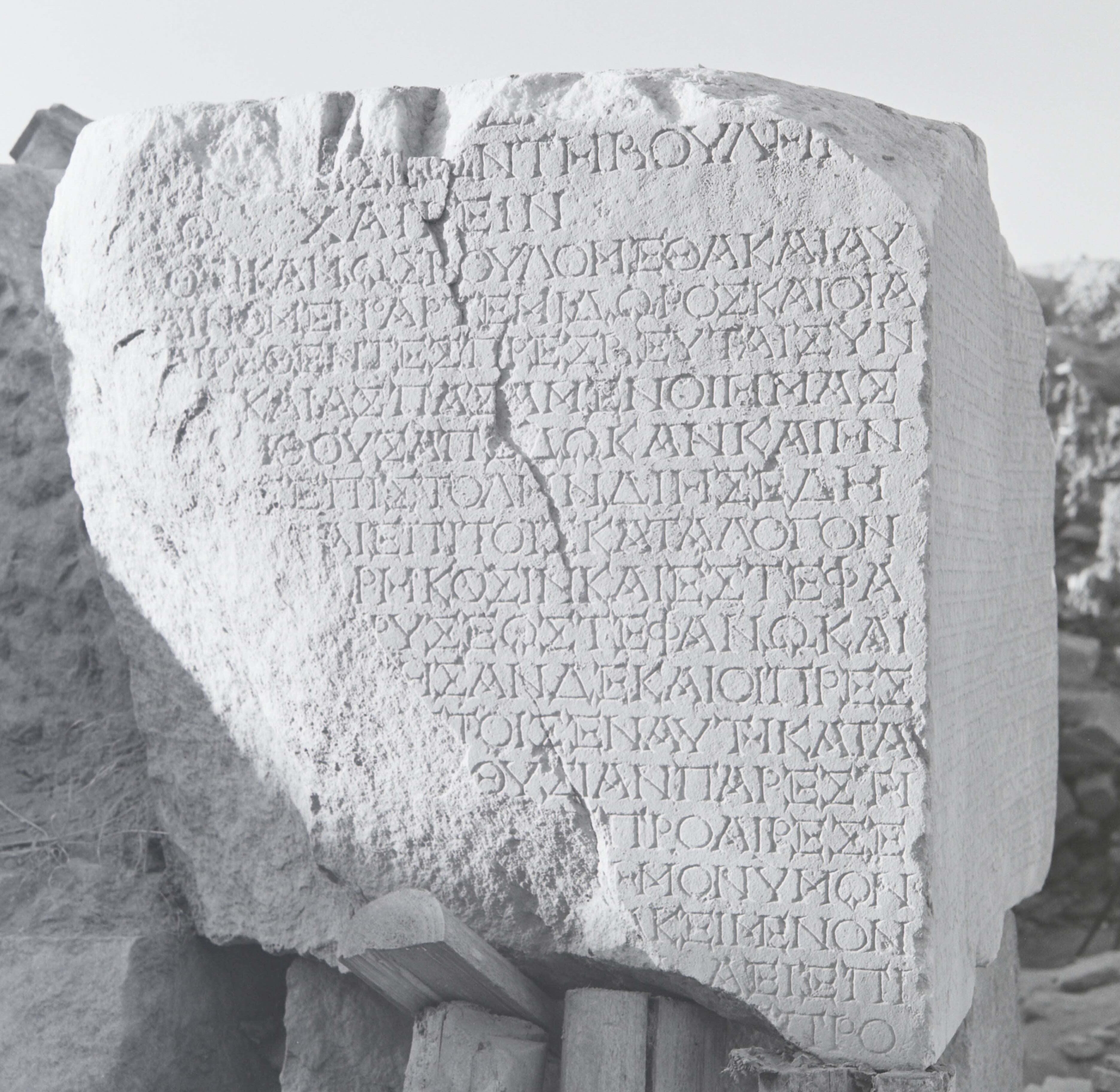
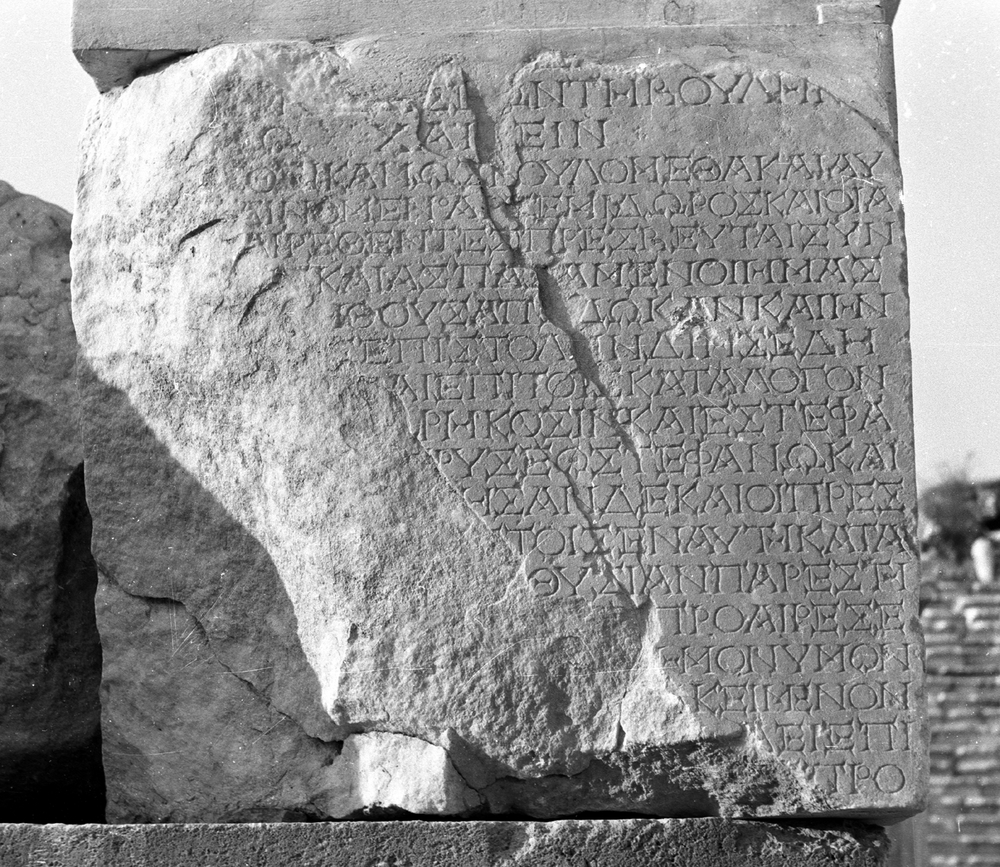
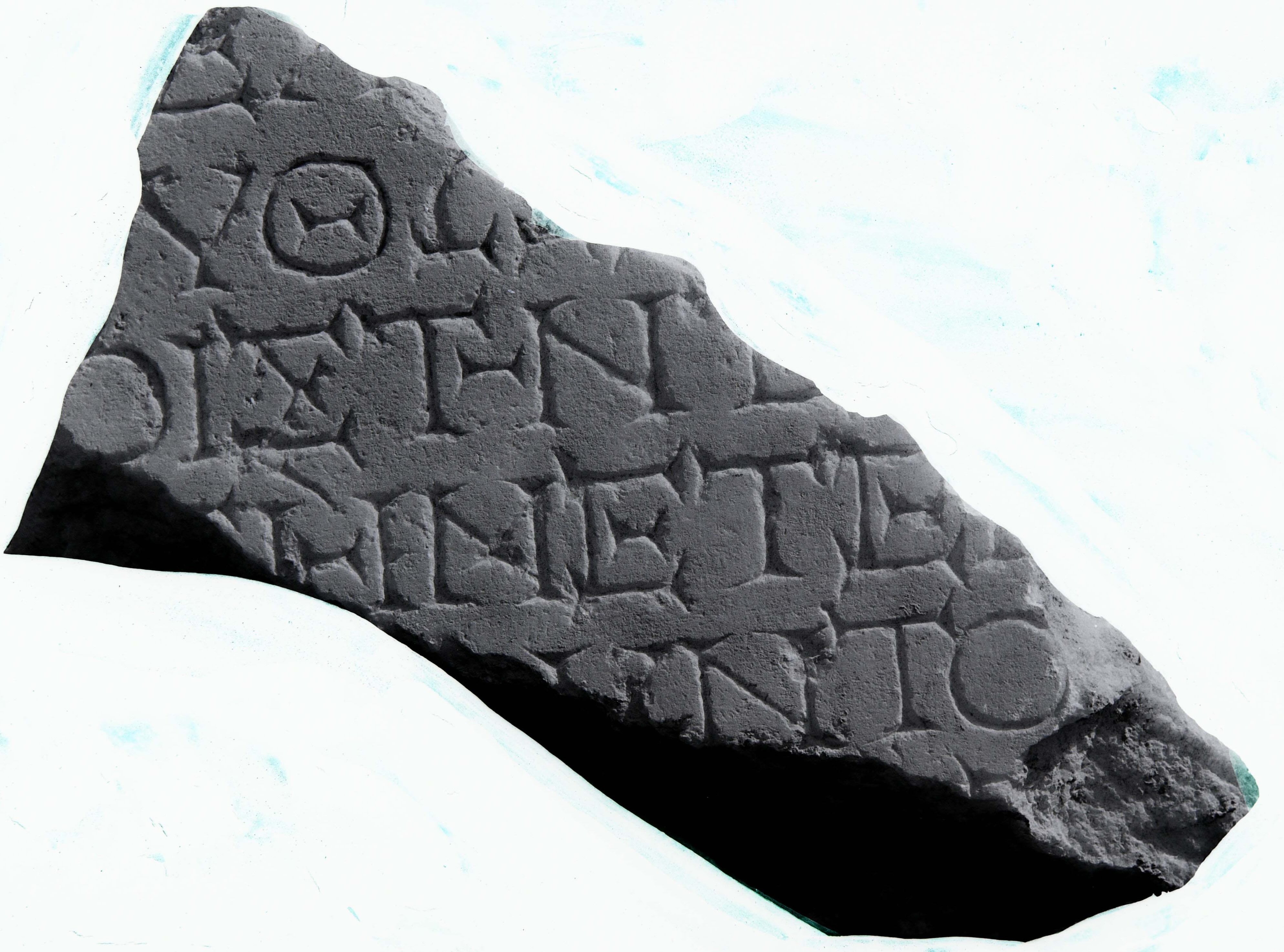
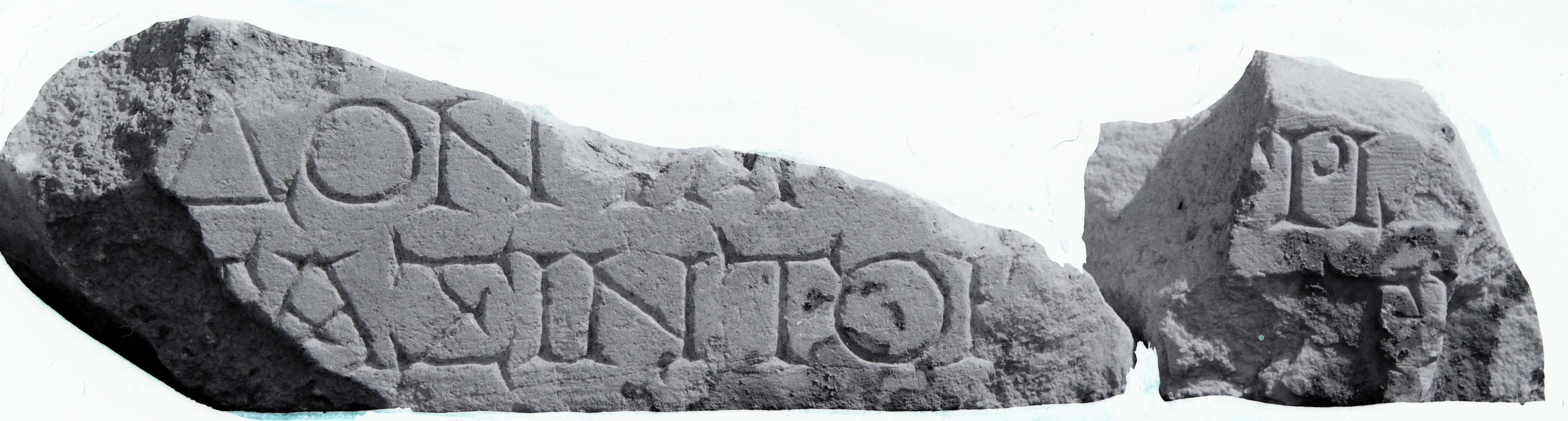
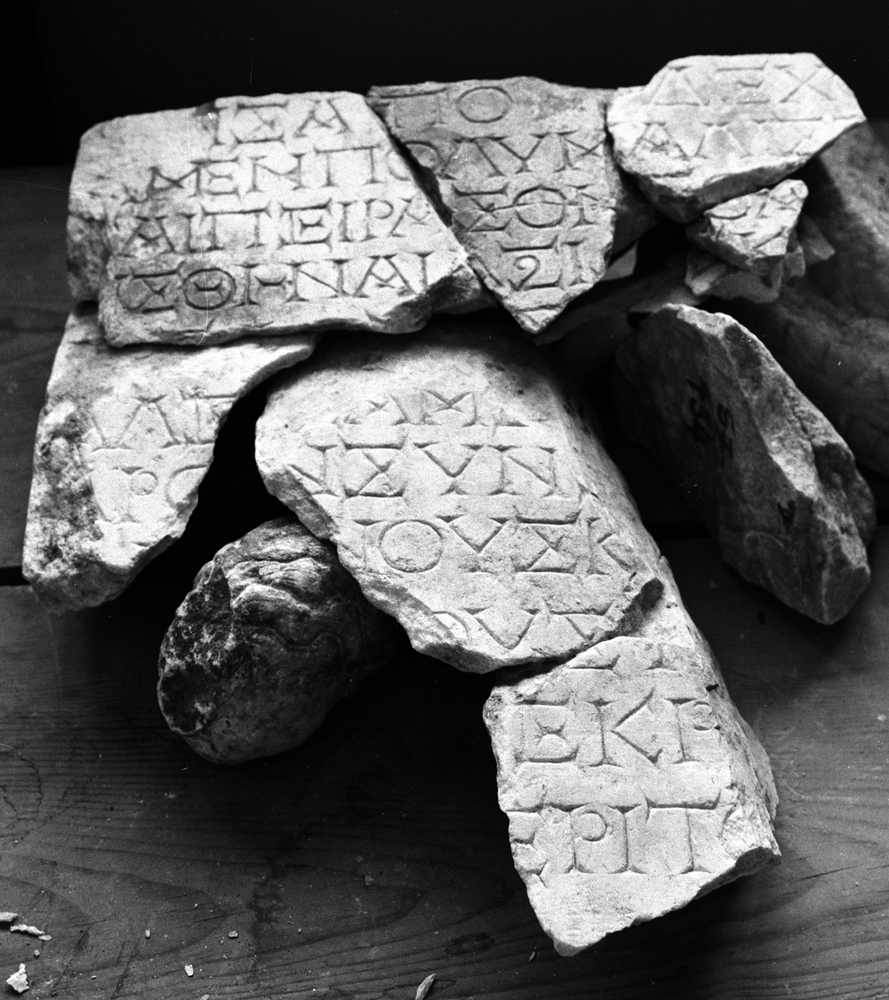
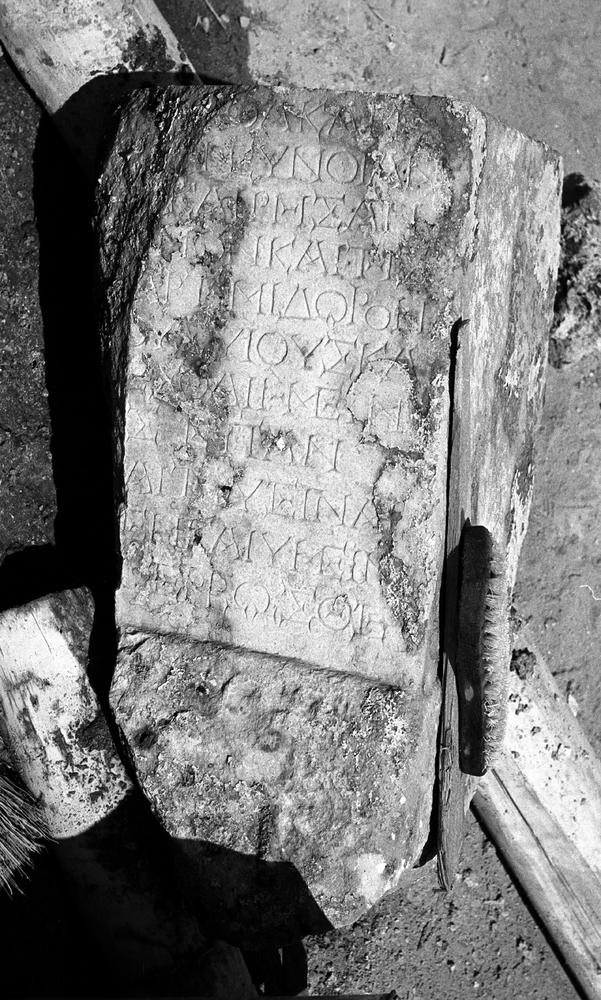
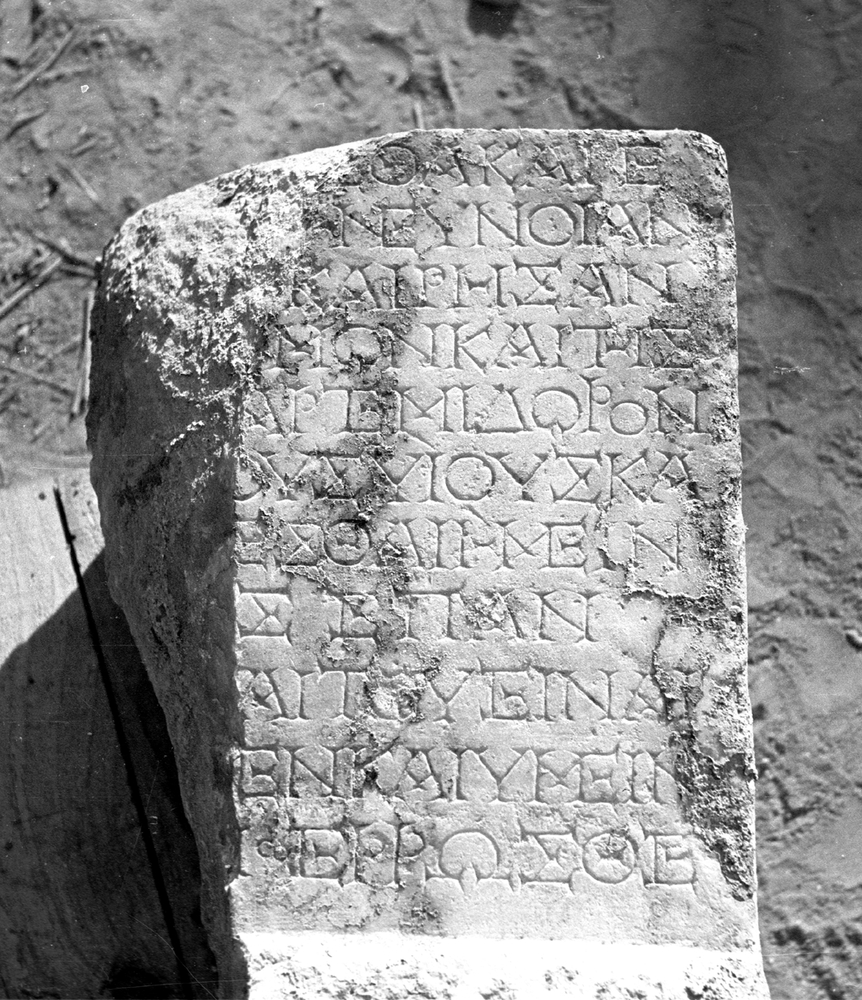
Description: North face of a pilaster (w: 0.81 × h: 0.66) inscribed on two faces.
The west face bears 8.2.
Text: The upper course consisted of one block; the top, badly chipped, and the left hand side survive (w: 0.625 × h: 0.67 × d: 0.83),
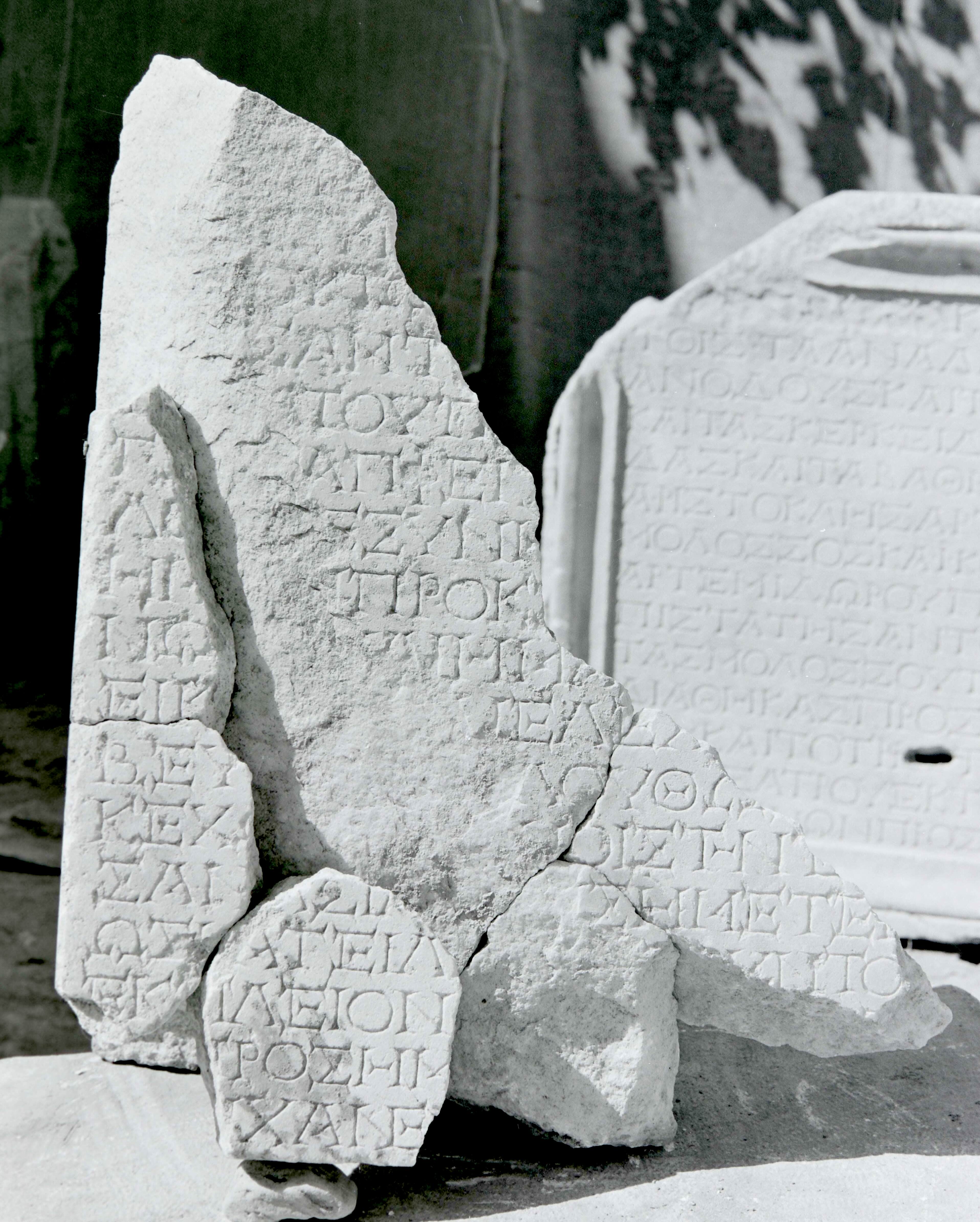
together with nine further fragments.
The lower course, which includes the dado, consisted of two adjacent blocks; at least 10 fragments survive.
Letters: Second to third centuries C.E., very similar to those of 8.3, 8.2, slightly different to those of 8.25-8.114. Traces of red paint in some letters. Lines 1-3, 0.025; lines 4 ff., ave. 0.02. ligatures : ΤΗ, lines 8, 14, 15, 24; ΤΗΝ
line 15; ΗΜ line 18; ΜΕ lines 18, 30; ΝΕ line 20; ΗΝ line 24; ΗΜΕ line 27; circular stops, lines 5, 31; apices lines4, 5,
7, 8, 17, 26, 27.
Date: Document; text: Second to third centuries CE
Findspot: Aphrodisias:
Theatre: north parodos, at the west corner.
Original location: Theatre: north parodos
Last recorded location: Findspot; fragments in Museum
Interpretive
[βασιλεὺς Βιθυνῶν Νικομή]δη̣[ς Πλαρασέων]
[καὶ] ⟦[Ἀ]φ̣ρ̣ο̣δ̣ε̣ι̣σ̣ι̣[έ]⟧ων τῇ βουλῇ κ̣[αὶ]
[τῷ] δ̣[ή]μῳ ( vac. 3) χαίρειν ( vac. 10)
[c. 5]Σ̣ΘΕΙΚΑΝ ὡς βουλόμεθα καὶ αὐ-
5[τοὶ] ὑ̣γι̣αίνομεν ((stop))Ἀρτ̣εμίδωρος καὶ οἱ ἅ-
[μα τ]ούτῳ αἱρεθέντες πρεσβευταὶ συν-
[μεί]ξαν̣τες καὶ ἀσπασ̣άμενοι ἡμᾶς
π̣[αρ]ὰ̣ τοῦ π[λ]ήθους ἀπέδωκα̣ν καὶ ἣν
γε̣[γ]ρ̣άπφει[τ]ε ἐπιστολὴν δι’ ἧς ἐδη-
10λο[ῦτ]ε συνη[σθῆν]αι ἐπὶ τοῖς κατὰ λόγον
ἡμ[εῖ]ν̣ προκε̣[χ]ω̣ρηκόσιν καὶ ἐστεφα-
νω[κέ]ν̣αι ἡμᾶ[ς χ]ρυσέῳ στεφάνῳ καὶ
εἰκ[όνι] διελέχ[θ]ησαν δὲ καὶ οἱ πρεσ-
βευ[ταὶ ἀκο]λούθως τοῖς ἐν αὐτῇ κατα-
15κεχ[ωρισμέ]ν̣οις τήν τ̣ε̣ θυσίαν παρέστη-
σαν ἀξία̣[ν τ]ῆς ἡμετέρας προαιρέσε-
ως κατειλη[φότε]ς̣ ο̣ὖν τὸ[ν δ]ῆμον ὑμῶν
ἐκ π̣λείον[ων εὐνοϊκῶ?]ς̣? [δι]α̣κείμενον
[τ]ὰ̣ π̣ρὸς ἡμ[ᾶς καὶ σπεύ]δοντα? vac ἀεὶ ἐπι-
20[τυ]ν̣χάνε[ιν ἡμᾶς? ἐν] π̣ᾶσιν τοῖς προ-
[κειμένο]ι̣ς ἀποδεχό[μ]ε̣θα καὶ ἐ-
[πῃνέσ?]αμεν πολὺ μάλιστ̣[α τ]ὴν εὔνοιαν
[ὑμῶν?] κ̣αὶ πειρασόμεθα [εὐ]καιρήσαν-
[τες χαρ?]ι̣σθῆναι ἀξί̣ω̣ς κ[αὶ ὑ?]μῶν καὶ τῆς
25[ἡμετέρα?]ς̣ δόξ[ης c. 5] Ἀρτεμίδωρον
[c. 5]ΑΛΕΞ̣ΑΜΕ[c. 5] ΟΥΣ υἱοὺς κα-
[τὰ? τὸ π]αρὸν συνε̣[c. 5]έσθαι ἡμεῖν
[c. 9] ΙΟΥΣΚ[c. 5]ΣΕΠΑΝ
[c. 10]ΟΥΣΥ[c. 5]ΑΙΤΟΥ εἶναι
30 [c. 10]ἐκρ[είναμ?]εν καὶ ὑμεῖν
[ἐγράψαμεν? π]ερὶ τ[ούτω]ν̣ ἔρρωσθε
Diplomatic
[.....................]Δ.[..........]
[...]⟦[.]........[.]⟧ΩΝΤΗΒΟΥΛΗ.[..]
[..].[.]ΜΩ ΧΑΙΡΕΙΝ
[·····].ΘΕΙΚΑΝΩΣΒΟΥΛΟΜΕΘΑΚΑΙΑΥ
5[...].Γ.ΑΙΝΟΜΕΝ • ΑΡ.ΕΜΙΔΩΡΟΣΚΑΙΟΙΑ
[...]ΟΥΤΩΑΙΡΕΘΕΝΤΕΣΠΡΕΣΒΕΥΤΑΙΣΥΝ
[...]ΞΑ.ΤΕΣΚΑΙΑΣΠΑ.ΑΜΕΝΟΙΗΜΑΣ
.[..].ΤΟΥΠ[.]ΗΘΟΥΣΑΠΕΔΩΚ.ΝΚΑΙΗΝ
Γ.[.].ΑΠΦΕΙ[.]ΕΕΠΙΣΤΟΛΗΝΔΙΗΣΕΔΗ
10ΛΟ[..]ΕΣΥΝΗ[....]ΑΙΕΠΙΤΟΙΣΚΑΤΑΛΟΓΟΝ
ΗΜ[..].ΠΡΟΚ.[.].ΡΗΚΟΣΙΝΚΑΙΕΣΤΕΦΑ
ΝΩ[..].ΑΙΗΜΑ[..]ΡΥΣΕΩΣΤΕΦΑΝΩΚΑΙ
ΕΙΚ[...]ΔΙΕΛΕΧ[.]ΗΣΑΝΔΕΚΑΙΟΙΠΡΕΣ
ΒΕΥ[......]ΛΟΥΘΩΣΤΟΙΣΕΝΑΥΤΗΚΑΤΑ
15ΚΕΧ[......].ΟΙΣΤΗΝ..ΘΥΣΙΑΝΠΑΡΕΣΤΗ
ΣΑΝΑΞΙ.[..]ΗΣΗΜΕΤΕΡΑΣΠΡΟΑΙΡΕΣΕ
ΩΣΚΑΤΕΙΛΗ[....]..ΥΝΤΟ[..]ΗΜΟΝΥΜΩΝ
ΕΚ.ΛΕΙΟΝ[.........].?[..].ΚΕΙΜΕΝΟΝ
[.]..ΡΟΣΗΜ[.........]ΔΟΝΤΑ?VACΑΕΙΕΠΙ
20[..].ΧΑΝΕ[........].ΑΣΙΝΤΟΙΣΠΡΟ
[.......].ΣΑΠΟΔΕΧΟ[.].ΘΑΚΑΙΕ
[.....]ΑΜΕΝΠΟΛΥΜΑΛΙΣ.[..]ΗΝΕΥΝΟΙΑΝ
[....].ΑΙΠΕΙΡΑΣΟΜΕΘΑ[..]ΚΑΙΡΗΣΑΝ
[......].ΣΘΗΝΑΙΑΞ..ΣΚ[...]ΜΩΝΚΑΙΤΗΣ
25[.......].ΔΟΞ[..·····]ΑΡΤΕΜΙΔΩΡΟΝ
[·····]ΑΛΕ.ΑΜΕ[·····]ΟΥΣΥΙΟΥΣΚΑ
[.....]ΑΡΟΝΣΥΝ.[·····]ΕΣΘΑΙΗΜΕΙΝ
[·········]ΙΟΥΣΚ[·····]ΣΕΠΑΝ
[··········]ΟΥΣΥ[·····]ΑΙΤΟΥΕΙΝΑΙ
30[··········]ΕΚΡ[.....]ΕΝΚΑΙΥΜΕΙΝ
[..........]ΕΡΙΤ[....].ΕΡΡΩΣΘΕ
Apparatus
1: Part of the top of the block survives, and the whole of the crowning capital, which is uninscribed on this face; there is
therefore no doubt that this is the first line of the text. Only the bottoms of letters remain.
4: Σ̣ could be Ε̣. An apex on Ι should imply that it was pronounced separately from the preceding vowel, and at first sight suggests
ἱκανῶς. Ν is cut over a partially erased Μ.
5: The dotted letters are faint and incomplete, but reasonably certain.
8,.9,.11-30: Dotted letters are often little more than vestigial traces, but consosnant with the interpretation printed which assumes use
of the common formulae of diplomatic interchange in the Hellenistic world.
24: A small space at the base line before ΜΩΝ suggests that the preceding letter was Υ not Η.
25: Σ̣ might be Ε̣, Ζ̣ or Ξ̣; Ξ̣ might be Ε̣, Ζ̣, Σ̣ or possibly Δ̣.
26: Ξ̣ might be Ε̣, Ζ̣ or Σ̣.
27: Ε̣̣ might be Ζ̣, Ξ̣, Σ̣ or possibly Δ̣.
English translation
Translation source: Reynolds, 1982
[? Nikomedes king of the Bithynians] to the Council and People of the [Plarasans and Aphrodisians], greetings.
[? If you are well it would be] as we wish; we too are in good health. Artemidoros and the ambassadors chosen at the same
time met and greeted us from the People and gave us the letter you have written, in which you reported that you had rejoiced
at the satisfactory progress of our affairs and had crowned us with a golden crown and a statue. Further your ambassadors
spoke in terms which accorded with those expressed in the letter and furnished a sacrifice worthy of our conduct. Understanding
then from many [things] that your people are [well disposed] to us and [? anxious for our] success in all [our ? undertakings],
we approve and have [praised] very highly [your] goodwill and shall try, in our prosperity, to [? do you favours] in a manner
worthy both of you and [our own] reputation. [. . . ? . . . ] Artemidoros [.. ? ..] sons [.. ? ..] to be [.. ? ..] with us
[ . . . ? . . . we ?decided] and [? have written] to you about these things. Farewell
Bibliography
Recorded: New York University expedition the main block in situ (67.552) the remaining fragments over several years (67.311, 67.451, 67.452, 67.456, 67.457, 67.458,
67.460, 67.469, 67.470, 67.490, 67.526, 67.552, 69.312, 69.372, 69.451, 76.12, 76.196.2, 76.196.12)
Publication: Reynolds, 1982 4 whence SEG 32.1097 , BE 1983.365 ; discussed, with emendations, Jones, EMC 29, 1985, 309-317 (lines 1, 2, 4, 18, 20-21, 24, 25, 26, 27, 28, 30-31),
whence SEG 35.1083 ; from all these McCabe, PHI, 1996 36 ; IAph2007 8.24.