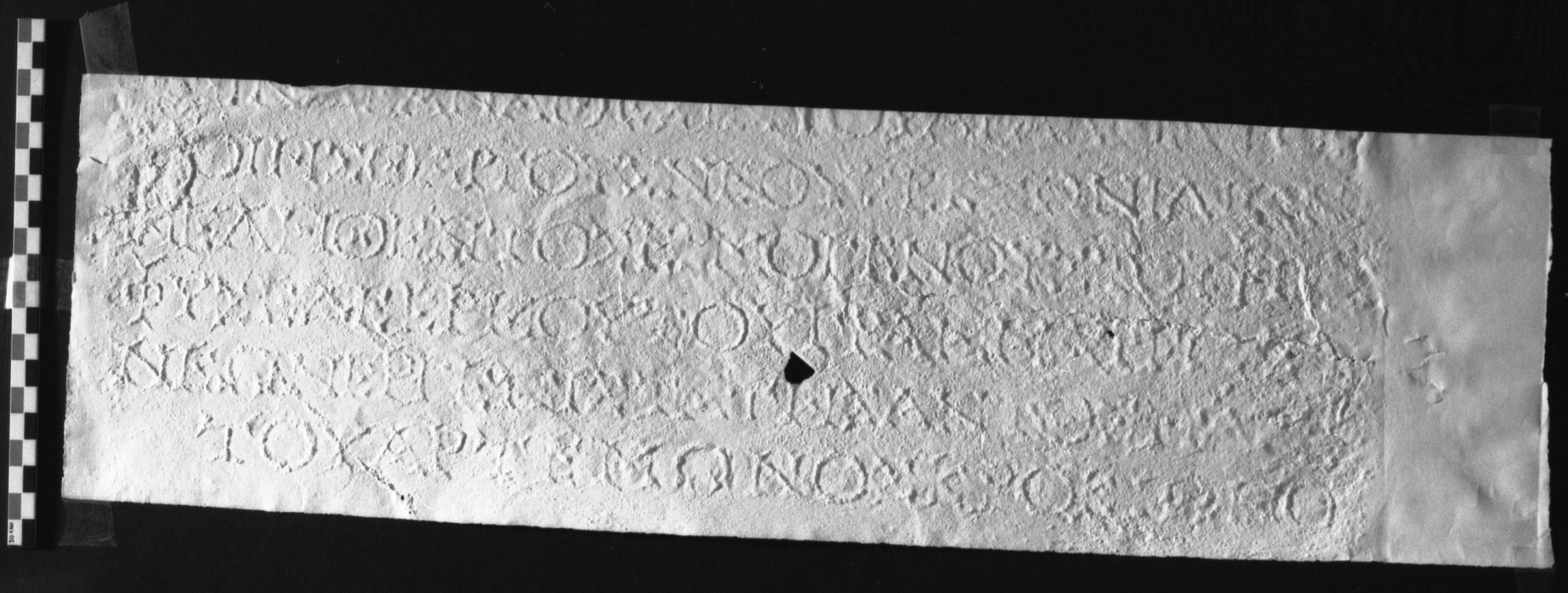
Description:
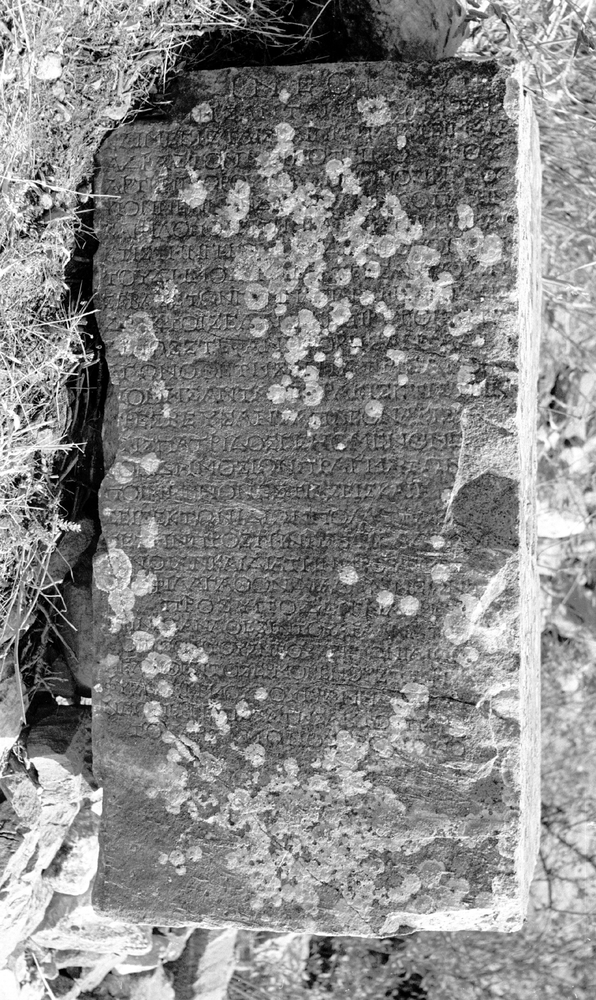
White marble
base without moulding
(w: 0.54 × h: 1.095 × d: 0.54)
chipped above, and damaged at the lower right side.
Text:
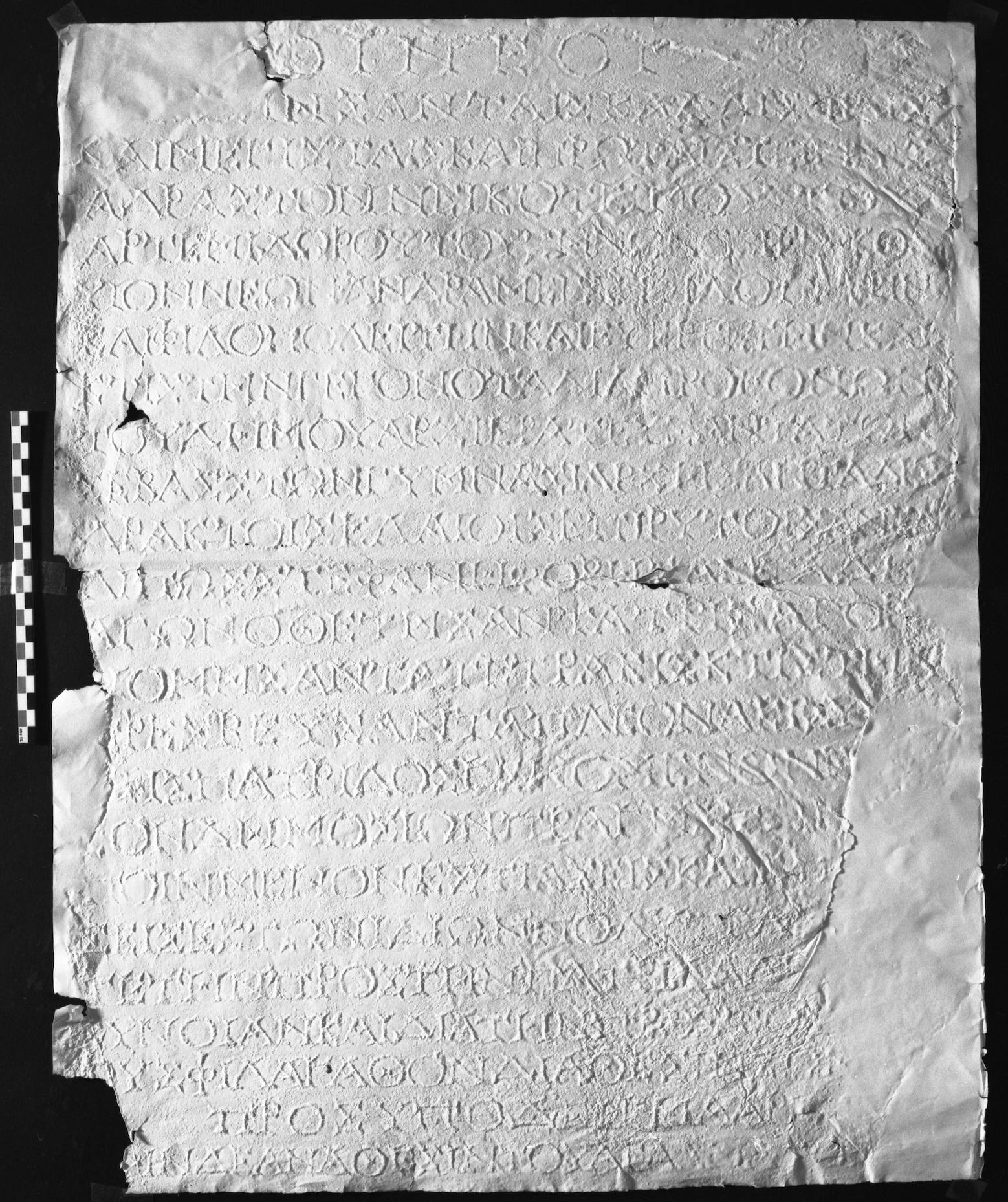
Inscribed on the face.
Letters: Line 1, 0.0275; lines 2 ff., 0.015–0.0175.
Date: First century CE (prosopography)
Findspot: Aphrodisias:
Walls, East stretch (south part): fallen, in the stretch just north of the South-east Gate, east of 12.325 , 12.326.
Original location: Unknown
Last recorded location: Findspot (1973)
Interpretive
( vac. 5) οἱ νέοι ( vac. 5)
[ἐτεί]μ̣ησαν ταῖς καλλίσταις
καὶ μεγίσταις καὶ πρώταις τειμαῖς
Ἄδραστον Νεικοτείμου τοῦ
5 Ἀρτεμιδώρου τοῦ Ζήνωνος Ἱέρακος
υἱὸν νέων ἄνδρα μέγαν φιλόπατριν
καὶ φιλοπολείτην καὶ εὐεργέτην καὶ
κτίστην γεγονότα διὰ προγόνων
τοῦ δήμου ἀρχιερατεύσαντα τῶν
10 Σεβαστῶν γυμνασιαρχήσαντα δὶς
δρακτοῖς ἐλαίοις ἐπιρύτοις ἀνελ̣
λιπῶς στεφανηφορήσαντα δίς
ἀγωνοθετήσαντα τρίς ἀγορα
ν̣ομήσαντα τετράκις κτίστην
15π̣ρεσβεύσαντα πλεονάκις ὑπὲρ
τῆς πατρίδος γενόμενον ἔκδι
κ̣ον δημοσίων πραγμάτων πε
ποιημένον ἑστιάσεις καὶ ἐπιδό
σεις ἐκ τῶν ἰδίων πολυτελεῖς διά
20 τε τὴν πρὸς τὴν πατρίδα διηνεκῆ
εὔνοιαν καὶ διὰ τὴν πρὸς τοὺς̣ νέ
ους φιλάγαθον διάθεσιν ζῶντα
( vac. 5) πρὸς ὑπόδειγμα ἀρετῆς ( vac. 2)
τὴν δὲ ἀνάθεσιν τοῦ ἀγάλματος πε
25ποιῆσθαι τοὺς νέους ἐκ τῶν ἰδίων ἐπι
μεληθέντος Ἑρμογένους το[ῦ] Ὑψικ̣λέους
φύσε[ι] δὲ Ἑρμοῦ τοῦ γραμματε̣ω̣ς τῶν
νέων ἐργεπιστατήσαντος Παν̣φίλου
( vac. ) τοῦ Ἀρτέμωνος Κροκίωνος ( vac. )
Diplomatic
ΟΙΝΕΟΙ
[....].ΗΣΑΝΤΑΙΣΚΑΛΛΙΣΤΑΙΣ
ΚΑΙΜΕΓΙΣΤΑΙΣΚΑΙΠΡΩΤΑΙΣΤΕΙΜΑΙΣ
ΑΔΡΑΣΤΟΝΝΕΙΚΟΤΕΙΜΟΥΤΟΥ
5ΑΡΤΕΜΙΔΩΡΟΥΤΟΥΖΗΝΩΝΟΣΙΕΡΑΚΟΣ
ΥΙΟΝΝΕΩΝΑΝΔΡΑΜΕΓΑΝΦΙΛΟΠΑΤΡΙΝ
ΚΑΙΦΙΛΟΠΟΛΕΙΤΗΝΚΑΙΕΥΕΡΓΕΤΗΝΚΑΙ
ΚΤΙΣΤΗΝΓΕΓΟΝΟΤΑΔΙΑΠΡΟΓΟΝΩΝ
ΤΟΥΔΗΜΟΥΑΡΧΙΕΡΑΤΕΥΣΑΝΤΑΤΩΝ
10ΣΕΒΑΣΤΩΝΓΥΜΝΑΣΙΑΡΧΗΣΑΝΤΑΔΙΣ
ΔΡΑΚΤΟΙΣΕΛΑΙΟΙΣΕΠΙΡΥΤΟΙΣΑΝΕ.
ΛΙΠΩΣΣΤΕΦΑΝΗΦΟΡΗΣΑΝΤΑΔΙΣ
ΑΓΩΝΟΘΕΤΗΣΑΝΤΑΤΡΙΣΑΓΟΡΑ
.ΟΜΗΣΑΝΤΑΤΕΤΡΑΚΙΣΚΤΙΣΤΗΝ
15.ΡΕΣΒΕΥΣΑΝΤΑΠΛΕΟΝΑΚΙΣΥΠΕΡ
ΤΗΣΠΑΤΡΙΔΟΣΓΕΝΟΜΕΝΟΝΕΚΔΙ
.ΟΝΔΗΜΟΣΙΩΝΠΡΑΓΜΑΤΩΝΠΕ
ΠΟΙΗΜΕΝΟΝΕΣΤΙΑΣΕΙΣΚΑΙΕΠΙΔΟ
ΣΕΙΣΕΚΤΩΝΙΔΙΩΝΠΟΛΥΤΕΛΕΙΣΔΙΑ
20ΤΕΤΗΝΠΡΟΣΤΗΝΠΑΤΡΙΔΑΔΙΗΝΕΚΗ
ΕΥΝΟΙΑΝΚΑΙΔΙΑΤΗΝΠΡΟΣΤΟΥ.ΝΕ
ΟΥΣΦΙΛΑΓΑΘΟΝΔΙΑΘΕΣΙΝΖΩΝΤΑ
ΠΡΟΣΥΠΟΔΕΙΓΜΑΑΡΕΤΗΣ
ΤΗΝΔΕΑΝΑΘΕΣΙΝΤΟΥΑΓΑΛΜΑΤΟΣΠΕ
25ΠΟΙΗΣΘΑΙΤΟΥΣΝΕΟΥΣΕΚΤΩΝΙΔΙΩΝΕΠΙ
ΜΕΛΗΘΕΝΤΟΣΕΡΜΟΓΕΝΟΥΣΤΟ[.]ΥΨΙ.ΛΕΟΥΣ
ΦΥΣΕ[.]ΔΕΕΡΜΟΥΤΟΥΓΡΑΜΜΑΤ..ΣΤΩΝ
ΝΕΩΝΕΡΓΕΠΙΣΤΑΤΗΣΑΝΤΟΣΠΑ.ΦΙΛΟΥ
ΤΟΥΑΡΤΕΜΩΝΟΣΚΡΟΚΙΩΝΟΣ
Apparatus
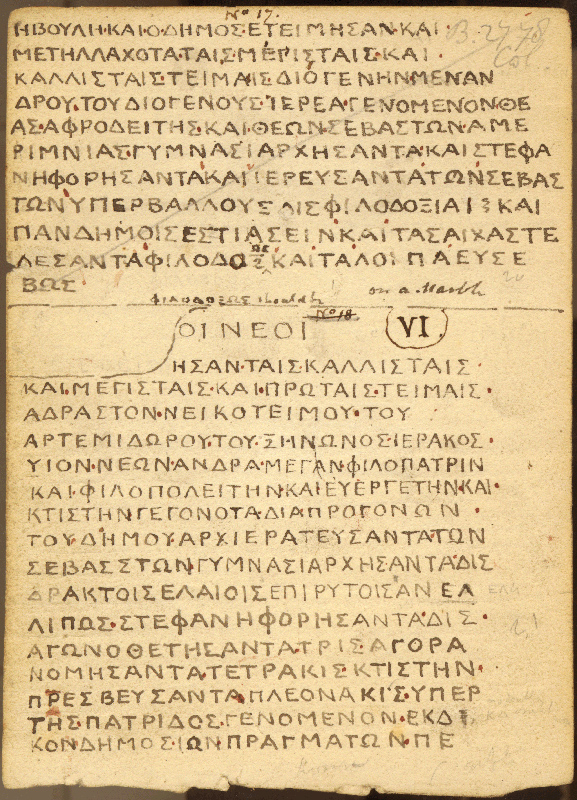
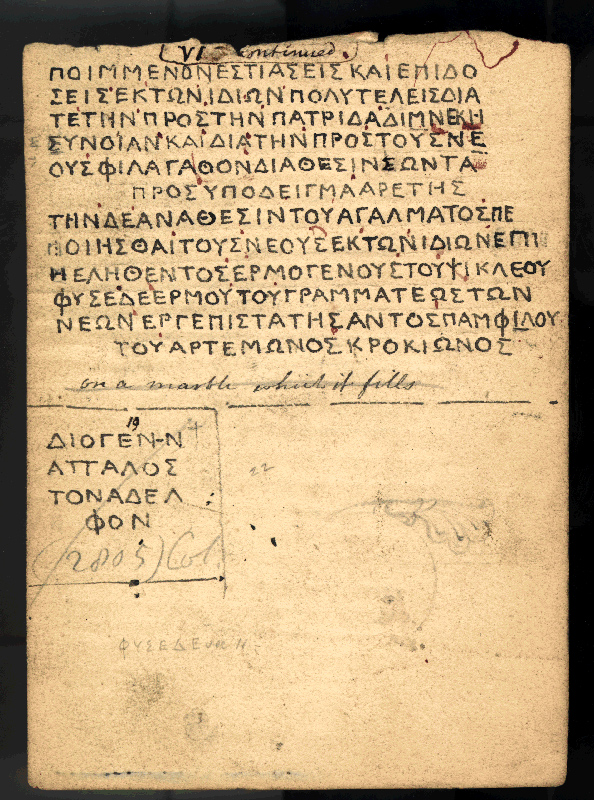
Letters read by Deering at the beginning of lines 16, 24 and 25, and the ends of lines 11, 13 and 15 onwards were no longer
visible by 1934, and a few more have become illegible: letters recorded by Deering but no longer legible are highlighted.
English translation
Translation source: IAph2007
The neoi honoured with the finest, greatest and foremost honours Adrastos, son of Neikoteimos Hierax, the son of Artemidoros
the son of Zenon, Son of the Neoi, a great man who loved his fatherland and his city, both a benefactor and a founder of the
People through the tradition of his ancestors. He was high priest of the emperors, gymnasiarch twice, providing a continuous
and abundant flow of olive oil, stephanephoros twice, contest-president three times, market overseer four times, a founder;
he acted as ambassador for his fatherland on many occasions. He was an advocate of the affairs of the people and gave costly
feasts and contributions from his own funds because of the constant good will he bore to the fatherland and because of his
kindly disposition toward the neoi. He lived as a model of excellence.
The erection of the statue was undertaken by the Neoi from their own funds, under the supervision of Hermogenes, son of Hypsikles,
by birth son of Hermes, the secretary of the Neoi, and the management of Pamphilos Krokion, son of Artemon.
English translation
Translation source: Smith, 2006
The neoi honoured with the finest, greatest and foremost honors Adrastos, son of Neikoteimos Hierax, son of Artemidoros, son of Zenon,
son of the neoi, a great man who loved his fatherland and his city, both a benefactor and a founder of the People in the tradition of his
ancestors. He was high priest of the emperors, gymnasiarch twice, providing a continuous and abundant flow of olive oil, stephanephoros
twice, agonothete three times, market overseer four times, a founder, and ambassador for his fatherland on many occasions.
He was an advocate of the affairs of the people and gave costly feasts and contributions from his own funds because of the
constant good will he bore toward the fatherland and because of his kindly disposition toward the neoi. He lived as a model
of excellence.
The erection of the statue (agalma) was undertaken (pepoiesthai by the neoi from their own funds, and taken in charge (epimelthentos by Hermogenes, son of Hypsikles, by birth son of Hermes, the secretary of the neoi, and supervised (ergepistatesantos by Pamphilos Krokion, son of Artemon.
Bibliography
Recorded: Deering, 1812, 4v-5, no. 18; Gaudin, 1904, 162; Calder, 1934; New York University expedition
Publication: Leake, 1843 6 whence Le Bas and Waddington, 1870, 1602a , Liermann, 1889, 19 ; Reinach, 1906, 33 (mention) ; MAMA 8, 484 , whence McCabe, PHI, 1996 222 , Smith, 2006 H.51 (listed) and p.22; IAph2007 12.308;