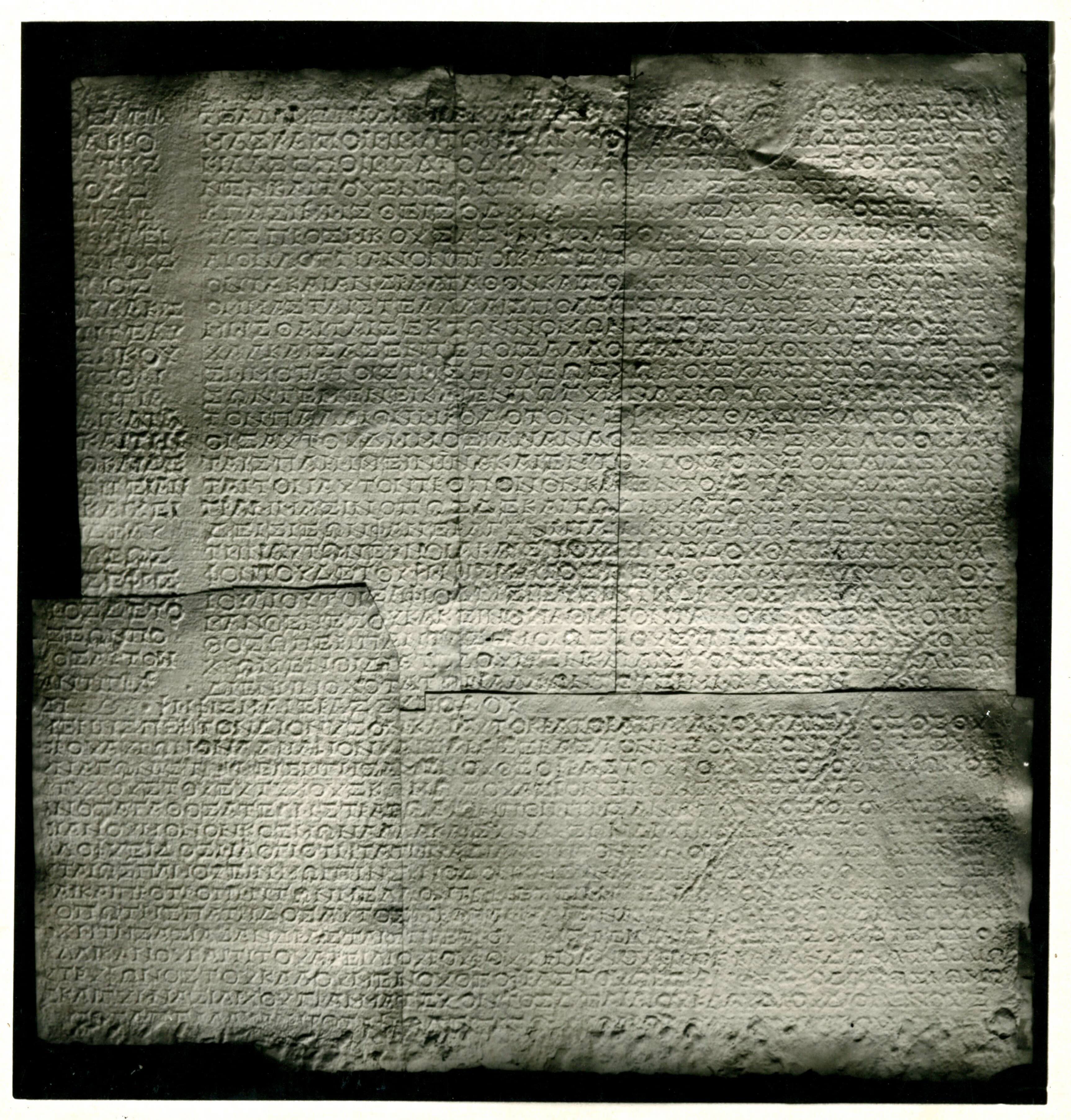
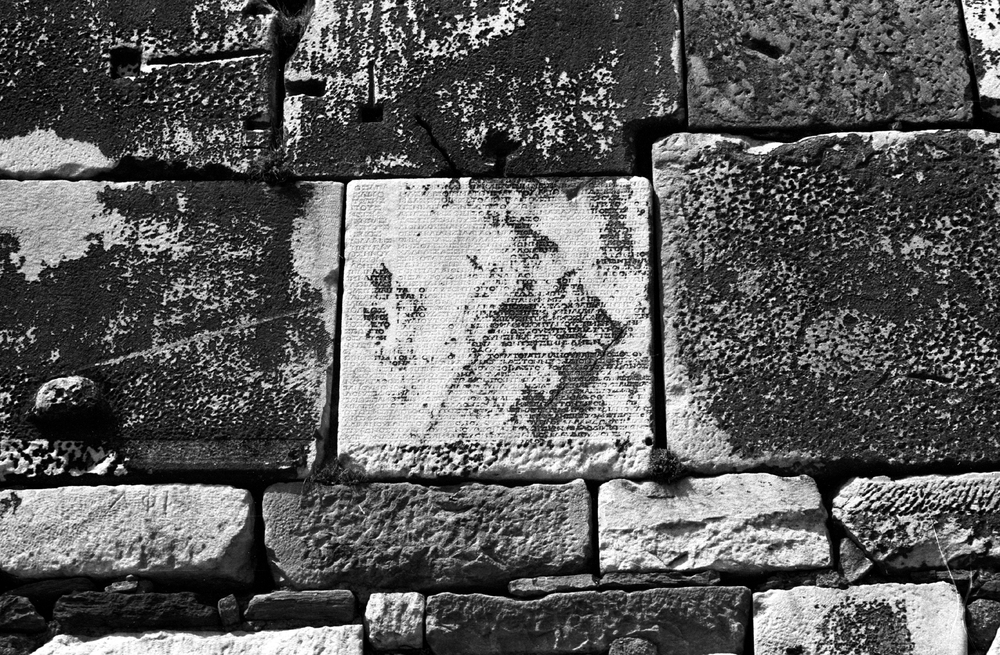
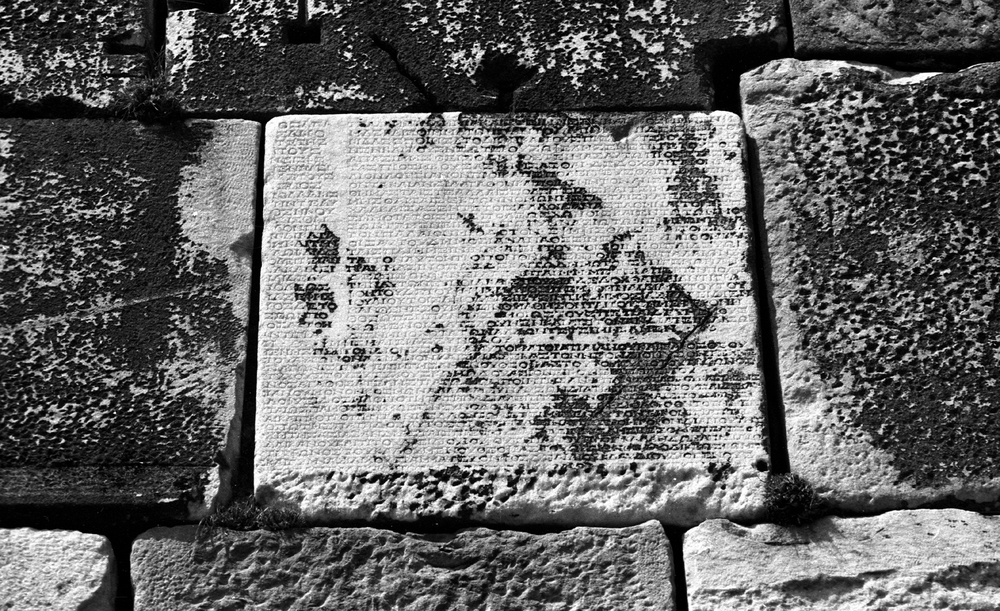
Description: Three texts, all inscribed on a single white marble
block; the block (0.81 x 0.77) has an area of rough tooling along the lower edge, which breaks into iii.16, suggesting that
there was a moulding below, which was broken away to fit the stone for use in the wall (as is found on other re-used blocks
in the wall). The stone must come from a composite monument of some kind, perhaps the wall of a building.
Text: The texts of i and ii must have started on the blocks above, and most of i, with much of iii was inscribed on a block to the
left. i and ii both contain twenty-six lines, but these are not completely aligned with one another; line 26 of i ends on
the same line as the first line of iii, while line 26 of ii ends above it; this probably indicates that the three documents
were not inscribed simultaneously (although the lettering shows no marked variations).
Letters: Letters standard second-third-century forms, 0.01; dot for stops (not marked by Waddington or MAMA). We have not climbed
up to the stone; measurements are therefore those of the MAMA team
Date: iii: 127 A.D. (consuls)
Findspot: Aphrodisias:
Walls, North stretch: high up in the north wall of the Stadium.
Original location: Unknown
Last recorded location: Findspot
Interpretive
i
[------]
[---] ΟΣΑΠΑ
[--- διὰ? τὰ]ς ἀκρό-
[ασεις ---] Α̣ τε τῆς
[---]Ι̣ΤΟΥΣ
5 [c. 6]Α̣Ν εἰσφερ-
[c. 6] Ι̣ ἐν πλει-
[στοις c. 6]ΑΣΤΟΥΣ
[c. 6]Δ̣ΕΝΟΣ
[c. 6] πολλάκις
10 [c. 6] τ̣ήν τε αὐ-
[τ--- πρ]οσηκου-
[c. 6]Λ̣ΗΣΘΑΙ
[--- Γάιον Ἰούλιον] Λονγια-
[νὸν c. 6]Ν̣ καὶ κατα
15 [c. 6]Ο̣Ν̣ καὶ τῶν
[c. 6]Τ̣Λ̣Ω καὶ ΔΕ
[c. 4 π]ολειτείαν
[c. 6]ΔΑ καὶ ΧΕΙ
[c. 6]ΝΑΙ δὲ αὐ-
20[τc. 6] πόλεως
[c. 6]ΜΑΣΕΦΗΣ
[c. 6]ΡΟΣ δὲ το
[--- Ἁλικαρνασ?]σέων πο-
[λc. 6] ΟΣ αὐτὸν
25 [c. 6] ἀντίγρα-
[φον --- σημανθὲν τῇ δημοσίᾳ σφραγεῖ]δι ((stop)) ((leaf)) ii
[------]
τῇ̣ ἄλλῃ ἐπιδημίᾳ καὶ ἐτείμησεν καὶ ἐκόσμησεν ἡ-
μᾶς καὶ ποιημάτων παντοδαπῶν ἐπιδείξεις ποι-
κίλας ἐποιήσατο δι'ὧν καὶ τοὺς πρεσβυτέρους εὔφρα-
νεν καὶ τοὺς νεωτέρους ὠφέλησεν ἐπί τε τούτοις
5 ἅπασιν ἡσθεὶς ὁ δῆμος τειμὰς αὐτῷ προσέταξε
τὰς προσηκούσας ψηφίσασθαι ((stop)) δεδόχθαι Γάιον Ἰού-
λιον Λογγιανὸν προῖκα πεπολειτεῦσθαι παρ' ἡμεῖν ( vac. )
ὄντα καὶ ἄνδρα ἀγαθὸν καὶ ποιητὴν τὸν ἄριστον τῶν κα-
θ' ἡμᾶς ταῖς τε ἄλλαις πολειτείαις καὶ τειμαῖς τετει-
10μῆσθαι ταῖς ἐκ τῶν νόμων μεγίσταις καὶ εἰκόσιν ( vac. )
χαλκαῖς ἃς ἔν τε τοῖς ἄλλοις ἀνασταθῆναι τοῖς ἐπι-
σημοτάτοις τῆς πόλεως χωρίοις καὶ ἐν τῷ τῶν Μου̣-
σῶν τεμένει καὶ ἐν τῷ γυμνασίῳ τῶν ἐφήβων παρὰ
τὸν παλαιὸν Ἡρόδοτον ((stop)) ἐψηφίσθαι δὲ καὶ τοῖς βυβλί̣-
1515 οις αὐτοῦ δημοσίαν ἀνάθεσιν ἔν τε βυβλιοθήκαις̣
ταῖς παρ' ἡμεῖν ἵνα καὶ ἐν τούτοις οἱ νέοι παιδεύων-
ται τὸν αὐτὸν τρόπον ὃν καὶ ἐν τοῖς τῶν παλαίων συ[ν-]
γράμμασιν ὅπως δὲ καὶ τῷ δήμῳ τῶν συνγενῶν Ἀφρο-
δεισιέων φανερὰ γένηται ἡ ἡμετέρα περὶ τὸν πολε[ί-]
20την αὐτῶν εὔνοια καὶ σπουδή ((stop)) δεδόχθαι καὶ ἀντίγρα-
φον τοῦδε τοῦ ψηφίσματος πεμφθῆναι διὰ αὐτοῦ τοῦ
Ἰουλίου τοῖς Ἀφροδεισιεῦσιν τῇ δημοσίᾳ σφραγεῖδι ση-
μανθὲν ἐξ οὗ κἀκεινο<ι> μαθήσονται τό τε ἡμέτερον ἦ- ( vac. 2)
θος ᾧ περὶ πάντας ὁμοίως τοὺς πεπαιδευμένοις
25 χρώμενοι διατελοῦμεν καὶ αἷς τὸν ἄνδρα τειμαῖς ὡς
διενηνοχότα τῶν ἄλλων τετειμήκαμεν ((stop)) ((leaf))(?) ( vac. ) iii
((stop)) ((leaf)) ((stop)) ψήφισμα ἱερᾶς συνόδου ( vac. )
[ἔδοξεν τῇ ἱερᾷ συνόδῳ τῶν ἀπὸ τῆς οἰκου]μένης περὶ τὸν Διόνυσον καὶ Τραιανὸν̣ αὐτοκράτορα Καίσαρος θεοῦ ( vac. )
[Τραιανοῦ Δακικοῦ Παρθικοῦ υἱὸν θεοῦ Ν]έρουα υἱωνὸν Ἁδριανὸν Καίσαρα Σεβαστὸν νέον Διόνυσον τεχνε[ι-]
[τῶν ἱερονεικῶν? στεφανειτῶν καὶ τῶν σ]υναγωνιστῶν ( vac. ) εἰσηγησαμένου Θεοφράστου τοῦ Εὐβιότου Τρύφωνος ( vac. )
5 [κωμῳδοῦ Λαοδικέως ἐπιψηφισαμένου Ε]ὐ̣τύχους τοῦ Εὐτύχους κωμῳδοῦ Ἀσιονείκου Ἱεραπολείτου ( vac. )
[ἐπεὶ Γάιος Ἰούλιος υἱὸς? Λογγι]α̣νὸς ἀγαθὸς ἀτελὴς τραγῳδίων ποιήτης ἀνὴρ πὰντος λόγου καῖ πάσης
[c. 30 - 31]Σ̣ΙΑΝ οὐ μόνον κοσμῶν ἀλλὰ καὶ συναύξων διὰ τῆς ἐναρέτου παιδείας
[c. 27 - 28 μεγ?]αλοφυεῖ δόξῃ λογιότητα, τὴν ἀδιάλειπτον εὔνοιάν τε καὶ σπουδὴν ΕΝ ( vac. 1)
[c. 30 - 31]ΥΤΑΙ ὡς πληθύειν ἡμῶν τὴν σύνοδον καὶ συναύξειν δι'ὃ ἀθ̣ρ̣όον τὸ τῆς ΕΙ̣Ο̣
10 [c. 30 - 31]Τ̣ΑΙ καὶ προτροπὴν τῶν μελλόντων ἐτείμησεν αὐτὸν εἰκόνι γραπτῇ ( vac. )
[c. 25 - 26 ἐν ᾧἂν] τ̣όπῳ τῆς πατρίδος αὐτὸς προέ̣λ̣ηται, εἶναί τ̣ε̣ π̣ροήγορον διὰ βίου τῆς
[συνόδου c. 24 - 25]Ο̣ΧΗτῆς ἀξίας ἄνδρας ταῖς πρεπούσαις τειμαῖς ἀμείβεσθαι ((stop)) ἐτελέσθη̣
[ἐπὶ ὑπάτων Μάρκου Γαουίου Σκουίλλα Γ]αλλικανοῦ καὶ Τίτου Ἀτ̣ειλίου Ῥούφου Τιτιανοῦ πρὸ Ϛ καλανδῶν Ἀπρειλίων̣
[c. 12 - 13 Θεοφράστου τοῦ Εὐβιότο]υ Τρύφωνος τοῦ καλουμένου Θεοφράστου Ὠρείωνος Λαοδικέως κωμῳ-
15[δοῦ c. 28 - 29]Σ̣ καὶ γυμνασιάρχου γραμματεύοντος δὲ Αἰλίου Κλαυδίου Διογένους ( vac. )
[c. 31 - 32]Ν̣ΤΟΣ Ἀπελ̣λα Χά̣ρ̣η̣τος Ἀφροδεισιέω̣[ς κι]θ̣α̣ρ̣ῳ̣[δο]υ̣ [c. 7] ΟΥ ( vac. )
Diplomatic
i
[------]
[---]ΟΣΑΠΑ
[---.....]ΣΑΚΡΟ
[.....---].ΤΕΤΗΣ
[---].ΤΟΥΣ
5[······].ΝΕΙΣΦΕΡ
[······].ΕΝΠΛΕΙ
[.....······]ΑΣΤΟΥΣ
[······].ΕΝΟΣ
[······]ΠΟΛΛΑΚΙΣ
10[······].ΗΝΤΕΑΥ
[.---..]ΟΣΗΚΟΥ
[······].ΗΣΘΑΙ
[---............]ΛΟΝΓΙΑ
[...······].ΚΑΙΚΑΤΑ
15[······]..ΚΑΙΤΩΝ
[······]..ΩΚΑΙΔΕ
[····.]ΟΛΕΙΤΕΙΑΝ
[······]ΔΑΚΑΙΧΕΙ
[······]ΝΑΙΔΕΑΥ
20[.······]ΠΟΛΕΩΣ
[······]ΜΑΣΕΦΗΣ
[······]ΡΟΣΔΕΤΟ
[---.........]ΣΕΩΝΠΟ
[.······]ΟΣΑΥΤΟΝ
25[······]ΑΝΤΙΓΡΑ
[...---........................]ΔΙ • ❦ ii
[------]
Τ.ΑΛΛΗΕΠΙΔΗΜΙΑΚΑΙΕΤΕΙΜΗΣΕΝΚΑΙΕΚΟΣΜΗΣΕΝΗ
ΜΑΣΚΑΙΠΟΙΗΜΑΤΩΝΠΑΝΤΟΔΑΠΩΝΕΠΙΔΕΙΞΕΙΣΠΟΙ
ΚΙΛΑΣΕΠΟΙΗΣΑΤΟΔΙΩΝΚΑΙΤΟΥΣΠΡΕΣΒΥΤΕΡΟΥΣΕΥΦΡΑ
ΝΕΝΚΑΙΤΟΥΣΝΕΩΤΕΡΟΥΣΩΦΕΛΗΣΕΝΕΠΙΤΕΤΟΥΤΟΙΣ
5ΑΠΑΣΙΝΗΣΘΕΙΣΟΔΗΜΟΣΤΕΙΜΑΣΑΥΤΩΠΡΟΣΕΤΑΞΕ
ΤΑΣΠΡΟΣΗΚΟΥΣΑΣΨΗΦΙΣΑΣΘΑΙ • ΔΕΔΟΧΘΑΙΓΑΙΟΝΙΟΥ
ΛΙΟΝΛΟΓΓΙΑΝΟΝΠΡΟΙΚΑΠΕΠΟΛΕΙΤΕΥΣΘΑΙΠΑΡΗΜΕΙΝ
ΟΝΤΑΚΑΙΑΝΔΡΑΑΓΑΘΟΝΚΑΙΠΟΙΗΤΗΝΤΟΝΑΡΙΣΤΟΝΤΩΝΚΑ
ΘΗΜΑΣΤΑΙΣΤΕΑΛΛΑΙΣΠΟΛΕΙΤΕΙΑΙΣΚΑΙΤΕΙΜΑΙΣΤΕΤΕΙ
10ΜΗΣΘΑΙΤΑΙΣΕΚΤΩΝΝΟΜΩΝΜΕΓΙΣΤΑΙΣΚΑΙΕΙΚΟΣΙΝ
ΧΑΛΚΑΙΣΑΣΕΝΤΕΤΟΙΣΑΛΛΟΙΣΑΝΑΣΤΑΘΗΝΑΙΤΟΙΣΕΠΙ
ΣΗΜΟΤΑΤΟΙΣΤΗΣΠΟΛΕΩΣΧΩΡΙΟΙΣΚΑΙΕΝΤΩΤΩΝΜΟ.
ΣΩΝΤΕΜΕΝΕΙΚΑΙΕΝΤΩΓΥΜΝΑΣΙΩΤΩΝΕΦΗΒΩΝΠΑΡΑ
ΤΟΝΠΑΛΑΙΟΝΗΡΟΔΟΤΟΝ • ΕΨΗΦΙΣΘΑΙΔΕΚΑΙΤΟΙΣΒΥΒΛ.
1515ΟΙΣΑΥΤΟΥΔΗΜΟΣΙΑΝΑΝΑΘΕΣΙΝΕΝΤΕΒΥΒΛΙΟΘΗΚΑΙ.
ΤΑΙΣΠΑΡΗΜΕΙΝΙΝΑΚΑΙΕΝΤΟΥΤΟΙΣΟΙΝΕΟΙΠΑΙΔΕΥΩΝ
ΤΑΙΤΟΝΑΥΤΟΝΤΡΟΠΟΝΟΝΚΑΙΕΝΤΟΙΣΤΩΝΠΑΛΑΙΩΝΣΥ[.-]
ΓΡΑΜΜΑΣΙΝΟΠΩΣΔΕΚΑΙΤΩΔΗΜΩΤΩΝΣΥΝΓΕΝΩΝΑΦΡΟ
ΔΕΙΣΙΕΩΝΦΑΝΕΡΑΓΕΝΗΤΑΙΗΗΜΕΤΕΡΑΠΕΡΙΤΟΝΠΟΛΕ[.-]
20ΤΗΝΑΥΤΩΝΕΥΝΟΙΑΚΑΙΣΠΟΥΔΗ • ΔΕΔΟΧΘΑΙΚΑΙΑΝΤΙΓΡΑ
ΦΟΝΤΟΥΔΕΤΟΥΨΗΦΙΣΜΑΤΟΣΠΕΜΦΘΗΝΑΙΔΙΑΑΥΤΟΥΤΟΥ
ΙΟΥΛΙΟΥΤΟΙΣΑΦΡΟΔΕΙΣΙΕΥΣΙΝΤΗΔΗΜΟΣΙΑΣΦΡΑΓΕΙΔΙΣΗ
ΜΑΝΘΕΝΕΞΟΥΚΑΚΕΙΝΟΜΑΘΗΣΟΝΤΑΙΤΟΤΕΗΜΕΤΕΡΟΝΗ-
ΘΟΣΩΠΕΡΙΠΑΝΤΑΣΟΜΟΙΩΣΤΟΥΣΠΕΠΑΙΔΕΥΜΕΝΟΙΣ
25ΧΡΩΜΕΝΟΙΔΙΑΤΕΛΟΥΜΕΝΚΑΙΑΙΣΤΟΝΑΝΔΡΑΤΕΙΜΑΙΣΩΣ
ΔΙΕΝΗΝΟΧΟΤΑΤΩΝΑΛΛΩΝΤΕΤΕΙΜΗΚΑΜΕΝ • ❦ iii
• ❦ • ΨΗΦΙΣΜΑΙΕΡΑΣΣΥΝΟΔΟΥ
[................................]ΜΕΝΗΣΠΕΡΙΤΟΝΔΙΟΝΥΣΟΝΚΑΙΤΡΑΙΑΝΟ.ΑΥΤΟΚΡΑΤΟΡΑΚΑΙΣΑΡΟΣΘΕΟΥ
[................................]ΕΡΟΥΑΥΙΩΝΟΝΑΔΡΙΑΝΟΝΚΑΙΣΑΡΑΣΕΒΑΣΤΟΝΝΕΟΝΔΙΟΝΥΣΟΝΤΕΧΝΕ[.-]
[...............................]ΥΝΑΓΩΝΙΣΤΩΝ ΕΙΣΗΓΗΣΑΜΕΝΟΥΘΕΟΦΡΑΣΤΟΥΤΟΥΕΥΒΙΟΤΟΥΤΡΥΦΩΝΟΣ
5[...............................].ΤΥΧΟΥΣΤΟΥΕΥΤΥΧΟΥΣΚΩΜΩΔΟΥΑΣΙΟΝΕΙΚΟΥΙΕΡΑΠΟΛΕΙΤΟΥ
[.........................].ΝΟΣΑΓΑΘΟΣΑΤΕΛΗΣΤΡΑΓΩΔΙΩΝΠΟΙΗΤΗΣΑΝΗΡΠΑΝΤΟΣΛΟΓΟΥΚΑΙΠΑΣΗΣ
[c. 30 - 31].ΙΑΝΟΥΜΟΝΟΝΚΟΣΜΩΝΑΛΛΑΚΑΙΣΥΝΑΥΞΩΝΔΙΑΤΗΣΕΝΑΡΕΤΟΥΠΑΙΔΕΙΑΣ
[c. 27 - 28...]ΑΛΟΦΥΕΙΔΟΞΗΛΟΓΙΟΤΗΤΑΤΗΝΑΔΙΑΛΕΙΠΤΟΝΕΥΝΟΙΑΝΤΕΚΑΙΣΠΟΥΔΗΝΕΝ
[c. 30 - 31]ΥΤΑΙΩΣΠΛΗΘΥΕΙΝΗΜΩΝΤΗΝΣΥΝΟΔΟΝΚΑΙΣΥΝΑΥΞΕΙΝΔΙΟΑ..ΟΟΝΤΟΤΗΣΕ..
10[c. 30 - 31].ΑΙΚΑΙΠΡΟΤΡΟΠΗΝΤΩΝΜΕΛΛΟΝΤΩΝΕΤΕΙΜΗΣΕΝΑΥΤΟΝΕΙΚΟΝΙΓΡΑΠΤΗ
[c. 25 - 26.....].ΟΠΩΤΗΣΠΑΤΡΙΔΟΣΑΥΤΟΣΠΡΟ..ΗΤΑΙΕΙΝΑΙ...ΡΟΗΓΟΡΟΝΔΙΑΒΙΟΥΤΗΣ
[.......c. 24 - 25].ΧΗΤΗΣΑΞΙΑΣΑΝΔΡΑΣΤΑΙΣΠΡΕΠΟΥΣΑΙΣΤΕΙΜΑΙΣΑΜΕΙΒΕΣΘΑΙ • ΕΤΕΛΕΣΘ.
[...............................]ΑΛΛΙΚΑΝΟΥΚΑΙΤΙΤΟΥΑ.ΕΙΛΙΟΥΡΟΥΦΟΥΤΙΤΙΑΝΟΥΠΡΟϚΚΑΛΑΝΔΩΝΑΠΡΕΙΛΙΩ.
[c. 12 - 13....................]ΥΤΡΥΦΩΝΟΣΤΟΥΚΑΛΟΥΜΕΝΟΥΘΕΟΦΡΑΣΤΟΥΩΡΕΙΩΝΟΣΛΑΟΔΙΚΕΩΣΚΩΜΩ
15[...c. 28 - 29].ΚΑΙΓΥΜΝΑΣΙΑΡΧΟΥΓΡΑΜΜΑΤΕΥΟΝΤΟΣΔΕΑΙΛΙΟΥΚΛΑΥΔΙΟΥΔΙΟΓΕΝΟΥΣ
[c. 31 - 32].ΤΟΣΑΠΕ.ΛΑΧ...ΤΟΣΑΦΡΟΔΕΙΣΙΕ.[...]....[..].[·······]ΟΥ
Apparatus
i.5: ]ΝΕΙ Le Bas and Waddington, 1870, MAMA 8
i.6: ΠΑΣΙ Le Bas and Waddington, 1870
i.8: ]ΕΝΟΣ Le Bas and Waddington, 1870, MAMA 8
i.10: ΤΩΝ Le Bas and Waddington, 1870
i.12: ]ΗΣΘΑΙ Le Bas and Waddington, 1870, MAMA 8
i.15: · ]ΟΗ Le Bas and Waddington, 1870; ]Ω̣Ν̣ MAMA 8
i.17: ΔΕΙΜΕΙΑΝ Le Bas and Waddington, 1870; π]ολιτείαν MAMA 8
i.19: ]ΑΙ Le Bas and Waddington, 1870; ]Ν̣ΑΙ̣ MAMA 8
ii.1: ΤΗΤΕ MAMA 8; ΤΗ Le Bas and Waddington, 1870 While the second letter is uncertain, there are not more than two.
ii.7: ΗΜΕΙΝ Le Bas and Waddington, 1870; ΗΜΙΝ MAMA 8
ii.8: ΠΟΛΕΙΤΗΝ Le Bas and Waddington, 1870
ii.9: ΠΟΛΙΤ Le Bas and Waddington, 1870
ii.12: ΜΟΥ Le Bas and Waddington, 1870; ΜΟ[Υ] MAMA 8
ii.13: ΣΚΑΙ, corrected in his edition. Waddington, 1850
ii.14: ΒΥΒΛ Le Bas and Waddington, 1870; ΒΥΒΛΙ MAMA 8
ii.15: ΚΑΙΣ Le Bas and Waddington, 1870; ΚΑΙ[Σ] MAMA 8
ii.17: ΣΥΝ Le Bas and Waddington, 1870; ΣΥ[Ν] MAMA 8
ii.18: ΣΥΝΓ Le Bas and Waddington, 1870; ΣΥΓΓ MAMA 8
ii.19: ΠΟΛΕΙ Le Bas and Waddington, 1870; ΠΟΛΕ[Ι] MAMA 8
iii.2: ΤΡΑΙΑΝΟΥ
iii.3: ΤΕΧΝ[Ι] Le Bas and Waddington, 1870; ΤΕΧΝΕ[Ι] MAMA 8
iii.4: ΤΗΝ Le Bas and Waddington, 1870; ΤΩΝ MAMA 8; ΕΥΦΟΡΟΥ Le Bas and Waddington, 1870; ΕΥΒΙΟΤΟΥ MAMA 8
iii.5: ]ΣΤΥΧ Waddington, 1850; ]ΥΤΥΧ Le Bas and Waddington, 1870; ]ΤΥΧ MAMA 8; ]Υ̣ΤΥΧ; ΚΩΜΩΙΔ Le Bas and Waddington, 1870; ΚΩΜΩΔ
iii.7: ΣΙΑΝ Le Bas and Waddington, 1870; ΞΙΑΝ MAMA 8 no decisive traces - - ΕΙΑΝ is also possible.
iii.8: ΛΛΟΦ Le Bas and Waddington, 1870; ΑΛΟΦ MAMA 8; at end, ΕΙΣ Le Bas and Waddington, 1870; ΕΝ MAMA 8 very unclear, even on the squeeze.
iii.9: ΤΑΙ Le Bas and Waddington, 1870; ΑΙ MAMA 8; ΥΤΑΙ; ΑΘΡΟΟΝ MAMA 8; ΑΙΙΟΟΝ Le Bas and Waddington, 1870; At end ΤΗΣΠΕ Le Bas and Waddington, 1870; ΤΗΣΣ̣[ΥΝ] MAMA 8; ΤΗΣΕΙ̣Ο̣
ii.10: ΑΙ Le Bas and Waddington, 1870, MAMA 8
iii.11: ΟΠΩ Le Bas and Waddington, 1870, MAMA 8; ΠΡΟΣΔΕΠΑ .. Σ ..... ΗΓΟ Le Bas and Waddington, 1870; ΠΡΟΣΘΗ ... ΝΕΙΝΑΙ ... ΝΗΓΟΡ Reinach, 1906 the MAMA reading seems closest to what can be determined; at end ΛΙΣ Le Bas and Waddington, 1870; ΤΗΣ MAMA 8
iii.12: ΡΧΗ Le Bas and Waddington, 1870; ΟΧΗ MAMA 8; ΑΣΙΑΣ Le Bas and Waddington, 1870; ΑΞΙΑΣ MAMA 8; at end ΟΜ Le Bas and Waddington, 1870; ΘΗ MAMA 8
iii.13: ΑΠΕΙ Le Bas and Waddington, 1870; ΑΤΕΙ MAMA 8; Υ ... ΓΚΑΛ Le Bas and Waddington, 1870; ΠΡΟ]ςΚΑΛ Reinach, 1906; ΠΡΟςΚΑΛ MAMA 8; ΛΙΩΝ Le Bas and Waddington, 1870; ΛΙΩ[Ν] MAMA 8
iii.14: ΩΝ ... ΛΛΟ Le Bas and Waddington, 1870; ΩΝΟΣΛΑΟ MAMA 8; ΚΩΜ .. Le Bas and Waddington, 1870; ΚΩΜΩ MAMA 8
iii.15: At beginning Ε Le Bas and Waddington, 1870; Σ MAMA 8
iii.16: does not appear in Waddington's copy, and was first read from the MAMA squeeze; it seems to have been largely obliterated
when the protruding area below the text was chipped away to prepare the block for reuse in the wall Our readings of the squeeze
do not differ significantly from those of Cormack.
English translation
Translation source: Roueché, PPA
(i): Summary: A decree in honour of Longianos (line 13) with a reference to public readings of his poetry (line 2) and to a copy
of a decree in his honour sealed with a public seal (lines 25-6); perhaps the last is that mentioned in ii, which was almost
certainly a decree of the people of Halicarnassus, in which case their name should perhaps be restored here (line 23). This
might perhaps have been a covering document which accompanied ii; but the lack of alignment between the two texts suggests
to me that they were probably not inscribed at the same time, and were therefore not so closely associated.
(ii): [The Council and people ?of Halicarnassus honoured C. Julius Longianos since he had benefited them ...] and by the rest
of his visit, and he also honoured and adorned us, and gave demonstrations of poems of every kind, by which he both delighted
the older and improved the younger, and, pleased at all this, the People instructed that the appropriate honours be voted
to him; it has been resolved that Gaius Julius Longianus function as a citizen among us without payment, being both a good
man, and the best poet of our times, and be honoured with the other grants of citizenship and honours, the greatest that the
laws permit, and with bronze statues which are to be put up both in the most notable places of the city and in the precinct
of the Muses and in the gymnasium of the ephebes next to the ancient Herodotus; it has also been voted that there should be
public presentation of his books in the libraries in our city, so that the young men may be educated in these also, in the
same way as in the writings of the ancients; and, so that our goodwill and enthusiasm for their citizen should become clear
to the People of our kinsfolk, the Aphrodisians, it has been resolved that a copy of this decree should be sent, by the hand
of Julius himself, to the Aphrodisians, signed with the public seal, from which they too will learn both the way in which
we regularly behave towards all educated men, and the honours with which we have honoured (Longianus) as someone quite outstanding.
(iii): Decree of the sacred synod. [It was resolved by the sacred worldwide synod], under Dionysos and the emperor Traianus, [son]
of the divine Caesar [Traianus Dacicus Parthicus], grandson of the [divine] Nerva, Hadrianus Caesar Augustus, new Dionysos,
of performers [?crowned and sacred victors] and the associate-competitors; (resolution) introduced by Theophrastos Tryphon,
son of Eubiotos, [comedian, of Laodicea, seconded by] Eutyches son of Eutyches, comedian, Asian victor, of Hierapolis. [Since
Gaius Julius, ? son of Gaius, Longi]anos, a good and ?unrivalled tragic poet, a man [?worthy of] all regard and all [? - -
] not only adorning but also enhancing through his virtuous learning [?our association, - - ? his ] eloquence [?adorned with
the] reputation of his natural genius, his unceasing goodwill and zeal [ - - ] so as to increase and enhance our synod, by
which altogether [ - - ] and as an encouragement for future generations, honoured him with a painted likeness [ - to be put
up in whatever] place in his homeland he himself may choose, and to be advocate, for his lifetime, of the [synod - ? e.g.
since it is our wish] to reward men with the fitting honours; it was carried out [in the consulate of Marcus Gavius Squilla
G]allicanus and Titus Atilius Rufus Titianus, six days before the calends of April; [?the president was Theophrastos] Tryphon
[son of Eubiotos] also called Theophrastos Orion, of Laodicea, comedian; [ - - ] and gymnasiarch; the secretary was Aelius
Claudius Diogenes [...the ...] was Apelles son of Chares, Aphrodisian, [...] End.
Bibliography
Recorded: Waddington, 1850 (using a ladder); Gaudin, 1904 96; Calder, 1934 (copied, squeezed and measured); New York University expedition, using binoculars.
Publication: Le Bas and Waddington, 1870 1618 (i and ii), 1619 (iii) ; Reinach, 1906 10 (mention); MAMA 8 418 , whence Robert, Hellenica XIII 173-4, Smith, 2006 H.122 (listed); Roueché, PPA 88 , whence PHI PPAphr 88; IAph2007 12.27.