τὸν ϲοφὸν ἥδε | πόλιϲ Εὐπείθιον | εἵνεκα πάντων |
ϲτήϲατο λαϊνέην | (5) εἰκόνα δειμαμένη ((leaf)) |
μνωομένη μετὰ | πότμον ὅτ' ἀνδρά|ϲιν αἶνοϲ ἀληθὴϲ ((leaf)) |
τίνεται ἀνδρομέ|(10)ηϲ ἔκτοθι βασκα|( vac. 3) νίηϲ ((leaf)) ( vac. 2)
Description: A rectangular white marble statue base shaft with panels within moulded edges on three sides (w: 0.485 × h: 0.97 × d: 0.38).
Text: Inscribed on the central panel.
Letters: 0.03-0.045; 12; sigma lunate in 1. 1, otherwise rectangular.
Date: Mid to late fourth century. (lettering)
Findspot: Aphrodisias: Hadrianic Baths: Apodyterium, at the west side of trench A.
Original location: Unknown.
Last recorded location: Museum (1993).
Translation source: ALA 2004
This city had made and set up a stone image (scil. of) the wise Eupeithios because of everything, recalling that it is after death that true praise, beyond human envy, is accorded to men.
Translation source: Puech, 2002
Du sage Eupeithios, pour tous ses mérites, notre cité a éxecuté et dressé une statue de marbre: elle se souvient que c'est après leur mort qu'une vraie louange, libérée de l'humaine jalousie, rend aux hommes ce qui leur est dû.
Translation source: Merkelbach and Stauber, 1998
Diese Stadt hat den weisen Eupeithios in steinerner Statue aufgebaut wegen all (seiner Verdienste); sie erinnert daran, dass der wahre Ruhm den Männern nach dem Tode gezollt word, wenn der menschliche Neid ausser Betracht bleibt.
Recorded: New York University expedition, 66.542; SBI 4. The plinth of the accompanying statue, with a fragment of a foot and the edge of a chlamys was found with the base.
Publication: Ševčenko, 1968 38, n. 55, whence Robert, Bulletin Épigraphique 1969.543 ; Roueché, ALA 33 and plate ix, whence McCabe, PHI, 1996 720 , Merkelbach and Stauber, 1998 02/09/11, Puech, 2002, 106; Smith, 2007 B 36 (description); ALA 2004 33, whence LSA 183; IAph2007 5.120.
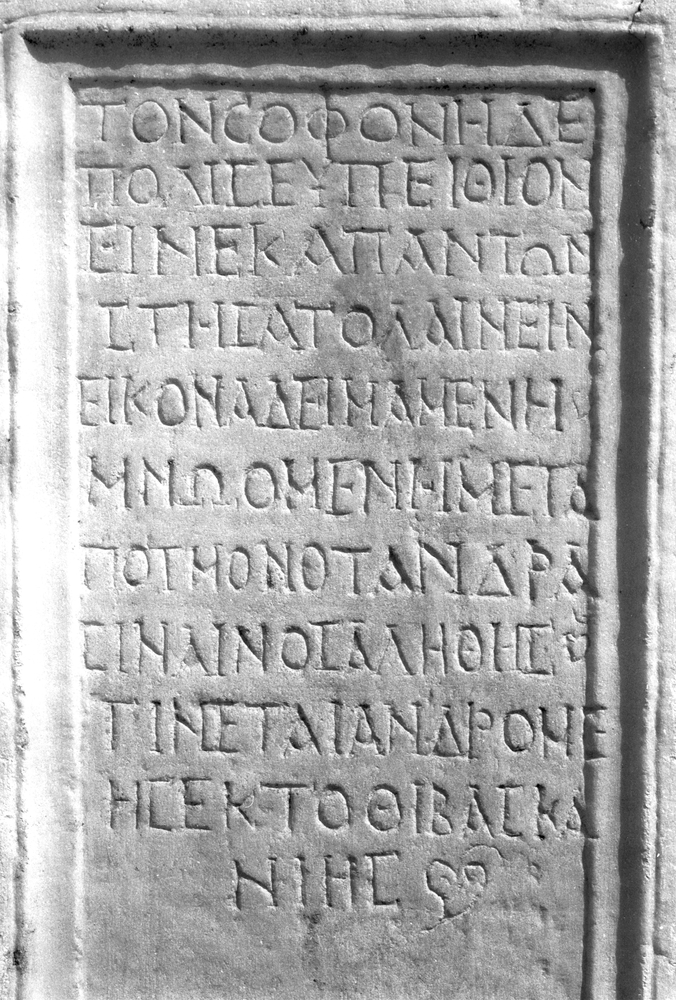
Fig. 1. Face (Lenaghan, 1993)
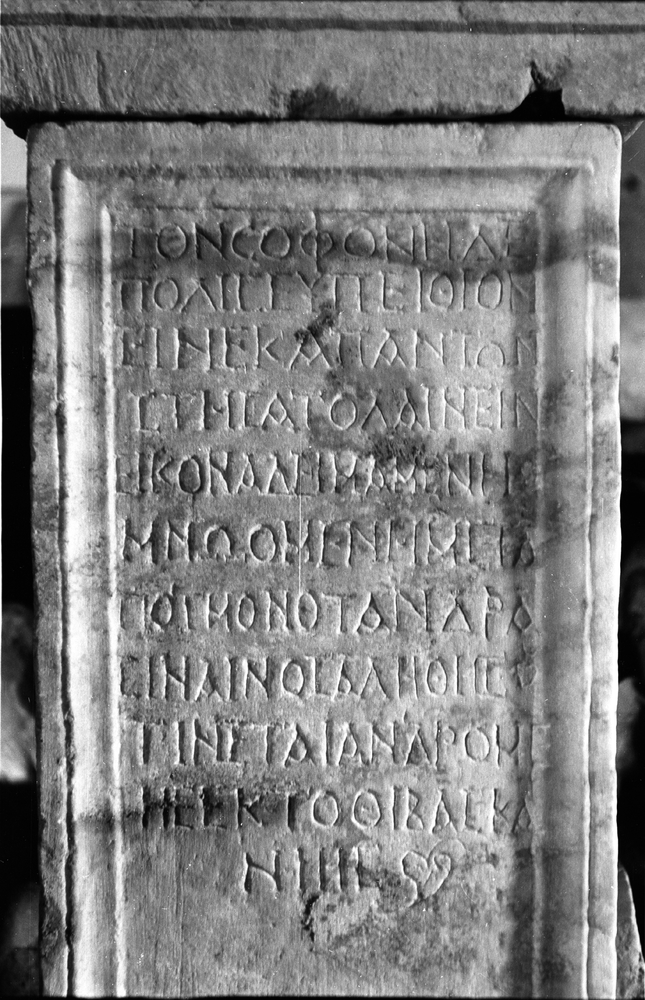
Fig. 2. Face (Mossman Roueché, 1972)
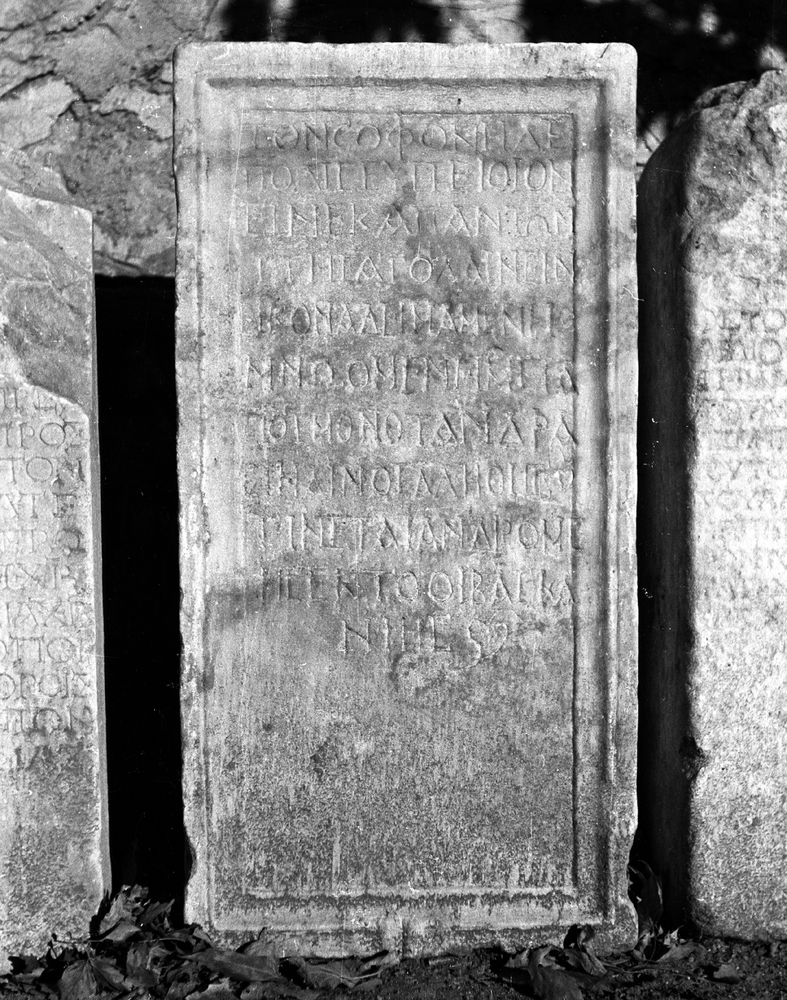
Fig. 3. Face (Mossman Roueché, 1977)
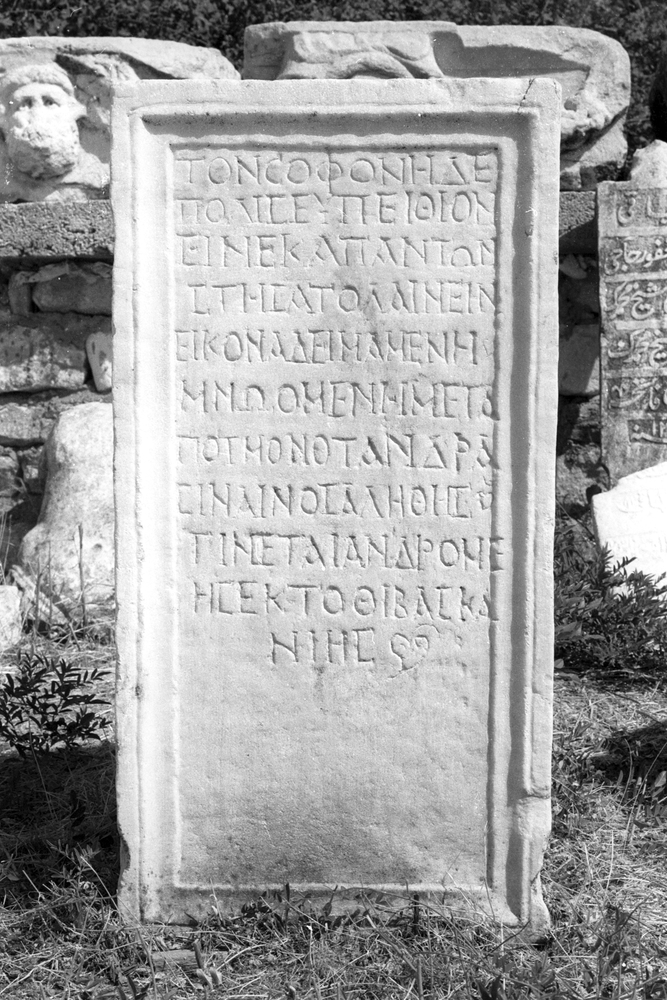
Fig. 4. View (Lenaghan, 1993)