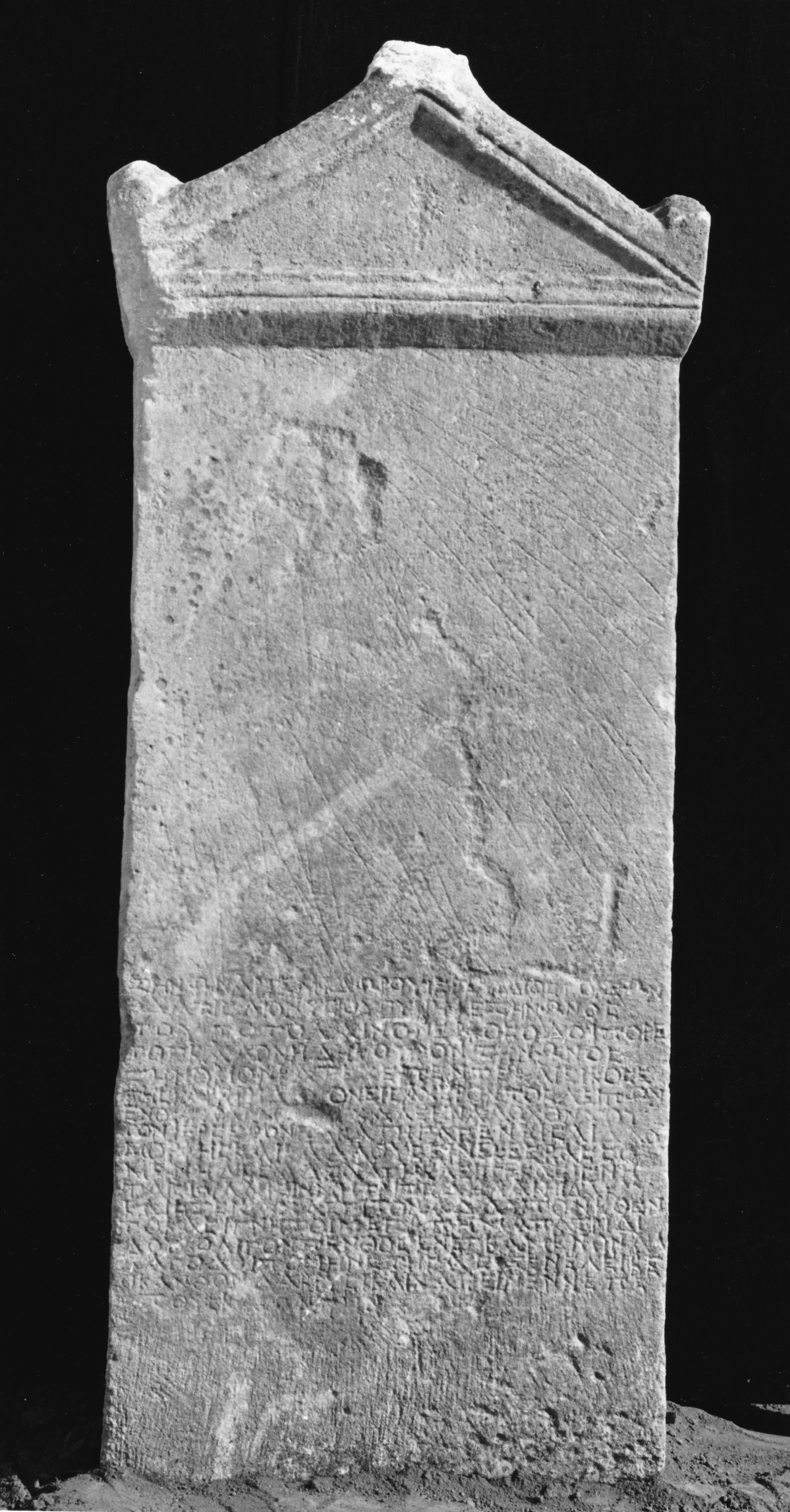
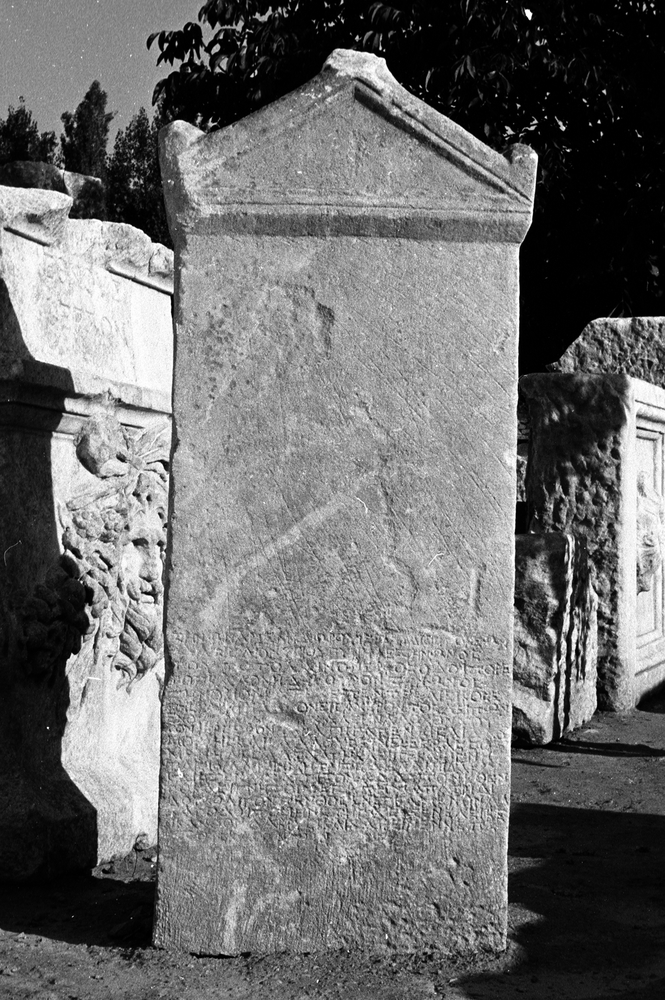
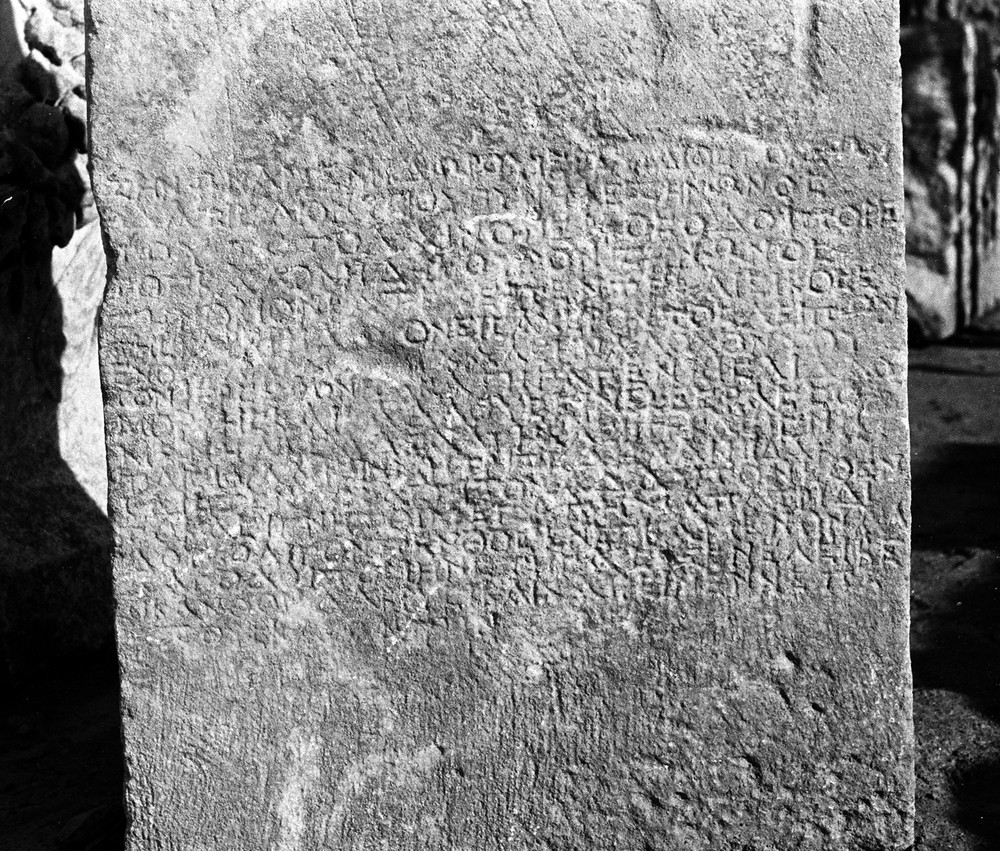
Description: A white marble
stele, slightly damaged (w: 0.525 × h: 1.42 × d: 0.20). There is a pediment above, outlined with moulding and flanked by small
acroteria. For a full description see Smith, l.c.
Text:
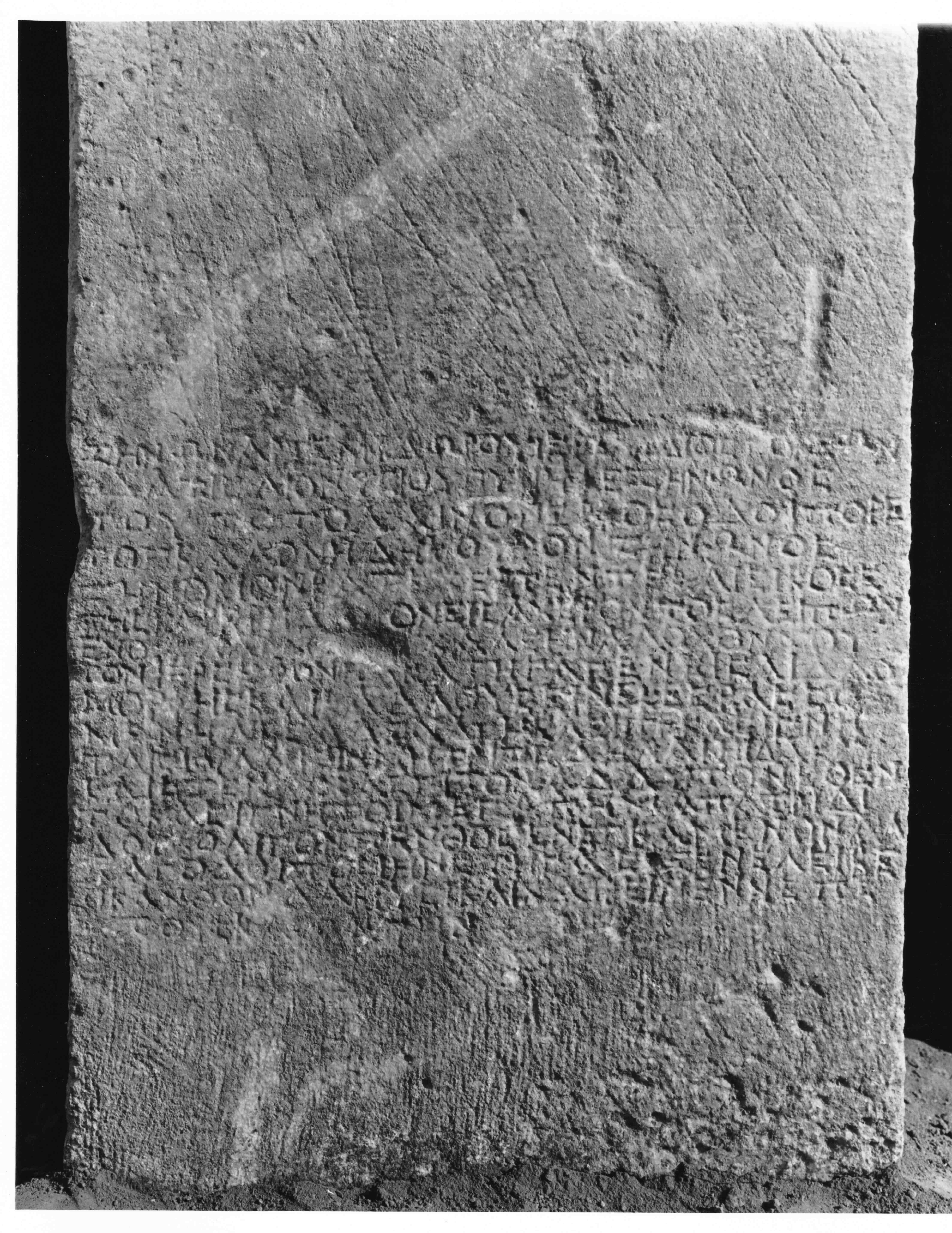
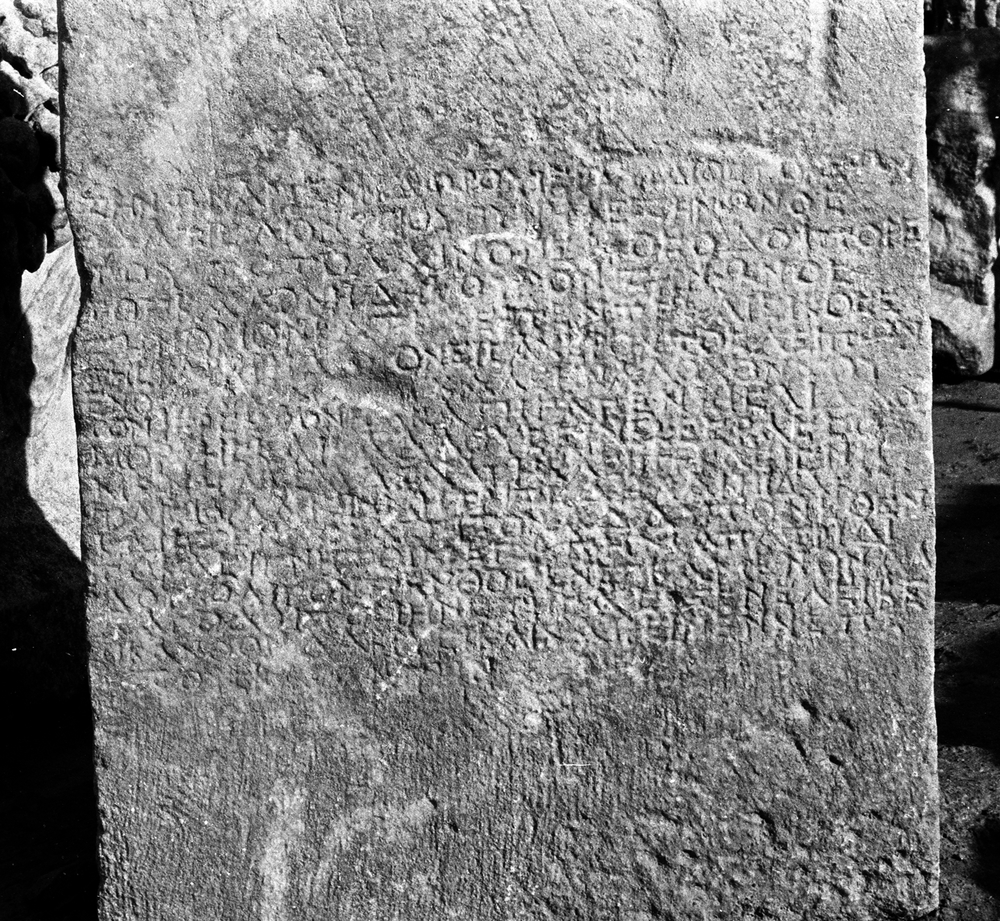
Inscribed on the lower part of the face, 0.54 below the pediment (so presumably below a painted image). The layout is compressed
and irregular.
Letters: Second-early first century BCE; 0.01-0.015.
Date: Second to early first century BCE (monument, lettering)
Findspot: Aphrodisias:
Necropolis, South-west area:
brought in from the fields some kilometers south west of the city, towards Bingeç.
Original location: Unknown
Last recorded location: Museum (Inv. no. 56776)
Interpretive
Ζήνων Ἀρτεμιδώρου ἱερεὺς Διὸς Γονέων
Ὀδατις Διονυσίου γυνὴ δὲ Ζήνωνος
τοῦτο τὸ λάινον ἕρκος ὁδοίπορε | τὸγ καλὸν ἤδη
κοῦρον Ζήνωνος | (5) Ζηνόβιον κατέχει
πεντεκαιεικοσέ|της κατέβη δ[όμ]ον εἰς Ἀχέροντος
λείπων | ἐν θαλάμῳ [τρ?]υχαλέην ἄλοχον
τοῦ|τον Φερσεφόνεια κατήγαγεν εἰς Ἀίδαο |
μορφῆς καὶ κάλλους εἵνεκε ἐρασσο|(10)μένη
δισσὰ δὲ ἄλγη ἔλειπε κασιγνη|ταισι φίλαισιν
μητρὶ δὲ δειλαίῃ δάκρυ<α> | καὶ στεναχάς
γίτονα δ' αὐτὸν ἔθεν|το κασιγνήτου̣, μέγα πῆμα
πατρίδι | δ'οὐκ ὀλίγον πένθος ἐνεγκάμενον
ἄλ|(15)λ’ἄγ'ὁδοιπορίην στήσας ξένε λείβε|ο κανθὸν
δάκρυσι καὶ χαίρειν ἔννεπε | τοὺς κατὰ γῆν
Diplomatic
ΖΗΝΩΝΑΡΤΕΜΙΔΩΡΟΥΙΕΡΕΥΣΔΙΟΣΓΟΝΕΩΝ
ΟΔΑΤΙΣΔΙΟΝΥΣΙΟΥΓΥΝΗΔΕΖΗΝΩΝΟΣ
ΤΟΥΤΟΤΟΛΑΙΝΟΝΕΡΚΟΣΟΔΟΙΠΟΡΕ | ΤΟΓΚΑΛΟΝΗΔΗ
ΚΟΥΡΟΝΖΗΝΩΝΟΣ | (5) ΖΗΝΟΒΙΟΝΚΑΤΕΧΕΙ
ΠΕΝΤΕΚΑΙΕΙΚΟΣΕ|ΤΗΣΚΑΤΕΒΗΔ[..]ΟΝΕΙΣΑΧΕΡΟΝΤΟΣ
ΛΕΙΠΩΝ | ΕΝΘΑΛΑΜΩ[..]ΥΧΑΛΕΗΝΑΛΟΧΟΝ
ΤΟΥ|ΤΟΝΦΕΡΣΕΦΟΝΕΙΑΚΑΤΗΓΑΓΕΝΕΙΣΑΙΔΑΟ |
ΜΟΡΦΗΣΚΑΙΚΑΛΛΟΥΣΕΙΝΕΚΕΕΡΑΣΣΟ|(10)ΜΕΝΗ
ΔΙΣΣΑΔΕΑΛΓΗΕΛΕΙΠΕΚΑΣΙΓΝΗ|ΤΑΙΣΙΦΙΛΑΙΣΙΝ
ΜΗΤΡΙΔΕΔΕΙΛΑΙΗΔΑΚΡΥ | ΚΑΙΣΤΕΝΑΧΑΣ
ΓΙΤΟΝΑΔΑΥΤΟΝΕΘΕΝ|ΤΟΚΑΣΙΓΝΗΤΟ.ΜΕΓΑΠΗΜΑ
ΠΑΤΡΙΔΙ | ΔΟΥΚΟΛΙΓΟΝΠΕΝΘΟΣΕΝΕΓΚΑΜΕΝΟΝ
ΑΛ|(15)ΛΑΓΟΔΟΙΠΟΡΙΗΝΣΤΗΣΑΣΞΕΝΕΛΕΙΒΕ|ΟΚΑΝΘΟΝ
ΔΑΚΡΥΣΙΚΑΙΧΑΙΡΕΙΝΕΝΝΕΠΕ | ΤΟΥΣΚΑΤΑΓΗΝ
English translation
Translation source: Rigsby, 2000
Zenon, son of Artemidoros, priest of Zeus of the Goneis. Odatis, daughter of Dionysios, wife of Zenon. This stone barrier,
traveler, already confines the handsome son of Zenon, Zenobios. At twenty-five he descended to the house of Acheron, leaving
in the bed-chamber a care-worn wife. This man Persephone led down to the house of Hades, loving him for his beauty and handsomeness.
But he left twin griefs to his dear sisters, and to his unhappy mother tears and groans, they buried him as a neighbour to
his brother, a great grief, and bringing no small mourning to his city. But stop your journeying, stranger, moisten your eyes
with tears, and speak a greeting to those below earth.
English translation
Translation source: Jones and Smith, 1994
Zenon, son of Artemidoros, priest of Zeus of the Goneis. Odatis, daughter of Dionysios, wife of Zeno. This stone barrier,
traveler, already confines the handsome son of Zenon, Zenobios. At twenty-five he descended to the house of Acheron, leaving
here Lamo (?) his care-worn (?) wife. This man Persephone led down to the house of Hades, loving him for his beauty and handsomeness.
But he left twin (?) griefs to his dear sisters, and to his unhappy mother tears and groans. Near (?) [to his mother, sc.]
did his brothers lay him, a great grief, and bringing no small mourning to his city. But stop your journeying, stranger, moisten
your eyes with tears, and speak a greeting to those below earth.
German translation
Translation source: Merkelbach and Stauber, 1998
Zenon, sohn des Artemidoros, Priester des Zeus der Goneis. Odatis, Tochter des Dionysios, Ehefrau des Zenon.
Wanderer, diese steinerne Schranke enthält Zenobios, den schon fast erwachsenen Sohn des Zenon. Als 25jähriger ging er hinab
zum Haus des Acheron, und liess hier zurück seine traurige Gattin Lamo. Ihn hat Phersephone in der Hades aus Liebe herabgeholt,
wegen seiner Gestalt und Schönheit. Als Nachbarn (des Vaters) haben ihn die Brüder beigesetz, ihn, der ihnen grosses Leid
und der Vaterstadt keine geringe Trauer gebracht hat. Fremder, halt ein in deinem Schreiten, vergiess Tränen aus deinen Augenwinkeln
und sprich: Seid gegruusst, ihr unter der Erde.
Bibliography
Recorded: New York University expedition 90.16.
Publication: Jones and Smith, 1994 455-61, whence SEG 44.865 , BE 1995.514 , Merkelbach and Stauber, 1998 02/09/33 , Rigsby, 2000 114-115, whence SEG 50.1099 , Chaniotis, EBGR 2003.167; IAph2007 13.501.