Inscriptions of Aphrodisias 2027

12.920. Honours for Aelius Aurelius Menandros

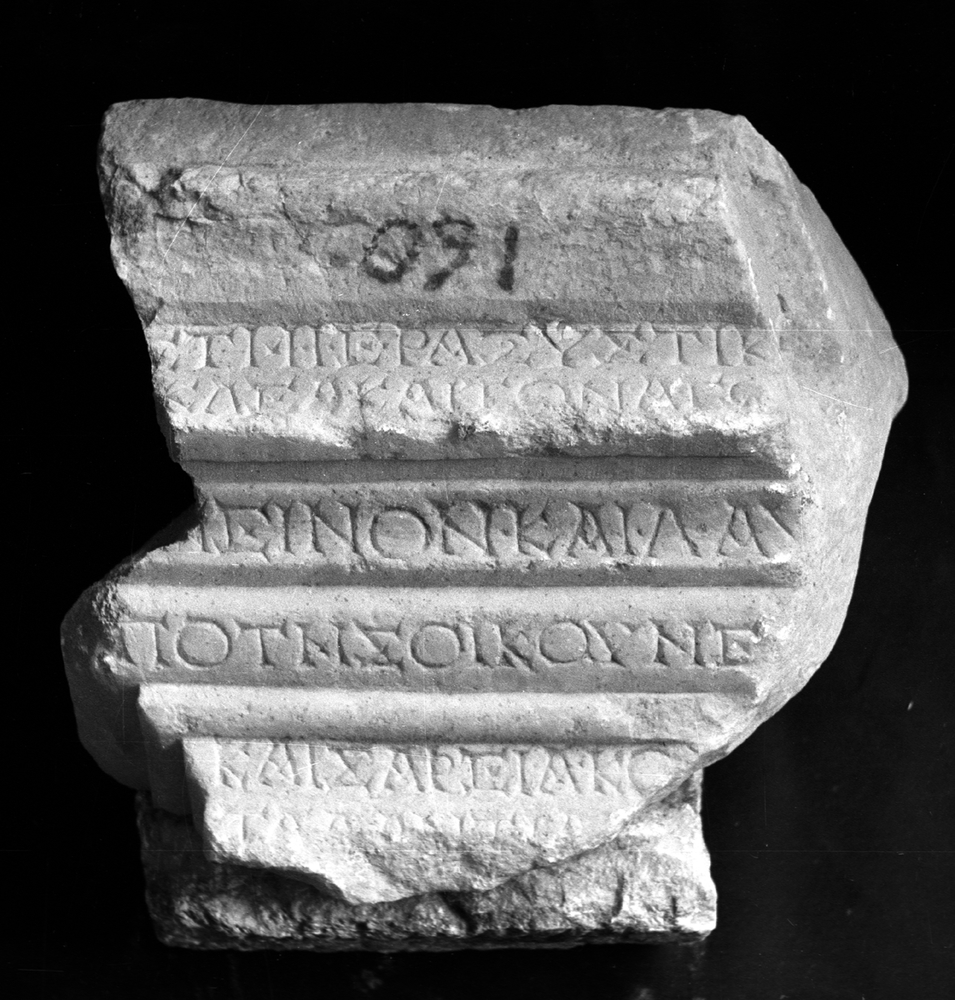
Description: A statue base shaft apparently with moulded panels. A fragment from the base capital survives (w: 0.25 × h: 0.25 × d: 0.22).

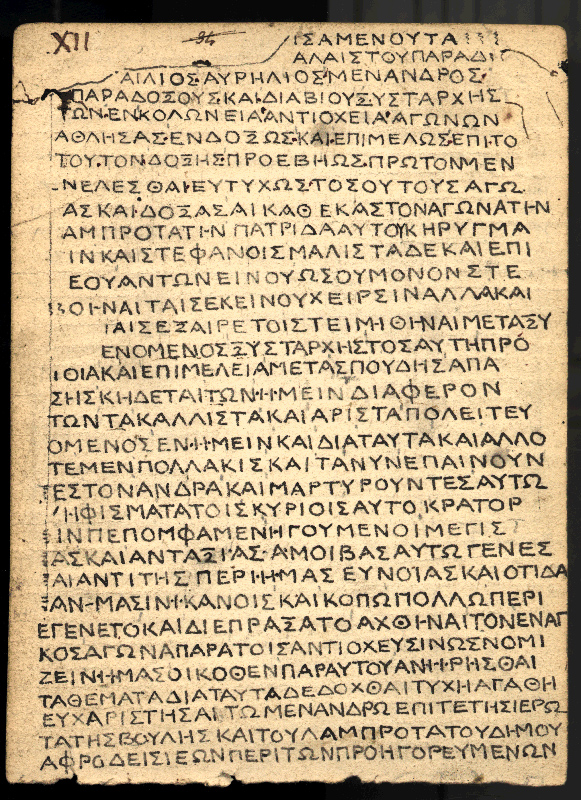
Text: Inscribed on three faces: a (Text i, 7 ff.), b and c (Text ii) (from left to right). i, lines 1-6 are on the base capital fragment, inscribed on three fasciae of the moulding (lines 1-2, line 3, l.4) which are broken away at both ends, and on the face below (lines 5-6) which is broken to the right. While it cannot be proved beyond doubt that this is the opening of i, it seems overwhelmingly likely. It is implied, at least in Fellows' description, that line 7 was the first line of the base; if so, the last line of the capital can be considered to precede it immediately. The opening letters of lines 19, 27, 29-32 appear to have been cut on the moulding

Letters: The letters on the shaft are reported to be standard forms, slightly irregular 0.01-0.015. Those on the capital are standard second-third-century forms, lines 1-2, 5-6, 0.015; lines 3-4, 0.02; dot for stop. Diairetic dots flanking initial Η, lines 23, 25, 31, 35, first Η of ΑΝΗΡΗΣΘΑΙ, line 35, initial Α, l.41, of ΑΜΟΙΒΑΣ, line 30, initial I, lines 1, 32.

Date: A.D. 138-69 (reign)

Findspot: Aphrodisias: Walls, West stretch: shaft 'outside of the west wall' (Fellows); capital a stray find.

Original location: Unknown

Last recorded location: Capital in Museum (1977); shaft at findspot (1844); shaft fragment at findspot (1934)

Interpretive

i

a
[ἔδοξ]ε̣ τῇ ἱερᾷ ξυστικ[ῇ περιπολιστικῇ? συνόδῳ τῶν περὶ τὸν]
[Ἡρα]κλέα καὶ τὸν ἀγώ[νιον καὶ αὐτοκράτορας Μ(ᾶρκον) Αὐρ(ήλιον) Ἀντ-]
[ω]ν̣εῖνον ((stop)) καὶ ((stop)) Λ(ούκιον) ((stop)) Αὐ[ρ(ήλιον) Οὐῆρον]
[ἀ]πὸ τῆς οἰκουμέ[νης ἱερονεικῶν στεφανειτῶν ἐν Ἀντιοχείᾳ?]
5 Καισαρείᾳ ((stop)) Κο[λωνείᾳ ἐπὶ τὸν ἀγῶνα]
ταλαντια̣ῖ̣[ον ---]
[c. 6]Α [εἰσηγ?]η̣σαμένου Τ(ίτου) Αἰ̣λ̣[ί]ου Μ [.]
[---]κα[c. 7 π]αλαιστοῦ παραδόξο[υ]
[ἐπεὶ] Αἴλιος Αὐρήλιος Μένανδρος
10 παράδοξος καὶ διὰ βίου ξυστάρχης
τῶν ἐν κολωνείᾳ Ἀντιοχείᾳ ἀγώνων
ἀθλήσας ἐνδόξως καὶ ἐπιμελῶς ἐπὶ το-
σοῦτον δόξης προέβη ὡς πρῶτον μὲν
[ἀ]νελέσθαι εὐτυχῶς τοσούτους ἀγῶ-
15[ν]ας καὶ δοξάσαι καθ' ἕκαστον ἀγῶνα τὴν
[λ]αμπροτάτην πατρίδα αὐτοῦ κηρυγμα-
[σ]ιν καὶ στεφάνοις μάλιστα δὲ καὶ ἐπὶ
[θ]εοῦ Ἀντωνείνου ὡς οὐ μόνον στε[φαν-]
[ω]θῆναι ταῖς ἐκείνου χειρσὶν ἀλλὰ καὶ
20 [τει]μ̣αῖς ἐξαιρέτοις τειμηθῆναι μεταξὺ
[δὲ γ]ενόμενος ξυστάρχης τοσαύτῃ προ-
ν̣οίᾳ καὶ ἐπιμελείᾳ μετὰ σπουδῆς ἁπά-
σης κήδεται τῶν ἡμεῖν διαφερόν-
των τὰ κάλλιστα καὶ ἄριστα πολειτευ-
25όμενος ἐν ἡμεῖν καὶ διὰ ταῦτα καὶ ἄλλο-
τε μέν πολλάκις καὶ τὰ νῦν ἐπαινοῦν-
[τ]ες τὸν ἄνδρα καὶ μαρτυροῦντες αὐτῷ
ψηφίσματα τοῖς κυρίοις Αὐτοκράτορ-
[σ]ιν πεπόμφαμεν ἡγούμενοι μεγίσ-
30[τ]ας καὶ ἀνταξίας ἀμοιβὰς αὐτῷ γενεσ-
[θ]αι ἀντὶ τῆς περὶ ἡμᾶς εὐνοίας καὶ ὅτι δα-
[π]ανήμασιν ἱκανοῖς καὶ κόπῳ πολλῷ περι-
εγένετο καὶ διεπράξατο ἀχθῆναι τὸν ἔναγ-
χ̣ος ἀγῶνα παρὰ τοῖς Ἀντιοχεῦσιν ὡς νομί-
35ζειν ἡμᾶς οἰκόθεν παρ' αὐτοῦ ἀνῃρῆσθαι
τὰ θέματα διὰ ταῦτα δεδόχθαι τύχῃ ἀγαθῇ
εὐχαριστῆσαι τῷ Μενάνδρῳ ἐπί τε τῆς ἱερω-
τάτης βουλῆς καὶ τοῦ λαμπροτάτου δήμου
Ἀφροδεισιέων περὶ τῶν προηγορευμένων
40 τειμῆσαί τε αὐτὸν ἀνδριάντων ἀναστάσει καὶ
εἰκόνων ἀναθέσει ἐν τῷ ἐπισημοτάτῳ
τῆς πατρίδος τόπῳ ἐπιγραφησομένων
τῶν τειμῶν τῇ προγραφῇ τοῦδε τοῦ ψη-
φίσματος πρὸς τὸ ἀιδίους ὑπάρξαι αὐ-
45τῷ τὰς παρ' ἡμῶν τειμάς ((leaf))
( vac. 1 line)
ἔστιν δὲ καὶ πολείτης πόλεων τῶν ὑπο-
γεγραμμένων ((stop)) Περγαμηνῶν Ἀντιοχέ-
ων Καισαρέων Κολωνῶν καὶ βουλευτὴς
Θηβαίων καὶ βουλευτὴς ((stop)) Ἀπολλωνιατῶν
50 Λυκίων Θρακῶν καὶ βουλευτὴς ((stop)) Μειλη-
σίων ((stop)) Πεσσινουντίων ((stop)) Κλαυδιοπολειτῶν
ἐπιμεληθέντος τῶν τειμῶν Ζήνωνος
τοῦ Ἀπολλωνίου τοῦ Μενάνδρου τοῦ
((scroll)) ἀδελφοῦ αὐτοῦ ((scroll))
ii

b
[ἡ βουλὴ καὶ ὁ δῆμος?]
ἐτείμησαν τα[ῖς καλλίσταις]
καὶ μεγίσταις τ[ειμαῖς Τίτον]
Αἴλιον ((stop)) Αὐρήλιον [((stop)) Μένανδρον]
ἀθλήσαντα ἐνδόξως [ἱερονίκην πλει-]
5στονείκην ((stop)) πανκρατια̣[στὴν παρά-]
δοξον ξυστάρχην ((stop)) γ[ένους πρώ-]
του καὶ ἐνδόξου ((stop)) πρῶ[τον καὶ μό-]
νον τῶν ((stop)) ἀπ' αἰώνος ((stop)) ἀγ[ωνισάμε-]
νον ((stop)) τριετίᾳ τὰς τρεῖς κρίσ[εις παῖδα]
10 ἀγένειον ((stop)) ἄνδρα ((stop)) καὶ νεική[σαντα]
ἱεροὺς ((stop)) καὶ ταλαντιαίους ((stop)) κ[αὶ πλείσ-]
τους ἄλλους ἀγῶνας ( vac. 3)
Νέαν πόλιν Σεβαστὰ παίδων Κλαυ-
διανῶν πανκράτιν ((stop)) Νέμεια παίδων
15 πανκράτιν ((stop)) Ἴσθμια ἀγενείων πανκρά-
τιν ((stop)) Ἔφεσον Βαλβίλληα ἀγενείων
πανκράτιν ((stop)) ἱερὰν Πέργαμον κοινὸν
Ἀσίας ἀνδρῶν πανκράτιν ((stop)) Ἔφεσον
Βαλβίλληα ἀνδρῶν πανκράτιν ((stop)) Σμυρ-
20ναν κοινὸν Ἀσίας ἀνδρῶν πανκράτιν ((stop))
ἑβδόμῃ Παναθηναίδι Παναθήναια
ἀνδρῶν πανκράτιν πρῶτον ((stop)) Ἀφροδει-
σιέων ((stop)) Νέμεια ἀνδρῶν πανκράτιν
καὶ τὰ ((stop)) ἑξῆς Νέμεια ἀνδρῶν πανκρά-
25τιν ((stop)) ἱερὰν Ὀλύμπεια ἐν Ἀθήναις ἀν-
δρῶν πανκράτιν πρῶτον Ἀφροδεισι-
έων ((stop)) Πύθια ἀνδρῶν πανκράτιν
Ῥώμην Καπετώλεια Ὀλύμπια ((stop)) ἀν-
δρῶν πανκράτιν πρῶτον Ἀφροδεισι-
30( vac. 7) ((scroll))έων ((leaf)) ( vac. 12)
c
[c. 22] ΕΝ
[c. 21] ΟΝ ἀ-
[νδρῶν πανκράτιν πρῶτον Ἀφ]ροδει-
[σιέων c. 15 κοι]νὸν Ἀσί-
35[ας ἀνδρῶν πανκράτι]ν̣ Μιτυλή-
[νην ἀνδρῶν παν]κράτιν ((stop)) Ἀδρα-
[μύττιον ἀνδρῶ]ν πανκράτιν ((stop))
[c. 8 ἀνδ]ρῶν πανκράτιν
[c. 8] ἀνδρῶν πανκράτιν
40 [c. 7]Α ἀνδρῶν πανκράτιν
[Νεικομήδ?]ειαν ἀνδρῶν παν-
[κράτιν ((stop))?] Νεικέαν ἀνδρῶν παν
[κράτ]ιν ((stop)) Προυσιάδα ἀνδρῶν
[πα]νκράτιν ((stop)) Κλαυδιόπολιν ((stop)) β
45 [ἀ]ν̣δρῶν πανκράτιν Ἄνκυραν
τ̣ῆς Γαλατίας ἀνδρῶν πανκρά-
τιν ((stop)) Πεσσινοῦντα ἀνδρῶν
πανκράτιν ((stop)) Δαμασκὸν ((stop)) β ((stop)) ἀν-
δρῶν πανκράτιν ((stop)) Βηρυτὸν ἀν-
50δρῶν πανκράτιν ((stop)) Τύρον ἀν-
δρῶν πανκράτιν ((stop)) Καισαρείαν
τῆς Στράτωνος ἀνδρῶν παν-
κράτιν ((stop)) Νέαν πόλιν τῆς Σαμαρί-
ας ἀνδρῶν πανκράτιν ((stop)) Σκυ-
55θόπολιν ((stop)) ἀνδρῶν πανκράτιν
Γάζαν ἀνδρῶν πανκράτιν ((stop)) Και-
σάρειαν Πανιάδα ((stop)) β ((stop)) ἀνδρῶν παν-
κράτιν ((stop)) Ἱερόπολιν ἀνδρῶν ((stop)) παν-
κράτιν ((stop)) Ἀναζαρβὸν ἀνδρῶν παν-
60κράτιν ((stop)) Μοψουεστίαν ἀνδρῶν
πανκράτιν ((stop)) Τρίπολιν τῆς Συρίας
ἀνδρῶν πανκράτιν ((stop)) Φιλαδέλφει-
αν τῆς Ἀραβίας ((stop)) ἀνδρῶν πανκρά-
τιν ((stop)) Ζεῦγμα πρὸς τῷ Εὐφράτῃ
65 ἀνδρῶν πανκράτιν ((stop)) Κιβύραν
( vac. 6) ἀνδρῶν πανκράτιν ( vac. 3)
Diplomatic

i

a
[....].ΤΗΙΕΡΑΞΥΣΤΙΚ[..............................]
[...]ΚΛΕΑΚΑΙΤΟΝΑΓΩ[............................-]
[.].ΕΙΝΟΝ ΚΑΙ Λ ΑΥ[.......]
[.]ΠΟΤΗΣΟΙΚΟΥΜΕ[...................................]
5ΚΑΙΣΑΡΕΙΑ ΚΟ[.................]
ΤΑΛΑΝΤΙ..[..---]
[······]Α[.....].ΣΑΜΕΝΟΥΤΑ..[.]ΟΥΜ[·]
[---]ΚΑ[·······.]ΑΛΑΙΣΤΟΥΠΑΡΑΔΟΞΟ[.]
[....]ΑΙΛΙΟΣΑΥΡΗΛΙΟΣΜΕΝΑΝΔΡΟΣ
10ΠΑΡΑΔΟΞΟΣΚΑΙΔΙΑΒΙΟΥΞΥΣΤΑΡΧΗΣ
ΤΩΝΕΝΚΟΛΩΝΕΙΑΑΝΤΙΟΧΕΙΑΑΓΩΝΩΝ
ΑΘΛΗΣΑΣΕΝΔΟΞΩΣΚΑΙΕΠΙΜΕΛΩΣΕΠΙΤΟ
ΣΟΥΤΟΝΔΟΞΗΣΠΡΟΕΒΗΩΣΠΡΩΤΟΝΜΕΝ
[.]ΝΕΛΕΣΘΑΙΕΥΤΥΧΩΣΤΟΣΟΥΤΟΥΣΑΓΩ
15[.]ΑΣΚΑΙΔΟΞΑΣΑΙΚΑΘΕΚΑΣΤΟΝΑΓΩΝΑΤΗΝ
[.]ΑΜΠΡΟΤΑΤΗΝΠΑΤΡΙΔΑΑΥΤΟΥΚΗΡΥΓΜΑ
[.]ΙΝΚΑΙΣΤΕΦΑΝΟΙΣΜΑΛΙΣΤΑΔΕΚΑΙΕΠΙ
[.]ΕΟΥΑΝΤΩΝΕΙΝΟΥΩΣΟΥΜΟΝΟΝΣΤΕ[...-]
[.]ΘΗΝΑΙΤΑΙΣΕΚΕΙΝΟΥΧΕΙΡΣΙΝΑΛΛΑΚΑΙ
20[...].ΑΙΣΕΞΑΙΡΕΤΟΙΣΤΕΙΜΗΘΗΝΑΙΜΕΤΑΞΥ
[...]ΕΝΟΜΕΝΟΣΞΥΣΤΑΡΧΗΣΤΟΣΑΥΤΗΠΡΟ
.ΟΙΑΚΑΙΕΠΙΜΕΛΕΙΑΜΕΤΑΣΠΟΥΔΗΣΑΠΑ
ΣΗΣΚΗΔΕΤΑΙΤΩΝΗΜΕΙΝΔΙΑΦΕΡΟΝ
ΤΩΝΤΑΚΑΛΛΙΣΤΑΚΑΙΑΡΙΣΤΑΠΟΛΕΙΤΕΥ
25ΟΜΕΝΟΣΕΝΗΜΕΙΝΚΑΙΔΙΑΤΑΥΤΑΚΑΙΑΛΛΟ
ΤΕΜΕΝΠΟΛΛΑΚΙΣΚΑΙΤΑΝΥΝΕΠΑΙΝΟΥΝ
[.]ΕΣΤΟΝΑΝΔΡΑΚΑΙΜΑΡΤΥΡΟΥΝΤΕΣΑΥΤΩ
ΨΗΦΙΣΜΑΤΑΤΟΙΣΚΥΡΙΟΙΣΑΥΤΟΚΡΑΤΟΡ
[.]ΙΝΠΕΠΟΜΦΑΜΕΝΗΓΟΥΜΕΝΟΙΜΕΓΙΣ
30[.]ΑΣΚΑΙΑΝΤΑΞΙΑΣΑΜΟΙΒΑΣΑΥΤΩΓΕΝΕΣ
[.]ΑΙΑΝΤΙΤΗΣΠΕΡΙΗΜΑΣΕΥΝΟΙΑΣΚΑΙΟΤΙΔΑ
[.]ΑΝΗΜΑΣΙΝΙΚΑΝΟΙΣΚΑΙΚΟΠΩΠΟΛΛΩΠΕΡΙ
ΕΓΕΝΕΤΟΚΑΙΔΙΕΠΡΑΞΑΤΟΑΧΘΗΝΑΙΤΟΝΕΝΑΓ
.ΟΣΑΓΩΝΑΠΑΡΑΤΟΙΣΑΝΤΙΟΧΕΥΣΙΝΩΣΝΟΜΙ
35ΖΕΙΝΗΜΑΣΟΙΚΟΘΕΝΠΑΡΑΥΤΟΥΑΝΗΡΗΣΘΑΙ
ΤΑΘΕΜΑΤΑΔΙΑΤΑΥΤΑΔΕΔΟΧΘΑΙΤΥΧΗΑΓΑΘΗ
ΕΥΧΑΡΙΣΤΗΣΑΙΤΩΜΕΝΑΝΔΡΩΕΠΙΤΕΤΗΣΙΕΡΩ
ΤΑΤΗΣΒΟΥΛΗΣΚΑΙΤΟΥΛΑΜΠΡΟΤΑΤΟΥΔΗΜΟΥ
ΑΦΡΟΔΕΙΣΙΕΩΝΠΕΡΙΤΩΝΠΡΟΗΓΟΡΕΥΜΕΝΩΝ
40ΤΕΙΜΗΣΑΙΤΕΑΥΤΟΝΑΝΔΡΙΑΝΤΩΝΑΝΑΣΤΑΣΕΙΚΑΙ
ΕΙΚΟΝΩΝΑΝΑΘΕΣΕΙΕΝΤΩΕΠΙΣΗΜΟΤΑΤΩ
ΤΗΣΠΑΤΡΙΔΟΣΤΟΠΩΕΠΙΓΡΑΦΗΣΟΜΕΝΩΝ
ΤΩΝΤΕΙΜΩΝΤΗΠΡΟΓΡΑΦΗΤΟΥΔΕΤΟΥΨΗ
ΦΙΣΜΑΤΟΣΠΡΟΣΤΟΑΙΔΙΟΥΣΥΠΑΡΞΑΙΑΥ
45ΤΩΤΑΣΠΑΡΗΜΩΝΤΕΙΜΑΣ
     vacat
ΕΣΤΙΝΔΕΚΑΙΠΟΛΕΙΤΗΣΠΟΛΕΩΝΤΩΝΥΠΟ
ΓΕΓΡΑΜΜΕΝΩΝ ΠΕΡΓΑΜΗΝΩΝΑΝΤΙΟΧΕ
ΩΝΚΑΙΣΑΡΕΩΝΚΟΛΩΝΩΝΚΑΙΒΟΥΛΕΥΤΗΣ
ΘΗΒΑΙΩΝΚΑΙΒΟΥΛΕΥΤΗΣ ΑΠΟΛΛΩΝΙΑΤΩΝ
50ΛΥΚΙΩΝΘΡΑΚΩΝΚΑΙΒΟΥΛΕΥΤΗΣ ΜΕΙΛΗ
ΣΙΩΝ ΠΕΣΣΙΝΟΥΝΤΙΩΝ ΚΛΑΥΔΙΟΠΟΛΕΙΤΩΝ
ΕΠΙΜΕΛΗΘΕΝΤΟΣΤΩΝΤΕΙΜΩΝΖΗΝΩΝΟΣ
ΤΟΥΑΠΟΛΛΩΝΙΟΥΤΟΥΜΕΝΑΝΔΡΟΥΤΟΥ
ΑΔΕΛΦΟΥΑΥΤΟΥ
ii

b
[...............]
ΕΤΕΙΜΗΣΑΝΤΑ[............]
ΚΑΙΜΕΓΙΣΤΑΙΣΤ[...........]
ΑΙΛΙΟΝ ΑΥΡΗΛΙΟΝ[..........]
ΑΘΛΗΣΑΝΤΑΕΝΔΟΞΩΣ[.............-]
5ΣΤΟΝΕΙΚΗΝ ΠΑΝΚΡΑΤΙ.[........-]
ΔΟΞΟΝΞΥΣΤΑΡΧΗΝ Γ[........-]
ΤΟΥΚΑΙΕΝΔΟΞΟΥ ΠΡΩ[........-]
ΝΟΝΤΩΝ ΑΠΑΙΩΝΟΣ ΑΓ[.......-]
ΝΟΝ ΤΡΙΕΤΙΑΤΑΣΤΡΕΙΣΚΡΙΣ[........]
10ΑΓΕΝΕΙΟΝ ΑΝΔΡΑ ΚΑΙΝΕΙΚΗ[.....]
ΙΕΡΟΥΣ ΚΑΙΤΑΛΑΝΤΙΑΙΟΥΣ Κ[.......-]
ΤΟΥΣΑΛΛΟΥΣΑΓΩΝΑΣ      
ΝΕΑΝΠΟΛΙΝΣΕΒΑΣΤΑΠΑΙΔΩΝΚΛΑΥ
ΔΙΑΝΩΝΠΑΝΚΡΑΤΙΝ ΝΕΜΕΙΑΠΑΙΔΩΝ
15ΠΑΝΚΡΑΤΙΝ ΙΣΘΜΙΑΑΓΕΝΕΙΩΝΠΑΝΚΡΑ
ΤΙΝ ΕΦΕΣΟΝΒΑΛΒΙΛΛΗΑΑΓΕΝΕΙΩΝ
ΠΑΝΚΡΑΤΙΝ ΙΕΡΑΝΠΕΡΓΑΜΟΝΚΟΙΝΟΝ
ΑΣΙΑΣΑΝΔΡΩΝΠΑΝΚΡΑΤΙΝ ΕΦΕΣΟΝ
ΒΑΛΒΙΛΛΗΑΑΝΔΡΩΝΠΑΝΚΡΑΤΙΝ ΣΜΥΡ
20ΝΑΝΚΟΙΝΟΝΑΣΙΑΣΑΝΔΡΩΝΠΑΝΚΡΑΤΙΝ
ΕΒΔΟΜΗΠΑΝΑΘΗΝΑΙΔΙΠΑΝΑΘΗΝΑΙΑ
ΑΝΔΡΩΝΠΑΝΚΡΑΤΙΝΠΡΩΤΟΝ ΑΦΡΟΔΕΙ
ΣΙΕΩΝ ΝΕΜΕΙΑΑΝΔΡΩΝΠΑΝΚΡΑΤΙΝ
ΚΑΙΤΑ ΕΞΗΣΝΕΜΕΙΑΑΝΔΡΩΝΠΑΝΚΡΑ
25ΤΙΝ ΙΕΡΑΝΟΛΥΜΠΕΙΑΕΝΑΘΗΝΑΙΣΑΝ
ΔΡΩΝΠΑΝΚΡΑΤΙΝΠΡΩΤΟΝΑΦΡΟΔΕΙΣΙ
ΕΩΝ ΠΥΘΙΑΑΝΔΡΩΝΠΑΝΚΡΑΤΙΝ
ΡΩΜΗΝΚΑΠΕΤΩΛΕΙΑΟΛΥΜΠΙΑ ΑΝ
ΔΡΩΝΠΑΝΚΡΑΤΙΝΠΡΩΤΟΝΑΦΡΟΔΕΙΣΙ
30               ΕΩΝ                         
c
[······················]ΕΝ
[·····················]ΟΝΑ
[......................]ΡΟΔΕΙ
[.....···············...]ΝΟΝΑΣΙ
35[................].ΜΙΤΥΛΗ
[............]ΚΡΑΤΙΝ ΑΔΡΑ
[............]ΝΠΑΝΚΡΑΤΙΝ
[········...]ΡΩΝΠΑΝΚΡΑΤΙΝ
[········]ΑΝΔΡΩΝΠΑΝΚΡΑΤΙΝ
40[·······]ΑΑΝΔΡΩΝΠΑΝΚΡΑΤΙΝ
[........]ΕΙΑΝΑΝΔΡΩΝΠΑΝ
[.......]ΝΕΙΚΕΑΝΑΝΔΡΩΝΠΑΝ
[....]ΙΝ ΠΡΟΥΣΙΑΔΑΑΝΔΡΩΝ
[..]ΝΚΡΑΤΙΝ ΚΛΑΥΔΙΟΠΟΛΙΝ Β
45[.].ΔΡΩΝΠΑΝΚΡΑΤΙΝΑΝΚΥΡΑΝ
.ΗΣΓΑΛΑΤΙΑΣΑΝΔΡΩΝΠΑΝΚΡΑ
ΤΙΝ ΠΕΣΣΙΝΟΥΝΤΑΑΝΔΡΩΝ
ΠΑΝΚΡΑΤΙΝ ΔΑΜΑΣΚΟΝ Β ΑΝ
ΔΡΩΝΠΑΝΚΡΑΤΙΝ ΒΗΡΥΤΟΝΑΝ
50ΔΡΩΝΠΑΝΚΡΑΤΙΝ ΤΥΡΟΝΑΝ
ΔΡΩΝΠΑΝΚΡΑΤΙΝ ΚΑΙΣΑΡΕΙΑΝ
ΤΗΣΣΤΡΑΤΩΝΟΣΑΝΔΡΩΝΠΑΝ
ΚΡΑΤΙΝ ΝΕΑΝΠΟΛΙΝΤΗΣΣΑΜΑΡΙ
ΑΣΑΝΔΡΩΝΠΑΝΚΡΑΤΙΝ ΣΚΥ
55ΘΟΠΟΛΙΝ ΑΝΔΡΩΝΠΑΝΚΡΑΤΙΝ
ΓΑΖΑΝΑΝΔΡΩΝΠΑΝΚΡΑΤΙΝ ΚΑΙ
ΣΑΡΕΙΑΝΠΑΝΙΑΔΑ Β ΑΝΔΡΩΝΠΑΝ
ΚΡΑΤΙΝ ΙΕΡΟΠΟΛΙΝΑΝΔΡΩΝ ΠΑΝ
ΚΡΑΤΙΝ ΑΝΑΖΑΡΒΟΝΑΝΔΡΩΝΠΑΝ
60ΚΡΑΤΙΝ ΜΟΨΟΥΕΣΤΙΑΝΑΝΔΡΩΝ
ΠΑΝΚΡΑΤΙΝ ΤΡΙΠΟΛΙΝΤΗΣΣΥΡΙΑΣ
ΑΝΔΡΩΝΠΑΝΚΡΑΤΙΝ ΦΙΛΑΔΕΛΦΕΙ
ΑΝΤΗΣΑΡΑΒΙΑΣ ΑΝΔΡΩΝΠΑΝΚΡΑ
ΤΙΝ ΖΕΥΓΜΑΠΡΟΣΤΩΕΥΦΡΑΤΗ
65ΑΝΔΡΩΝΠΑΝΚΡΑΤΙΝ ΚΙΒΥΡΑΝ
            ΑΝΔΡΩΝΠΑΝΚΡΑΤΙΝ      

Apparatus

The bulk of the text is from previous witnesses; only the letters underlined were read by us
i.a.7-10: omitted by Fellows, perhaps among the lines which he describes as written on 'the cornice and mouldings'. The fullest text is that of Franz, from Loew, some of whose readings were omitted by MAMA.
i.a.7: ΙΣΑΜΕΝΟΥ Deering, 1812; A . . . . ΙΣΑΜΕΝΟΥ Loew, 1841; Ἀ[γων]ισαμένου Franz, 1847; ἐπιψηφ]ισαμένου Le Bas and Waddington, 1870 but if the connection with the capital is correctly restored, there will not have been sufficient space to name a proposer and a seconder.; ΤΑΙΜ.ΟΥΜ Loew, 1841
i.a.9: It is not clear whether there is room for the initial of a praenomen after the space required for ΕΠΕΙ at the beginning of the line.
i.a.10: ΔΟΞΟΥΣ Deering, 1812; ΔΟΞΟΣ Fellows, 1841
i.a.13: ΤΟΥΤΟΝ Deering, 1812; ΣΟΥΤΟΝ Fellows, 1841, MAMA 8 ΜΕΝ omitted by Fellows, MAMA.
i.a.19: ΚΑΙ Deering, 1812; Κ[ΑΙ] Fellows, 1841, MAMA 8
i.a.21: [τε] MAMA 8
i.a.21-22: ΠΡΟ//Ι̣ΟΙΑ Deering, 1812; ΠΡΟ//.ΟΙΑ Loew, 1841; Ε[Υ//Ν]ΟΙΑ Fellows, 1841, MAMA 8; προν̣οίᾳ Robert, Hellenica XIII
i.a.33-34: ΕΝΑΓ//ΚΟΣ Deering, 1812
i.a.34-35: ΝΟ//ΜΙΖΕΙΝ MAMA 8
i.a.44: ΑΙΩΝΙΟΥΣ Fellows, 1841, MAMA 8; ΑΙΔΙΟΥΣ Deering, 1812, Loew, 1841, Robert, Hellenica XIII
i.a.49: ΘΗΡΑΙΩΝ Fellows, 1841, MAMA 8; ΘΗΒΑΙΩΝ Deering, 1812, Loew, 1841, Falkener, 1844; Θηβαίων Robert, Hellenica XIII
ii.3: τ[ειμαῖς c. 5] Roueché, PPA, IAph2007; τ[ειμαῖς Τίτον] Strasser, 2021
ii.4: ἐνδόξως [καὶ ἐπιμελῶς is the restoration based on the decree of the synod (i, l.12) proposed by Franke in CIG; Roueché, PPA, IAph2007; ἐνδόξως, [ἱερονίκην Strasser, 2021
ii.5: ΠΑΝΚΡΑΤΙΝ Deering, 1812; ΠΑΝΚΡΑ Fellows, 1841
ii.8: ΑΓ Fellows, 1841; ΑΠ Deering, 1812
ii.9: Deering copied the first three letters, then moved to the second letter of line 10.
ii.41: Deering's copy shows a space on the stone before EIAN, and no space at the right end of the line.
ii.42-45: The letters at the left printed in his transcription by Leake were in fact added as a supplement by Deering, who shows the break in his drawing.

English translation

Translation source: Roueché, PPA

i.a [It was resolved] by the sacred xystic [?travelling synod under] Herakles and the agonistic one (i.e. Hermes) [and the emperors M(arcus) Aur(elius) Anto]ninus and L(ucius) Au[r(elius) Verus, of sacred and crowned victors] from the whole world [?at Antioch] Caesaria Co[lonia ?on the occasion of the contest worth ?one] talent: [Proposer ....] seconded by T(itus) Aelius M[...], wrestler, extraordinary: since Aelius Aurelius Menandros, (10) extraordinary, and xystarch for life of the contests in Colonia Antiochia, who practised as an athlete with honour and with concern, has reached such honour that, firstly, he has won with good fortune so many contests and has brought honour at each contest to his splendid homeland by proclamations and crowns and especially also in the time of the divine Antoninus, so that he was not only crowned at his hands, but also honoured with (20) particular honours; meanwhile, having become xystarch, he cared with such forethought and concern, and with all zeal, for our interests, exercising his office excellently well; for these reasons both on many other occasions and now praising the man and bearing witness to him we have sent resolutions to the lords emperors, considering that (these would be) the greatest and (30) appropriate returns to him for his goodwill towards us, and because with sufficient expenditure and much effort he succeeded in arranging that the recent contest was conducted among the people of Antioch, so that we think that the prizes were obtained from his own resources. Therefore it has been decreed, with good fortune to thank Menandros before the most sacred Council and the most splendid People of the Aphrodisians concerning what has been described, (40) and to honour him with the erection of statues and the dedication of images in the most distinguished location of his homeland; the honours are to be inscribed with the publication of this decree, in order that his honours from us should be perpetual.

He is also citizen of the following cities: of the Pergamenes, of the Antiochenes, Caesarean colonists, and councillor of the Thebans, and councillor of the Apolloniatai, (50) Lycian and Thracian, and councillor of the Milesians, the Pessinuntii, the Claudiopolitai.

Zenon son of Apollonios son of Menandros, his brother, was responsible for the honours.

ii.[?The Council and People] honoured with the [finest] and greatest [?honours] Aelius Aurelius Menandros, who practised as an athlete with distinction [and with diligence], multiple victor, pancratiast, extraordinary, xystarch, of an honourable and [leading family], who was the first and only man of all time to contest over three years in the three categories, as [boy] and (10) as young man and as adult, and who won sacred (contests) and (contests) with prizes to the value of a talent and very many other contests:

(He won) at Neapolis, in the Sebasta, the pancration of the Claudian boys; in the Nemea, the boys'pancration; in the Isthmia, the young men's pancration; at Ephesus, in the Balbillea, the young men's pancration - - a contest with no outright victor; at Pergamum, in the provincial festival of Asia, the men's pancration; at Ephesus, in the Balbillea, the men's pancration; at Smyrna, (20) in the provincial festival of Asia, the men's pancration; on the occasion of the seventh Panathenais in the Panathenaia, the men's pancration, first Aphrodisian (to do so); in the Nemeia, the men's pancration, and in the following Nemeia, the men's pancration - - a contest with no outright victor; in the Olympia at Athens, the men's pancration, the first Aphrodisian (to do so); in the Pythia, the men's pancration; at Rome, in the Capitolia Olympia, the men's pancration, the first Aphrodisian (to do so); (30)[... , the men's pancration, the first] Aphrodisian (to do so); c [ at ? ... , in the provincial] festival of Asia, [the men's pancration;] at Mitylene, [the men's pan]cration; at Adra[myttion, the men's] pancration; [at ? ...], the men's pancration; [at ? ...], the men's pancration; (40) [in the ?], the men's pancration; [at ? Nicomed]ia, the men's pancration; at Nicea, the men's pancration; at Prusias, the men's pancration; at Claudiopolis, twice, the men's pancration; at Ancyra of Galatia, the men's pancration; at Pessinus, the men's (50) pancration; at Damascus, twice, the men's pancration; at Beirut, the men's pancration; at Tyre, the men's pancration; at Caesarea Stratonos, the men's pancration; at Neapolis of Samaria, the men's pancration; at Scythopolis, the men's pancration; at Gaza, the men's pancration; at Caesarea Panias, the men's pancration; at Hieropolis, the men's pancration; at Anazarbus, the men's pancration; (60) at Mopsuestia, the men's pancration; at Tripolis of Syria, the men's pancration; at Philadelphia of Arabia, the men's pancration; at Zeugma by the Euphrates, the men's pancration; at Kibyra, the men's pancration.

English translation

Translation source: Fellows, 1841

(21): . . . . . the extraordinary, and for his lifetime Xystarches of the games [celebrated] in the colony of Antiocheia. Being a glorious and diligent Athlete, he advanced so far in glory as to be the first who fortunately carried off so great prizes, and so as to glorify along with each prize his most splendid native city, by proclamations and crowns; but chiefly under . . . . . Antoninus, so as to be not only crowned by his [the Emperor's] hands, but honoured also by extraordinary [gifts]. Having afterwards become Xystarches, he with the greatest benevolence and diligence, and all [possible] zeal, takes care of our interests, conducting himself as a very good and honourable citizen amongst us. And in regard to these and other things, we, praising the man and bearing him testimony, have often and at present sent decrees to our masters, the Emperors; being of opinion that there should be made to him very great [?] and corresponding returns for his benevolence towards us, and because he put himself to considerable expense and much trouble, and effected . . . . . . . It was therefore decreed — May it be fortunate! to render thanks unto Menander on the part both of the most worshipful Council and the most splendid People of the Aphrodisians, in consideration of the aforesaid points, and to honour him by erecting statues and putting up images in the most conspicuous place of the city, his honours being recorded in the preamble of this decree, to the end that his honours amongst us may be perpetuated.

He is also a citizen of the under-mentioned cities, [that of the] Pergamenes, Antiocheians, Caesarean Colonists; and a Councilman of the Theraeans, and a Councilman of the Apolloniatae in Lycia [and in] Thracia, and a Councilman of the Milesians, Pessinuntians and Claudiopolitans.

There acted as superintendent in [conferring] these honours, his brother Zeno, son of Apollonius, the son of Menander.

(22): [The Senate and the People and the Gerusia ?] honoured with the [fairest] and greatest honours Aelius Aurelius . . . . . . . who was a glorious Athlete, a victor in many games, an extraordinary Pancratiastes, Xystarches of . . . . . . . and who won sacred games, and games in which the prize was a talent, and a great many other games.

At Neapolis in the Augustean games, the pancration of Claudian boys; in the Nemean games, the pancration of the boys; in the Isthmian, the young man's pancration; at Ephesus in the Balbillean games, the sacred pancration of the young men; at Pergamus in the [games celebrated by] the corporation of Asia, the pancration of the men; at Ephesus in the Balbillean games, the pancration of the men [?]; at Smyrna [in the games celebrated by the] corporation of Asia, the pancration of the men; seventhly, in the Panathenaeans . . . . . . . the pancration of the men, being the first of the citizens of Aphrodisias; in the Nemean games, the pancration of the men, and in the Nemean immediately following, the sacred pancration of the men; in the Olympian games at Athens, the pancration of the men, being the first of the citizens of Aphrodisias; in the Pythian, the pancration of the men; at Rome, in the Capitolian games; in the Olympian, the pancration of the men, being the first of the citizens of Aphrodisias.

French translation

Translation source: Strasser, 2021

(ii.b): [Le Conseil et le Peuple] ont décerné les plus beaux et les plus grands honneurs à Titus Aelius Aurelius Menandros, qui a accompli une carrière glorieuse, vainqueur dans les concours sacrés, vainqueur dans de nombreux concours, pancratiaste, champion extraordinaire, xystarque, d’une famille de premier rang et illustre, premier et seul de toute éternité à avoir concouru en l’espace de trois ans dans les trois catégories d’âge, pais, ageneios, anèr, et à avoir remporté des concours sacrés, des concours dotés de prix d’un talent et beaucoup d’autres concours. À Naples, aux Sebasta, dans le pancrace des paides klaudianoi; aux Nemea, dans le pancrace des paides; aux Isthmia dans le pancrace des ageneioi; à Éphèse, aux Balbilleia, dans le pancrace des ageneioi, ex aequo; à Pergame, au Koinon Asias, dans le pancrace des andres; à Éphèse, aux Balbilleia, dans le pancrace des andres; à Smyrne, au Koinon Asias, dans le pancrace des andres; lors de la septième panathénaïde, aux Panathénées, dans le pancrace des andres, premier des Aphrodisiens; aux Nemea, dans le pancrace des andres, et aux Nemea suivants, dans le pancrace des andres ex aequo; aux Olympieia d’Athènes, dans le pancrace des andres, premier des Aphrodisiens; aux Pythia, dans le pancrace des andres; à Rome, aux Kapetôlia Olympia, dans le pancrace des andres, premier des Aphrodisiens.

(ii.c): - - - Aphrodis- - - - au Koinon Asias, dans le pancrace des andres; à Mytilène, dans le pancrace des andres; à Adramyttion, dans le pancrace des andres ; - - -, dans le pancrace des andres; à Byzance (?), dans le pancrace des andres; à Chalcédoine, dans le pancrace des andres; à Nicomédie, dans le pancrace des andres; à Nicée, dans le pancrace des andres; à Prousias, dans le pancrace des andres; à Claudiopolis, 2 fois dans le pancrace des andres; à Ancyre de Galatie, dans le pancrace des andres; à Pessinonte, dans le pancrace des andres; à Damas, dans le pancrace des andres; à Bérytos, dans le pancrace des andres; à Tyr, dans le pancrace des andres; à Césarée de Stratôn, dans le pancrace des andres; à Neapolis de Samarie, dans le pancrace des andres; à Scythopolis, dans le pancrace des andres; à Gaza, dans le pancrace des andres; à Césarée Panéas, 2 fois, dans le pancrace des andres; à Hiéropolis, dans le pancrace des andres; à Anazarbe, dans le pancrace des andres; à Mopsueste, dans le pancrace des andres; à Tripolis de Syrie, dans le pancrace des andres; à Philadelphie d’Arabie, dans le pancrace des andres; à Zeugma sur l’Euphrate, dans le pancrace des andres; à Kibyra, dans le pancrace des andres.

Bibliography

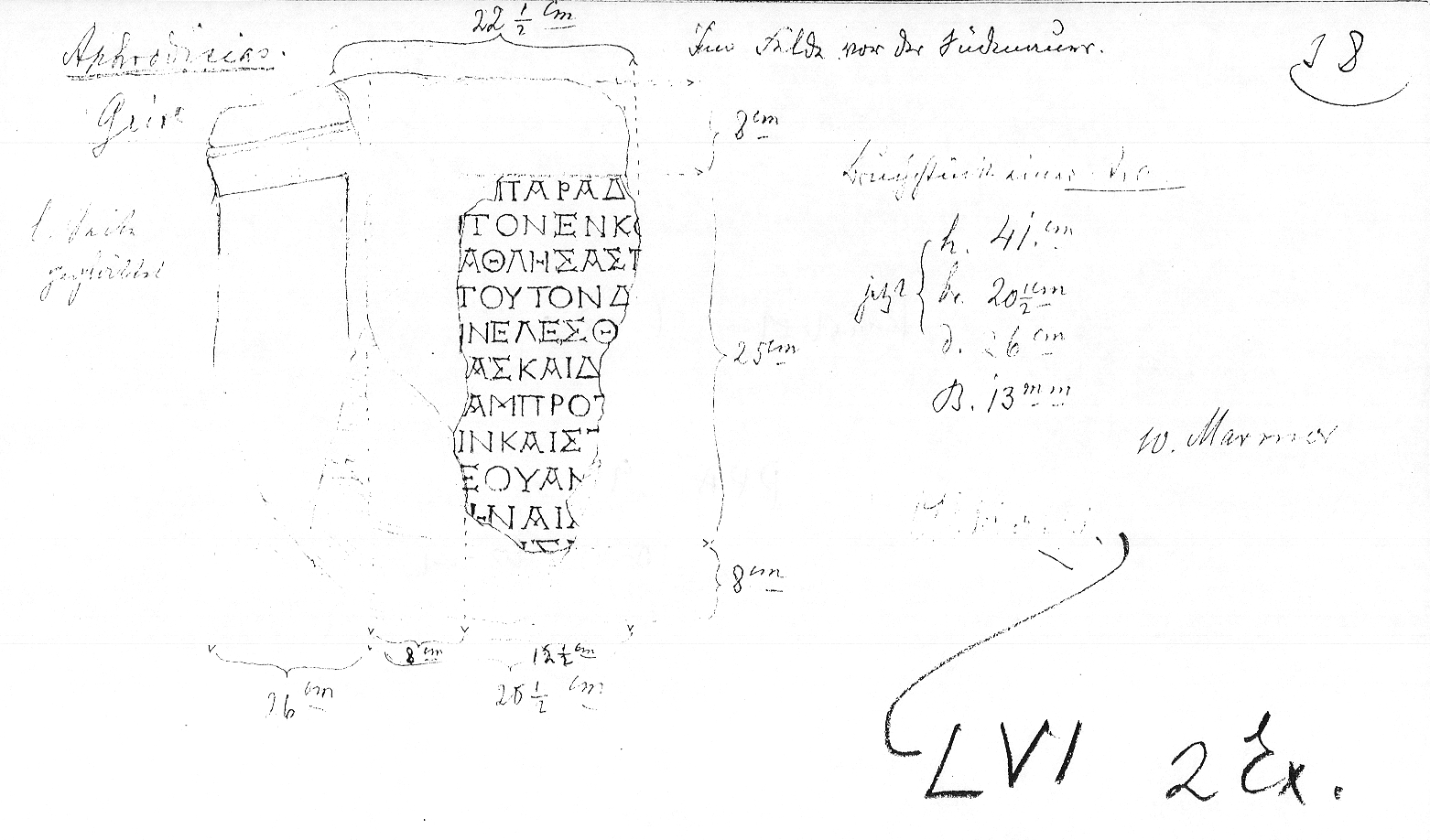
Transcription: a and b: Fellows, 1840 (and a squeeze taken); a, b and c: Deering, 1812 8v, 9, 9v, 10, nos 34, 35, 36; Loew, 1841; Falkener, 1844; A fragment (0.42 0.22 0.26) from the upper left side of i, Reichel, 1893 R.I.38, Abklatsch 56 (lines i.10-21), and Calder, 1934; New York University expedition the capital, lines i.1-6 Museum 160.

Publication: i, a and b, Fellows, 1841 21 and 22 whence CIG II.3, 1843 2811b, 2810b , Bailie, 1846 52, 53 ; i and ii: Leake, 1843 12, 13a, 13b ; Franz, 1847 a.7 and a.8 (corrections from Loew) ; Henzen, 1852 2 (observations from Falkener) ; from all these Le Bas and Waddington, 1870 1620a (i) and 1620b (ii), Liermann, 1889 15 and 16 , ii Moretti, 1953 72 (both with mistaken line divisions for c); MAMA 8 421 , on which see Robert, Hellenica XIII 147-54. From all these and a new surviving fragment, Roueché, PPA 91 , whence PHI PPAphr 91, Smith, 2006 H.262 (listed); IAph2007 12.920, whence Strasser, 2021 61-62 (ii only) .

Images

Fig. 1. i.a, lines 1-6 (M. Roueché, 1977)

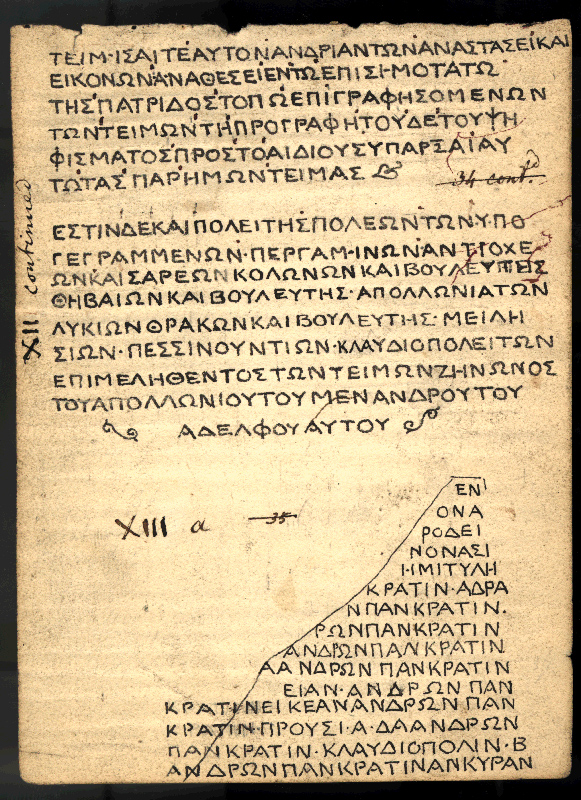
Fig. 2. Deering notebook 8v

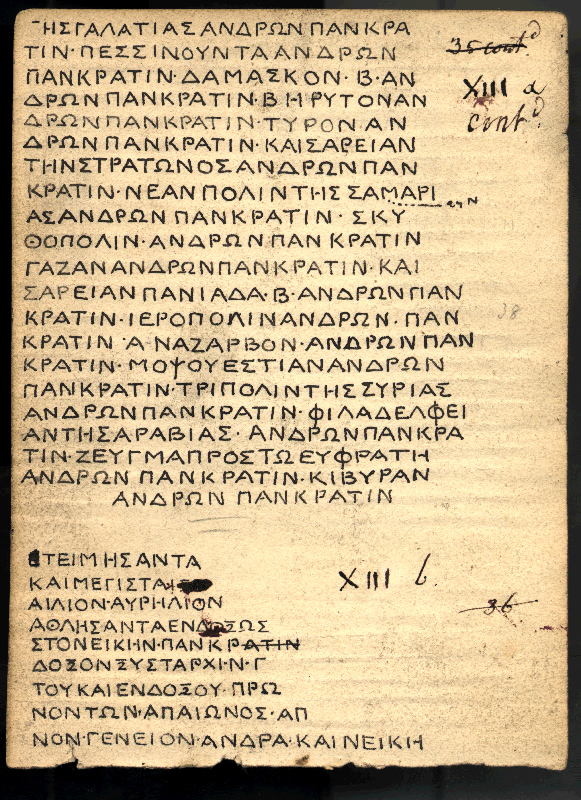
Fig. 3. Deering notebook 9

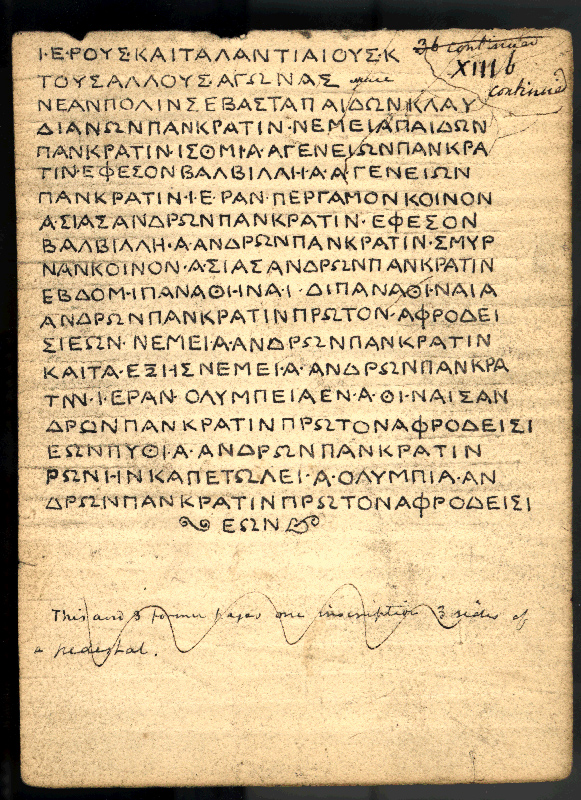
Fig. 4. Deering notebook 9v

Fig. 5. Deering notebook 10

Fig. 6. Lines 10-21: Reichel notebook I, 38