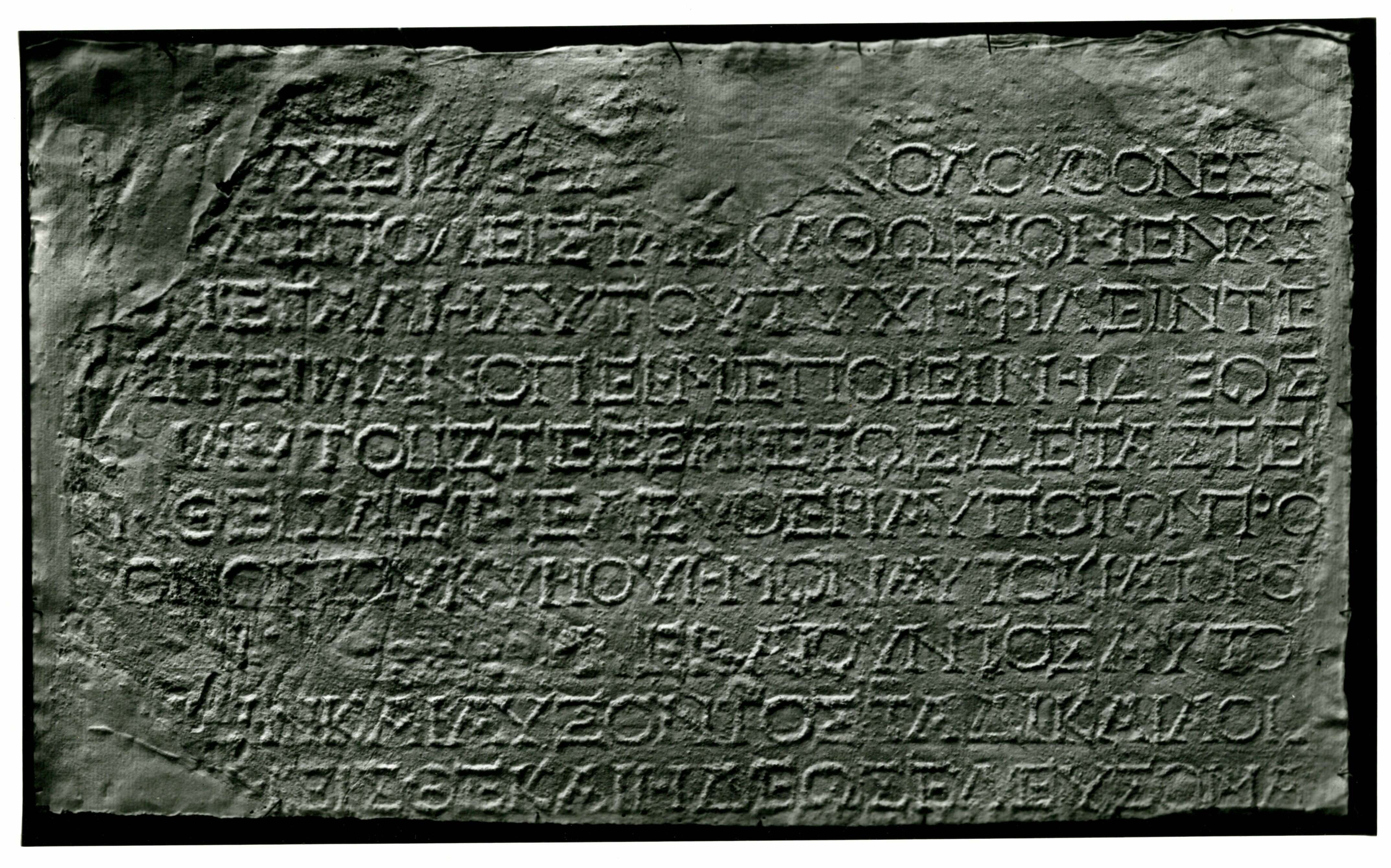
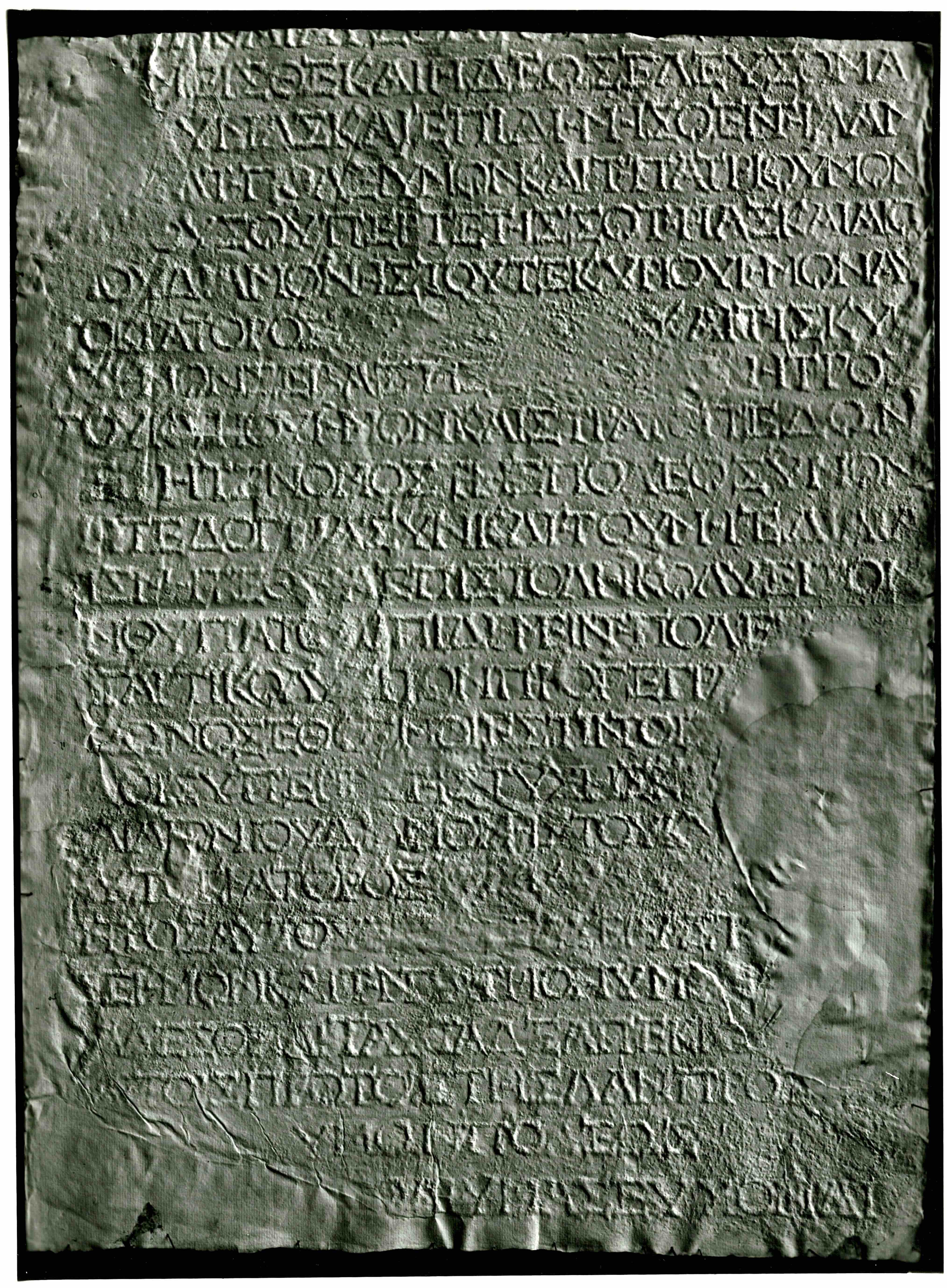
Description:
White marble
statue base shaft.
Text:
Inscribed on two adjacent faces.
Letters: Third century; 0.016. Omega normally cut as a circle slightly open at the bottom. Deliberate erasures in lines 8, 16, 16,
27, 28.
Date: 222-235 CE (reign)
Findspot: Aphrodisias:
Walls, North stretch: with 12.33
Original location: Unknown
Last recorded location: Findspot (1904)
Interpretive
[.]ΚΕ̣⟦[---]⟧
[.εὐτ]υχεῖς δηλ̣[ονότι ἀ]κόλουθόν ἐσ[τι]
[τ]ὰς πόλεις τὰς καθωσιωμένας
[τ]ῇ̣ μεγάλῃ αὐτοῦ Τύχῃ φιλεῖν τε
5 καὶ τειμᾶν ὅπερ με ποιεῖν ἡδέως
κ[α]ὶ αὐτοὶ ἴστε ἐξαιρέτως δὲ τὰς τει-
μηθείσας τῇ ἐλευθερίᾳ ὑπὸ τῶν προ-
γόνων τοῦ κυρίου ἡμῶν αὐτοκράτορο[ς]
⟦[Ἀλεξάνδρου]⟧ βεβαιοῦντος αὐτο[ῦ τὴν]
10[τειμ]ὴν καὶ αὔξοντος τὰ δίκαια οἷ[ς]
[εὐθυ]μεῖσθε καὶ ἡδέως ἐλεύσομαι̣
[πρὸς] ὑμᾶς ἐπιδημήσω ἐν τῇ λαμ-
[προτ]άτῃ πόλει ὑμῶν καὶ τῇ πατρίῳ ὑμῶν
[θεᾷ] θύσω ὑπέρ τε τῆς σωτηρίας καὶ αἰω-
15[ν]ίου διαμονῆς τοῦ τε κυρίου ἡμῶν αὐ-
τοκράτορος ⟦[Ἀλεξάνδρου]⟧ καὶ τῆς κυρ-
[ίας] ἡμῶν Σεβαστῆς ⟦[Μαμαίας]⟧ μητρὸς
τοῦ κυρίου ἡμῶν καὶ στρατοπέδων
εἰ μήτε νόμος τῆς πόλεως ὑμῶν
20 [μ]ήτε δόγμα συνκλήτου μήτε διάτα-
ξις μήτε θεία ἐπιστολὴ κωλύει τὸν
[ἀ]νθύπατον ἐπιδημεῖν τῇ πόλει [ὑμῶν]
[ε]ἰ γάρ τι κωλύει τῶν προγεγρα[μμένων]
θύων ὡς ἔθος μοί ἐστιν τοῖς [ἄλλοις]
25 [θε]οῖς ὑπέρ τε τῆς τύχης κα[ὶ σωτηρίας]
[κ]αὶ αἰωνίου διαμονῆς τοῦ κυ[ρίου ἡμῶν]
αὐτοκράτορος ⟦[Ἀλεξάνδρου]⟧ [καὶ τῆς ]
μητρὸς αὐτοῦ ⟦[Μαμαίας]⟧ Σεβαστῆ[ς κυρίας]
δὲ ἡμῶν καὶ τὴν πάτριον ὑμῶν [θεὰν ἐπι-]
30[κ]αλέσομαι. ταῦτα δὲ ἀπεκρι[νάμην]
( vac. ) τοῖς πρώτοις τῆς λανπροτ[άτης]
( vac. 5) ὑμῶν πόλεως ( vac. 5)
( vac. ) [ἐρρῶσ]θαι ὑμᾶς εὔχομαι ( vac. )
Diplomatic
[·]Κ.⟦[---]⟧
[·...]ΥΧΕΙΣΔΗ.[......]ΚΟΛΟΥΘΟΝΕΣ[..]
[.]ΑΣΠΟΛΕΙΣΤΑΣΚΑΘΩΣΙΩΜΕΝΑΣ
[.].ΜΕΓΑΛΗΑΥΤΟΥΤΥΧΗΦΙΛΕΙΝΤΕ
5ΚΑΙΤΕΙΜΑΝΟΠΕΡΜΕΠΟΙΕΙΝΗΔΕΩΣ
Κ[.]ΙΑΥΤΟΙΙΣΤΕΕΞΑΙΡΕΤΩΣΔΕΤΑΣΤΕΙ
ΜΗΘΕΙΣΑΣΤΗΕΛΕΥΘΕΡΙΑΥΠΟΤΩΝΠΡΟ
ΓΟΝΩΝΤΟΥΚΥΡΙΟΥΗΜΩΝΑΥΤΟΚΡΑΤΟΡΟ[.]
⟦[..........]⟧ΒΕΒΑΙΟΥΝΤΟΣΑΥΤΟ[....]
10[....]ΗΝΚΑΙΑΥΞΟΝΤΟΣΤΑΔΙΚΑΙΑΟΙ[.]
[....]ΜΕΙΣΘΕΚΑΙΗΔΕΩΣΕΛΕΥΣΟΜΑ.
[....]ΥΜΑΣΕΠΙΔΗΜΗΣΩΕΝΤΗΛΑΜ
[....]ΑΤΗΠΟΛΕΙΥΜΩΝΚΑΙΤΗΠΑΤΡΙΩΥΜΩΝ
[...]ΘΥΣΩΥΠΕΡΤΕΤΗΣΣΩΤΗΡΙΑΣΚΑΙΑΙΩ
15[.]ΙΟΥΔΙΑΜΟΝΗΣΤΟΥΤΕΚΥΡΙΟΥΗΜΩΝΑΥ
ΤΟΚΡΑΤΟΡΟΣ⟦[..........]⟧ΚΑΙΤΗΣΚΥΡ
[...]ΗΜΩΝΣΕΒΑΣΤΗΣ⟦[.......]⟧ΜΗΤΡΟΣ
ΤΟΥΚΥΡΙΟΥΗΜΩΝΚΑΙΣΤΡΑΤΟΠΕΔΩΝ
ΕΙΜΗΤΕΝΟΜΟΣΤΗΣΠΟΛΕΩΣΥΜΩΝ
20[.]ΗΤΕΔΟΓΜΑΣΥΝΚΛΗΤΟΥΜΗΤΕΔΙΑΤΑ
ΞΙΣΜΗΤΕΘΕΙΑΕΠΙΣΤΟΛΗΚΩΛΥΕΙΤΟΝ
[.]ΝΘΥΠΑΤΟΝΕΠΙΔΗΜΕΙΝΤΗΠΟΛΕΙ[....]
[.]ΙΓΑΡΤΙΚΩΛΥΕΙΤΩΝΠΡΟΓΕΓΡΑ[......]
ΘΥΩΝΩΣΕΘΟΣΜΟΙΕΣΤΙΝΤΟΙΣ[......]
25[..]ΟΙΣΥΠΕΡΤΕΤΗΣΤΥΧΗΣΚΑ[.........]
[.]ΑΙΑΙΩΝΙΟΥΔΙΑΜΟΝΗΣΤΟΥΚΥ[........]
ΑΥΤΟΚΡΑΤΟΡΟΣ⟦[..........]⟧[......]
ΜΗΤΡΟΣΑΥΤΟΥ⟦[.......]⟧ΣΕΒΑΣΤΗ[.......]
ΔΕΗΜΩΝΚΑΙΤΗΝΠΑΤΡΙΟΝΥΜΩΝ[.......-]
30[.]ΑΛΕΣΟΜΑΙΤΑΥΤΑΔΕΑΠΕΚΡΙ[.....]
ΤΟΙΣΠΡΩΤΟΙΣΤΗΣΛΑΝΠΡΟΤ[....]
ΥΜΩΝΠΟΛΕΩΣ
[.....]ΘΑΙΥΜΑΣΕΥΧΟΜΑΙ
Apparatus
1: Traces of erasure suggest the presence of Alexander's name or that of his mother here.
2: δηλ̣[αδὴ Reinach, 1906, Reynolds, 1982, IAph2007; δηλ[ονότι ? Kokkinia, 2025
9-10: αὐτο[ῦ / αὐτ]ὴν Reinach, 1906, Reynolds, 1982, IAph2007; αὐτο[ῦ τὴν / τειμ]ην Kokkinia, 2025
24: [ἄλλοις] Reynolds, 1982, IAph2007; [ἄλλοις ?] Reinach, 1906, Kokkinia, 2025
English translation
Translation source: Kokkinia, 2025
[ . . .]fortunate; clearly (?) it is natural to love and honor the cities dedicated to his great good fortune, which you yourselves
know that I do gladly and especially those honored with freedom by the ancestors of our lord Imperator [Alexander] who himself
confirms [the] honor and increases the rights in which you rejoice; and I will gladly come to you and make a stay in your
most splendid city and sacrifice to your native goddess for the safety and eternal reign (or: continuance) of the lord Imperator
[Alexander] and our lady Augusta [Mamaia], mother of our Lord and of the camps, if no law of your city or decree of the senate
or instruction or letter from the emperor prevents the proconsul from making a stay in [your] city. But if there is any impediment
in the documents I have mentioned, when I sacrifice as is my custom to the [other ? gods] for the good fortune and [safety]
and eternal continuance of [our] lord Imperator [Alexander and] his mother [Mamaia] Augusta, our [lady], I will call upon
your ancestral [goddess too]. I gave this reply [to the chief men] of your [most splendid] city. I hope (or: pray) for your
welfare.
English translation
Translation source: Reynolds, 1982
[ . . .]fortunate; clearly it follows that affection and honour is due to the cities dedicated to his great good fortune,
which you yourselves know that I give gladly and especially to those honoured with freedom by the ancestors of our lord Imperator
[Alexander] who himself confirms it and increases the rights in which you rejoice; and I will gladly come to you and make
a stay in your most splendid city and sacrifice to your native goddess for the safety and eternal continuance of our lord
Imperator [Alexander] and our lady Augusta [Mammaea], mother of our lord and of the camps, if no law of your city or decree
of the Senate or instruction or letter from the emperor prevents the proconsul from making a stay in [your] city. But if there
is any impediment in the documents I have mentioned, when I sacrifice as is my custom to the [?other gods] for the good fortune
and [safety] and eternal continuance of [our] lord Imperator [Alexander and] his mother [Mammaea] Augusta, our [lady], I will
call upon your native [goddess with them]. I gave this reply [to the chief men] of your [most splendid] city. I hope for your
welfare.
Bibliography
Recorded: Gaudin, 1904 59
Publication: Reinach, 1906 5 , whence Abbott and Johnson, 1926 137, Robert, Études Anatoliennes 303; from all these Reynolds, 1982 48 whence SEG 32.1097 , Robert, Bulletin Épigraphique 1983.391 , McCabe, PHI, 1996 71 ; IAph2007 12.34; Kokkinia, 2025 63.