Inscriptions of Aphrodisias 2027

13.203. Funerary inscription for Marcus Aurelius Athenagoras

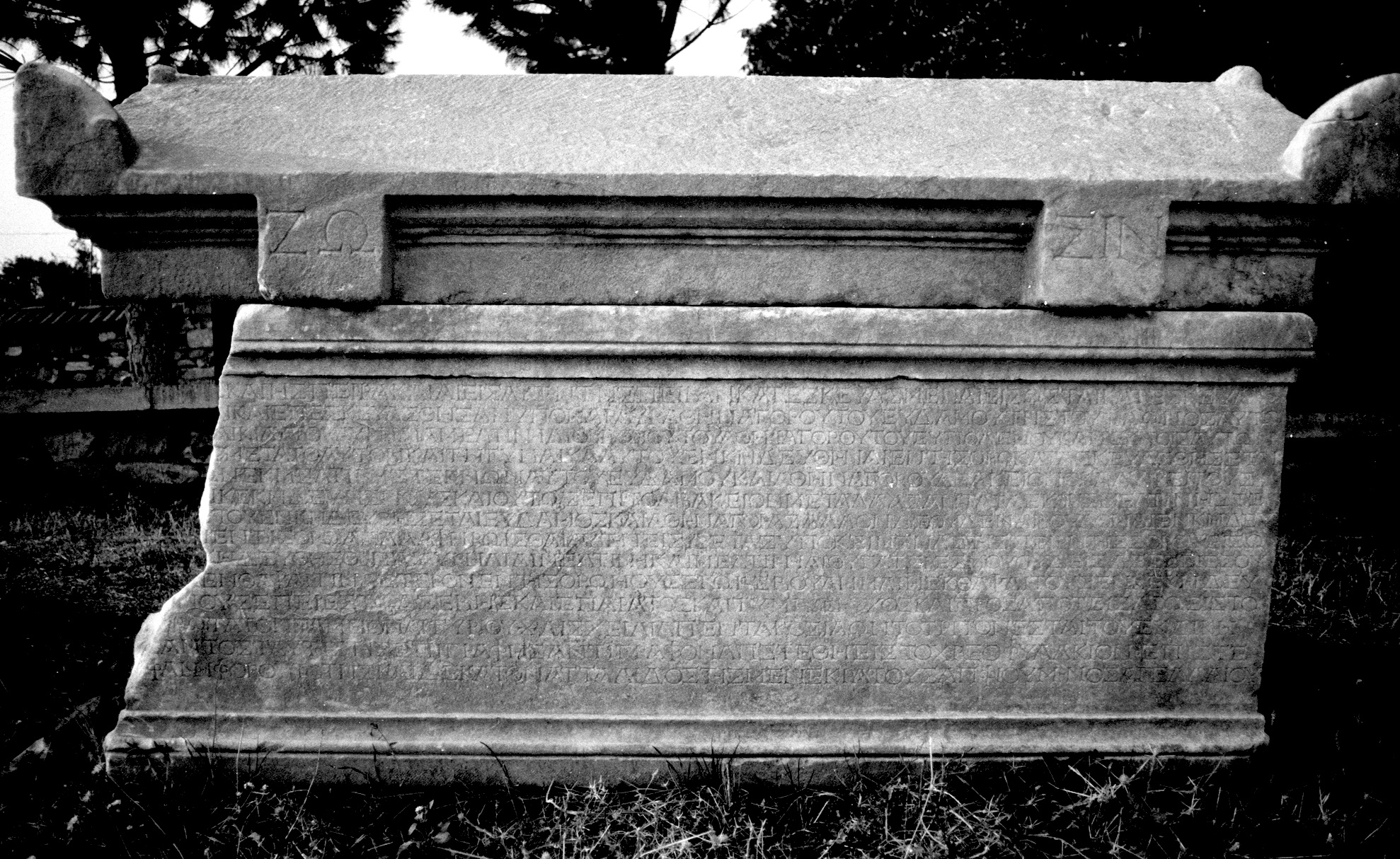
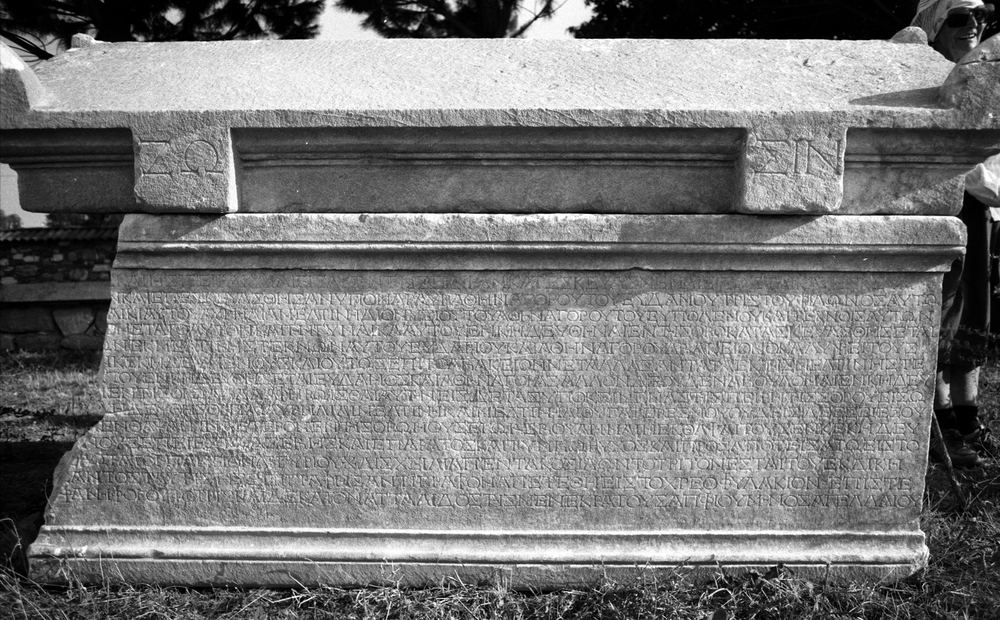
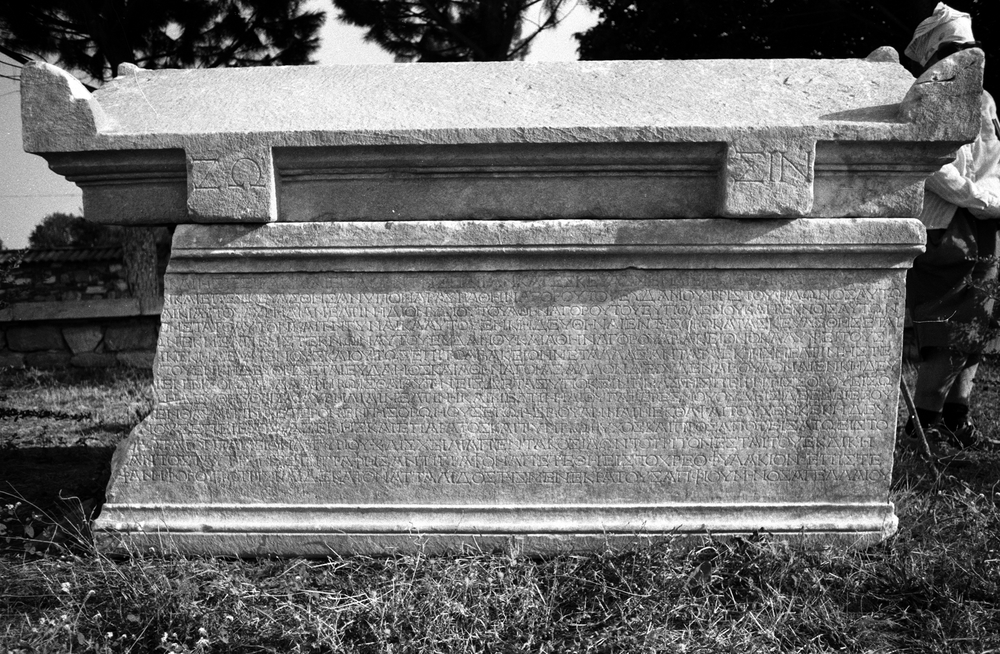
Description: White marble sarcophagus, with lid (w: 2.13).

Text: Inscribed a. on the vertical projections of the lid, lines 1-2, and b. across the sarcophagus front, which is otherwise undecorated (w: 1.88 × h: 0.585), and broken to left.

Letters: Standard forms; a: 0.07; b: 0.025.

Date: Second to third centuries CE (lettering)

Findspot: Ata Eymir

Original location: Unknown

Last recorded location: Museum (1994)

Interpretive

a
Ζῶ | σιν
b
[ἡ σορὸ]ς καὶ ἡ σπειρα καὶ αἱ εἰς αὐτὴν τὴν σπ̣ειραν κατεσκευασμέναι εἰσωσται κατεσκευά-
[σθησα]ν καὶ ἐπεσκευάσθησαν ὑπὸ Μάρ(κου) Αὐρ(ηλίου) Ἀθηναγόρου τοῦ Εὐδάμου τρὶς τοῦ Φίλωνος αὑτῷ
[καὶ γυν]αικὶ αὐτοῦ Αὐρηλία Μελτίνη Διονυσίου τοῦ Ἀθηναγόρου τοῦ Εὐπολέμου καὶ τέκνοις αὐτῶν
[c. 6]Σ̣ μετὰ τὸ αὑτὸν καὶ τὴν γυναικὰ αὐτοῦ ἐνκηδευθῆναι ἐν τῇ σορῷ κατασκευασθήσεται
5[ὑπὸ τ]ῶν ἐκ Μελτίνης τέκνων αὐτοῦ Εὐδάμου καὶ Ἀθηναγόρου ἀβακεῖον ὃ καλύψει τοὺς
[c. 6 ἐ]ν̣κεκηδευμένους καὶ οὕτως ἐπὶ τὸ ἀβακεῖον μεταλλάξαντα τὰ ἐκ τῆς Μελτίνης τέ-
[κνα α]ὐ̣τοῦ ἐνκηδευθήσεται Εὔδαμος καὶ Ἀθηναγόρας ἄλλον δὲ οὐδένα βούλομαι ἐνκηδευ-
[θῆνα]ι ἐν τῇ σορῷ ἀλλὰ ἀφηρωῖσθαι αὐτὴν εἰς δὲ τὰς ὑποκειμένας τῇ σπειρῃ τῆς σοροῦ εἴσω
[ἐν]κηδευθήσονται Αὐρηλίαι Μελτίνη καὶ Μελτίνη αἱ θυγάτερες μου οὐδεὶς δὲ ἕξει ἐξου- σιψ
10[σίαν] ἐνθάψαι τινα ἕτερον ἐν τῇ σορῷ ἢ οὓς ἐγω βεβούλημαι ἢ ἐκθάψαι τοὺς ἐνκεκηδευ-
[μέ]νους ἐπεὶ ἔστω ἀσεβὴς καὶ ἐπάρατος καὶ τυμβωρύχος καὶ προσαποτεισάτω εἰς τὸ
[ἱ]ε̣ρώτατον ταμεῖον ἀργυρίου (δηνάρια) δισχείλια πεντακόσια ὧν τὸ τρίτον ἔσται τοῦ ἐκδική-
σαντος ταύτης τῆς ἐπιγραφῆς ἀντίγραφον ἀπετέθη εἰς τὸ χρεοφυλάκιον ἐπί στε-
φανηφόρου τὸ τρισκαιδεκατον Ἀττάλιδος τῆς Μενεκράτους Ἀπφίου μηνὸς Ἀπελλαίου
Diplomatic

a
ΖΩ | ΣΙΝ
b
[.....]ΣΚΑΙΗΣΠΕΙΡΑΚΑΙΑΙΕΙΣΑΥΤΗΝΤΗΝΣ.ΕΙΡΑΝΚΑΤΕΣΚΕΥΑΣΜΕΝΑΙΕΙΣΩΣΤΑΙΚΑΤΕΣΚΕΥΑ
[.....]ΝΚΑΙΕΠΕΣΚΕΥΑΣΘΗΣΑΝΥΠΟΜΑΡΑΥΡΑΘΗΝΑΓΟΡΟΥΤΟΥΕΥΔΑΜΟΥΤΡΙΣΤΟΥΦΙΛΩΝΟΣΑΥΤΩ
[......]ΑΙΚΙΑΥΤΟΥΑΥΡΗΛΙΑΜΕΛΤΙΝΗΔΙΟΝΥΣΙΟΥΤΟΥΑΘΗΝΑΓΟΡΟΥΤΟΥΕΥΠΟΛΕΜΟΥΚΑΙΤΕΚΝΟΙΣΑΥΤΩΝ
[······].ΜΕΤΑΤΟΑΥΤΟΝΚΑΙΤΗΝΓΥΝΑΙΚΑΑΥΤΟΥΕΝΚΗΔΕΥΘΗΝΑΙΕΝΤΗΣΟΡΩΚΑΤΑΣΚΕΥΑΣΘΗΣΕΤΑΙ
5[....]ΩΝΕΚΜΕΛΤΙΝΗΣΤΕΚΝΩΝΑΥΤΟΥΕΥΔΑΜΟΥΚΑΙΑΘΗΝΑΓΟΡΟΥΑΒΑΚΕΙΟΝΟΚΑΛΥΨΕΙΤΟΥΣ
[······.].ΚΕΚΗΔΕΥΜΕΝΟΥΣΚΑΙΟΥΤΩΣΕΠΙΤΟΑΒΑΚΕΙΟΝΜΕΤΑΛΛΑΞΑΝΤΑΤΑΕΚΤΗΣΜΕΛΤΙΝΗΣΤΕ
[....].ΤΟΥΕΝΚΗΔΕΥΘΗΣΕΤΑΙΕΥΔΑΜΟΣΚΑΙΑΘΗΝΑΓΟΡΑΣΑΛΛΟΝΔΕΟΥΔΕΝΑΒΟΥΛΟΜΑΙΕΝΚΗΔΕΥ
[....]ΙΕΝΤΗΣΟΡΩΑΛΛΑΑΦΗΡΩΙΣΘΑΙΑΥΤΗΝΕΙΣΔΕΤΑΣΥΠΟΚΕΙΜΕΝΑΣΤΗΣΠΕΙΡΗΤΗΣΣΟΡΟΥΕΙΣΩ
[..]ΚΗΔΕΥΘΗΣΟΝΤΑΙΑΥΡΗΛΙΑΙΜΕΛΤΙΝΗΚΑΙΜΕΛΤΙΝΗΑΙΘΥΓΑΤΕΡΕΣΜΟΥΟΥΔΕΙΣΔΕΕΞΕΙΕΞΟΥ-ΣΙΨ
10[....]ΕΝΘΑΨΑΙΤΙΝΑΕΤΕΡΟΝΕΝΤΗΣΟΡΩΗΟΥΣΕΓΩΒΕΒΟΥΛΗΜΑΙΗΕΚΘΑΨΑΙΤΟΥΣΕΝΚΕΚΗΔΕΥ
[..]ΝΟΥΣΕΠΕΙΕΣΤΩΑΣΕΒΗΣΚΑΙΕΠΑΡΑΤΟΣΚΑΙΤΥΜΒΩΡΥΧΟΣΚΑΙΠΡΟΣΑΠΟΤΕΙΣΑΤΩΕΙΣΤΟ
[.].ΡΩΤΑΤΟΝΤΑΜΕΙΟΝΑΡΓΥΡΙΟΥ 𐆖 ΔΙΣΧΕΙΛΙΑΠΕΝΤΑΚΟΣΙΑΩΝΤΟΤΡΙΤΟΝΕΣΤΑΙΤΟΥΕΚΔΙΚΗ
ΣΑΝΤΟΣΤΑΥΤΗΣΤΗΣΕΠΙΓΡΑΦΗΣΑΝΤΙΓΡΑΦΟΝΑΠΕΤΕΘΗΕΙΣΤΟΧΡΕΟΦΥΛΑΚΙΟΝΕΠΙΣΤΕ
ΦΑΝΗΦΟΡΟΥΤΟΤΡΙΣΚΑΙΔΕΚΑΤΟΝΑΤΤΑΛΙΔΟΣΤΗΣΜΕΝΕΚΡΑΤΟΥΣΑΠΦΙΟΥΜΗΝΟΣΑΠΕΛΛΑΙΟΥ

Translation

a.They are alive.

b. The sarcophagus and the moulded base(?) and the ... (?) which have been prepared in the base were prepared and added(?) by Marcus Aurelius Athenagoras son of Eudamos (i.e. son of Eudamos son of Eudamos) the son of Philon, for himself and his wife Aurelia Meltine, daughter of Dionysios, son of Athenagoras the son of Eupolemos and for their children [ .. ? .. ] after the burial of himself and his wife in the sarcophagus there shall be prepared by his children by Meltine: Eudamus and Athenagoras, a slab which shall cover those buried in it and so his children by Meltine, Eudamos and Athenagoras, when they are deaad, shall be buried on /above the slab. But I wish no-one else to be buried in the sarcophagus but that it be consecrated as a heroon. In the ??? below the moulded base of the sarcophagus there shall be buried Aureliae Meltine and Meltine my daughters, but no-one shall have the right to bury anyone else in the sarcophagus other than those whom I have wished or to take out those buried in it, since he is to be impious and accursed and a tomb-breaker and in addition is to pay to the most sacred treasury 2500 denarii of which the third will be the prperty of the prosecutor. A copy of this inscription was deposited in the Property-archive when Attalis Apphion, daughter of Menekrates was stephanephorus for the thirteenth time, in the month Apellaion.

Commentary

It is probable that the Edict of Caracalla issued within the lifetime of the principals whose families, despite their élite names, were probably not Roman citizens before it. The stephanephorus was certainly holding office post mortem.The restorations are reasonably certain except in l.4 where possibilities are [μόνοι]ς (but it is a little short) or a word meaning male (but [ἀρρενικό]ς is too long), and in l.6, where there are many possibilities.The provision for the insertion of a panel in this sarcophagus, dividing the parents from the sons, is interesting, as also the exclusion of the daughters therefrom. Both daughters appear to be named Meltine, although both seem to be alive; there may have been a cutter's error here.

Bibliography

Transcription: New York University expedition Sarcophagus 419

Publication: Smith and Ratté, 1996 fig. 22 (photograph only), whence SEG 46.1556 ; IAph2007 13.203.

Images

Fig. 1. Face (M. Roueché, 1994)

Fig. 2. View (M. Roueché, 1994)

Fig. 3. View (M. Roueché, 1994)