Description:
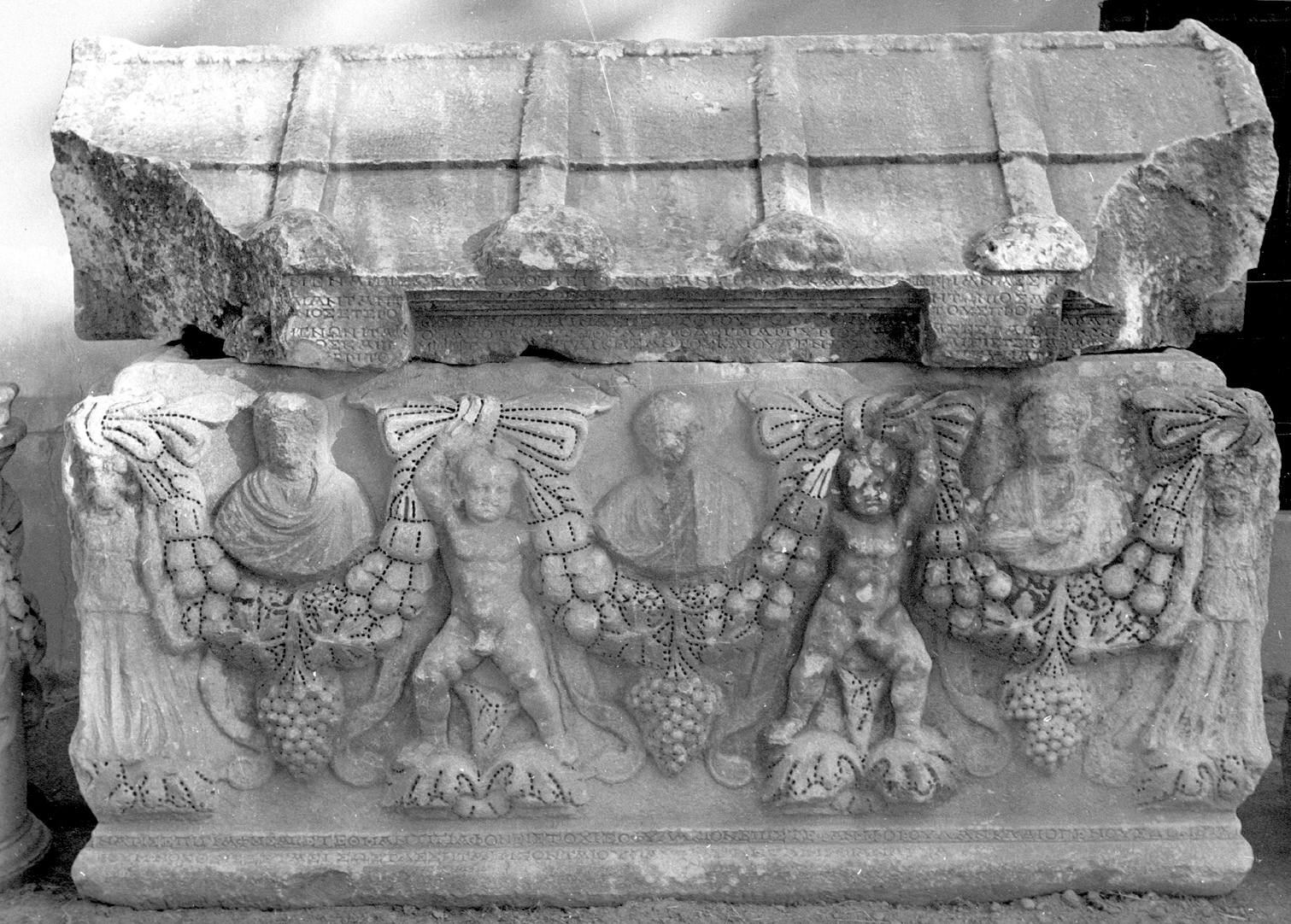
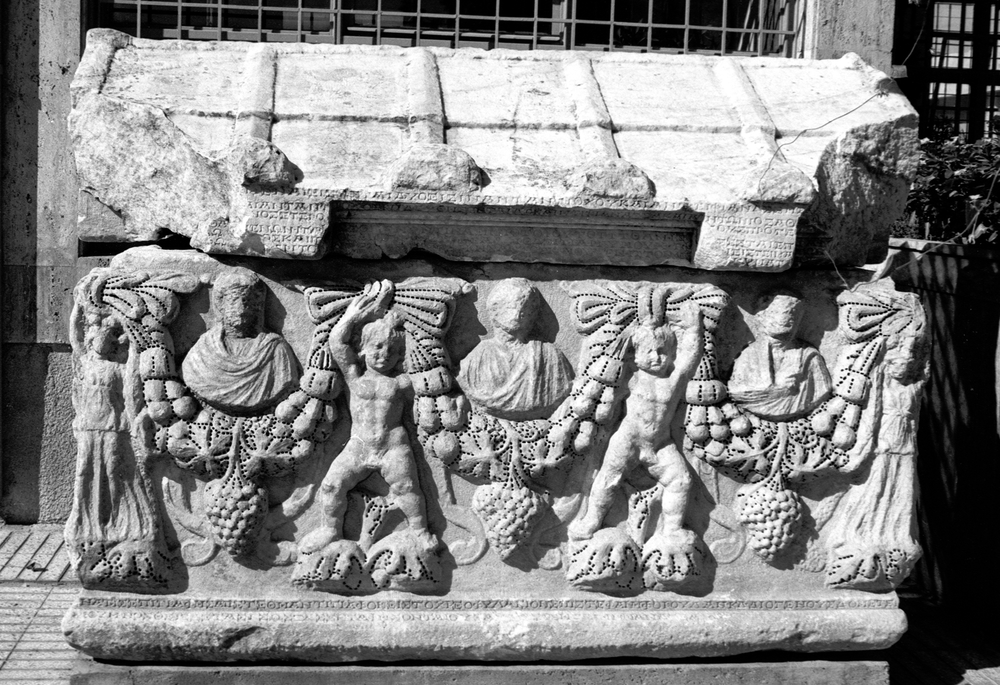
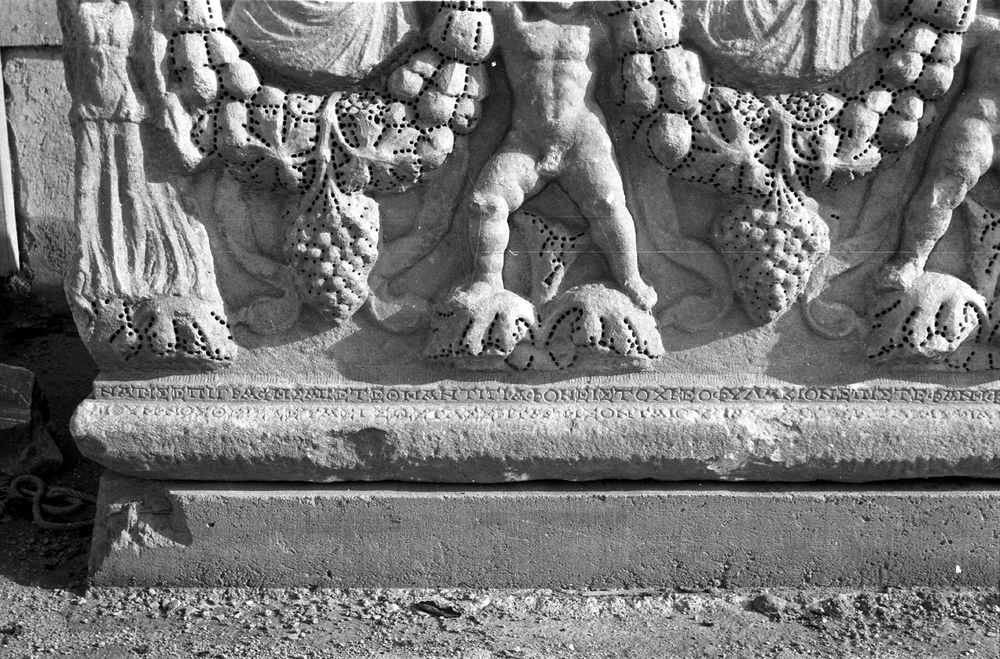
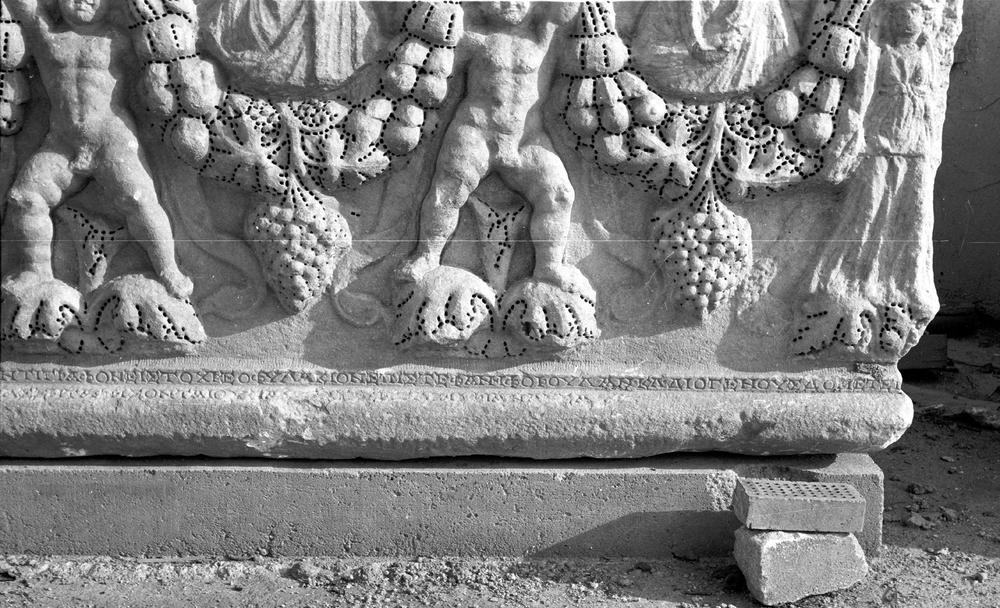
White marble garland sarcophagus with lid
(box: w: 2.42 × h: 1.06 × d: 1.18;
lid: w: 2.50 × h: 0.64 × d: 1.30).
Text:
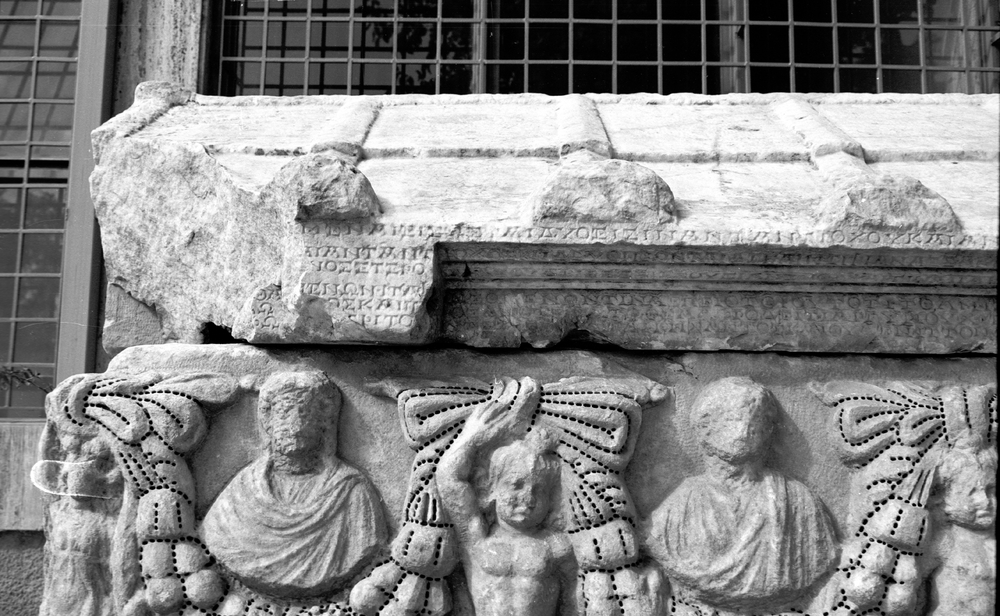
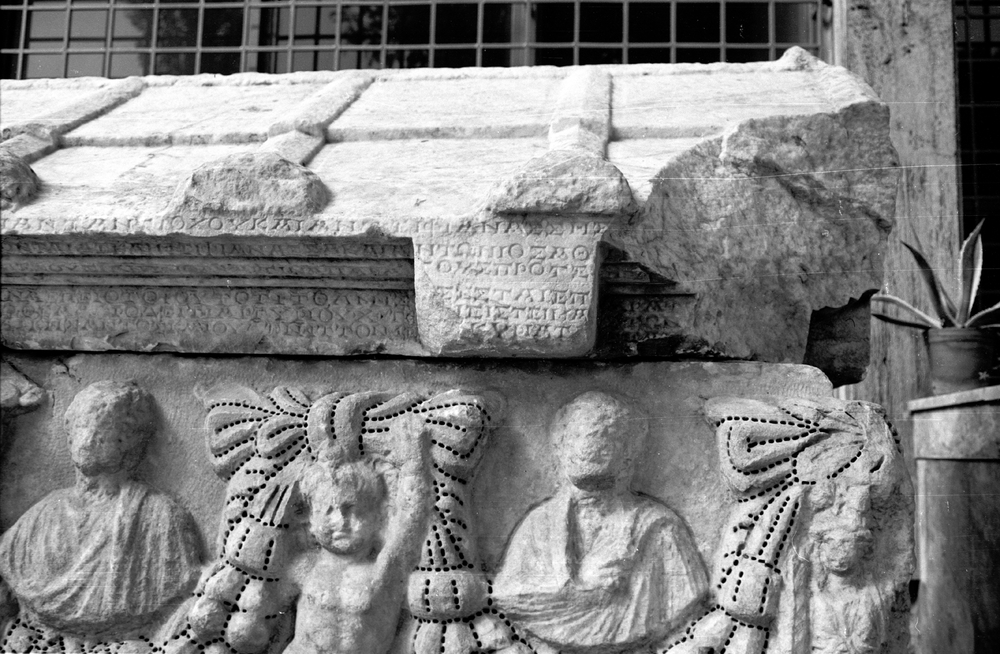
Inscribed lines 1-6 on the lid, on the lower moulding, including the two projections, lines 7-8 on the sarcophagus, on the
lower moulding. The lid has been badly damaged, with loss of the text at both sides.
Letters: Reasonably well designed, cut and aligned, in the second-to-fourth-century style, 0.0125-0.0175; star for denarius, slanting
strokes before and after the figures in lines 5, 6. Unconventional spelling in lines 6, 8.
Date: Perhaps the mid to late third century CE (total size of fine). (material context, textual context)
Findspot: Aphrodisias:
Necropolis, North-east: 'In a field 1 km. east of the NE gate' (MAMA)
Original location: Findspot?
Last recorded location: Museum
Interpretive
[ἡ σορὸς καὶ αἱ ὑποκεί]μεναι εἰσῶσται δύο εἰσὶν Ἀντ(ωνίου) Ἀντιόχου καὶ Ἀντ(ωνίας) Εἰφιανάσσης [γυναικὸς? αὐτοῦ]
[ἐν [ᾗ] σορῷ? κεκήδευτ]αι Ἀντ(ώνιος) Ἀντίοχος κηδευθήσονται δὲ καὶ ἡ Εἰφιάνασσα καὶ Ἀντώνιος Ἀθην[αγόρας ὁ? υἱὸς αὐτῶν]
[καὶ ὁ δεῖνα ὁ? ἔκγο]νος ἕτερος δὲ οὐδεὶς ἕξει ἐξουσίαν ἐνθάψαι τινὰ παρὰ τοὺς προγεγρα[μμένους ἢ? ἐκ-]
[θάψαι? τῶν τε]θα[μ]μ̣ένων ἢ ταφησομένων τινά ἐπεὶ ὁ τοιοῦτό τι τολμήσας ἔσται ἐπάρατο̣[ς καὶ ἀσε-]
5[βὴς καὶ τυμ]β̣ω[ρ]ύ̣χος καὶ προσαποτεισάτω θεᾷ Ἀφροδείτῃ ἀργυρίου (δηνάρια) ͵γφ [κ]αὶ εἰς τειμὰς τῶν [Σεβαστῶν]
[ἀργυρίου] (δηνάρια) ͵γφ ὧ[ν] τὸ τρίτον ἔσται τ[οῦ] ἐγδικήσαντος καὶ οὐδὲν ἧττον μενεῖ κύρια τὰ ἐπ'αὐ[τῇ γεγραμμέ?-]
να· τῆς ἐπιγραφῆς ἀπετέθη ἀντίγραφον εἰς τὸ χρεοφυλάκιον ἐπὶ στεφανηφόρου Λ(ουκίου) Ἀν(τωνίου) Κλ(αυδίου) Διογένους Δομετεί-
νου μηνὸς θ εἰς δὲ τὰς ἰ ( vac. 1) σώστας ἐνταφήσονται οὓς ἂν διατάξηται ἡ Εἰφιάνασσα
Diplomatic
[.................]ΜΕΝΑΙΕΙΣΩΣΤΑΙΔΥΟΕΙΣΙΝΑΝΤΑΝΤΙΟΧΟΥΚΑΙΑΝΤΕΙΦΙΑΝΑΣΣΗΣ[.............]
[...............]ΑΙΑΝΤΑΝΤΙΟΧΟΣΚΗΔΕΥΘΗΣΟΝΤΑΙΔΕΚΑΙΗΕΙΦΙΑΝΑΣΣΑΚΑΙΑΝΤΩΝΙΟΣΑΘΗΝ[.......][.........]
[..............]ΝΟΣΕΤΕΡΟΣΔΕΟΥΔΕΙΣΕΞΕΙΕΞΟΥΣΙΑΝΕΝΘΑΨΑΙΤΙΝΑΠΑΡΑΤΟΥΣΠΡΟΓΕΓΡΑ[........][..-]
[..........]ΘΑ[.].ΕΝΩΝΗΤΑΦΗΣΟΜΕΝΩΝΤΙΝΑΕΠΕΙΟΤΟΙΟΥΤΟΤΙΤΟΛΜΗΣΑΣΕΣΤΑΙΕΠΑΡΑΤ.[.......-]
5[.........].Ω[.].ΧΟΣΚΑΙΠΡΟΣΑΠΟΤΕΙΣΑΤΩΘΕΑΑΦΡΟΔΕΙΤΗΑΡΓΥΡΙΟΥ 𐆖 ͵ΓΦ[.]ΑΙΕΙΣΤΕΙΜΑΣΤΩΝ[........]
[........] 𐆖 ͵ΓΦΩ[.]ΤΟΤΡΙΤΟΝΕΣΤΑΙΤ[..]ΕΓΔΙΚΗΣΑΝΤΟΣΚΑΙΟΥΔΕΝΗΤΤΟΝΜΕΝΕΙΚΥΡΙΑΤΑΕΠΑΥ[..........-]
ΝΑΤΗΣΕΠΙΓΡΑΦΗΣΑΠΕΤΕΘΗΑΝΤΙΓΡΑΦΟΝΕΙΣΤΟΧΡΕΟΦΥΛΑΚΙΟΝΕΠΙΣΤΕΦΑΝΗΦΟΡΟΥΛΑΝΚΛΔΙΟΓΕΝΟΥΣΔΟΜΕΤΕΙ
ΝΟΥΜΗΝΟΣΘΕΙΣΔΕΤΑΣΙ ΣΩΣΤΑΣΕΝΤΑΦΗΣΟΝΤΑΙΟΥΣΑΝΔΙΑΤΑΞΗΤΑΙΗΕΙΦΙΑΝΑΣΣΑ
English translation
Translation source: Reynolds, 2007
[? The sarcophagus and the] burial places [? below it] belong to Antonius Antiochos and Antonia Eiphianassa [?his wife, ?
in which sarcophagus is buried] Antonius Antiochos and there will also be buried Eiphianassa and Antonius Athen[agoras ? their
son ? and name their grandson]; but no one else shall have the right to bury anyone (in it) except the aforenamed,[?or to
remove] anyone [of those] buried or [to be buried] in it, since whoever dares such a thing will be considered accursed [and
sacrilegious and a tomb]-breaker and in addition is to pay to the goddess Aphrodite 3500 silver denarii and for honours to
(?statues of) [the Augusti] 3500 silver denarii, of which one third shall belong to the prosecutor; and none the less the
provisions written upon it shall remain in force. A copy of the inscribed text was deposited in the property-archive in the
stephanephorate of L. Antonius Claudius Diogenes Dometeinos, month 9. And in the burial places (below) shall be buried whomever
Eiphianassa may ordain.
Bibliography
Recorded: Gaudin, 1904 178; Calder, 1934; New York University expedition in 1973
Publication: Reinach, 1906 155 ; by MAMA 8 565 , whence McCabe, PHI, 1996 421; Reynolds, 2007 171; IAph2007 13.156.