Description:
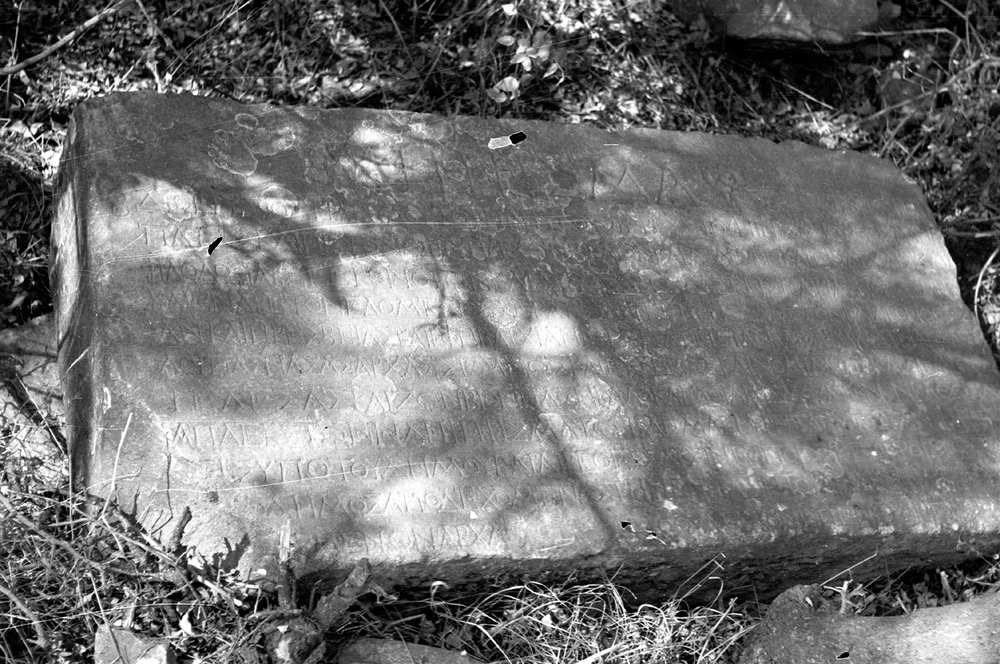
White marble block (w: 1.29 × h: 0.68 × d: 0.28) apparently complete on all sides.
Text:
Inscribed on the face; presumably continued on a lower block.
Letters: 0.02-0.03; line 1, first word, 0.07.
Date: First to second centuries CE (lettering, prosopography)
Findspot: Aphrodisias:
Walls, South (east part): Lying on the south side of the city wall, just west of the excavated stretch,
near 12.602, 12.714
Original location: Unknown
Last recorded location: Findspot
Interpretive
((leaf)) ψήφισμα ((leaf)) ((scroll)) ((scroll)) ἐπεὶ
Διονύσιος Παπύλου τοῦ Παπύλου ὁ ἱερεὺς τοῦ Νινευδίου Διὸς ἀνὴρ
πατρὸς καὶ προγόνων ὑπάρχων καλῶν καὶ ἀγαθῶν καὶ ἐν ἀρχαῖς καὶ
φιλοδοξίαις γεγονότων καὶ αὐτὸς ἀπὸ πρώτης ἡλικίας βίον σεμνὸν
5καὶ ἐνάρετον ἑλόμενος ἱερατείαν τε τῶν Σεβαστῶ̣ν καὶ ἀγ⸢ω⸣νοθεσί-
αν καὶ πρεσβείας καὶ ἐφηβαρχίαν καὶ στρατηγίαν καὶ γραμματήαν καὶ τὰς
λοιπὰς πάσας ἀρχὰς σεμνῶς καὶ εὐσεβῶς καὶ νομίμως καὶ δικαίως
τελέσας καὶ ζῶν βίον πάσῃ καλοκαγαθίᾳ κοσμούμενον καθὼς δι-
ὰ πλείστων ἤδη ψηφισμάτων μεμαρτύρηται αὐτῷ τὰ νῦν ἐπικλη-
10[θ]εὶς ὑπὸ τοῦ δήμου καὶ αἱρεθεὶς ἀρχινεοποιὸς κεχειροτόνηται ἐ-
[φ'οἷς] ὁ δῆμος ἀποδεχόμενος τὴν ἐν πᾶσιν τοῦ ἀνδρὸς φιλόπολιν σπου-
[δὴν ἀ]γομένων ἀρχαι̣ρ̣[εσιῶ]ν̣ ὁμοθυμαδὸν ἐπηνέχθη πάλιν τειμῆ-
[σαι αὐτὸν ---]
Diplomatic
❦ ΨΗΦΙΣΜΑ ❦ ΕΠΕΙ
ΔΙΟΝΥΣΙΟΣΠΑΠΥΛΟΥΤΟΥΠΑΠΥΛΟΥΟΙΕΡΕΥΣΤΟΥΝΙΝΕΥΔΙΟΥΔΙΟΣΑΝΗΡ
ΠΑΤΡΟΣΚΑΙΠΡΟΓΟΝΩΝΥΠΑΡΧΩΝΚΑΛΩΝΚΑΙΑΓΑΘΩΝΚΑΙΕΝΑΡΧΑΙΣΚΑΙ
ΦΙΛΟΔΟΞΙΑΙΣΓΕΓΟΝΟΤΩΝΚΑΙΑΥΤΟΣΑΠΟΠΡΩΤΗΣΗΛΙΚΙΑΣΒΙΟΝΣΕΜΝΟΝ
5ΚΑΙΕΝΑΡΕΤΟΝΕΛΟΜΕΝΟΣΙΕΡΑΤΕΙΑΝΤΕΤΩΝΣΕΒΑΣΤ.ΝΚΑΙΑΓΟΝΟΘΕΣΙ
ΑΝΚΑΙΠΡΕΣΒΕΙΑΣΚΑΙΕΦΗΒΑΡΧΙΑΝΚΑΙΣΤΡΑΤΗΓΙΑΝΚΑΙΓΡΑΜΜΑΤΗΑΝΚΑΙΤΑΣ
ΛΟΙΠΑΣΠΑΣΑΣΑΡΧΑΣΣΕΜΝΩΣΚΑΙΕΥΣΕΒΩΣΚΑΙΝΟΜΙΜΩΣΚΑΙΔΙΚΑΙΩΣ
ΤΕΛΕΣΑΣΚΑΙΖΩΝΒΙΟΝΠΑΣΗΚΑΛΟΚΑΓΑΘΙΑΚΟΣΜΟΥΜΕΝΟΝΚΑΘΩΣΔΙ
ΑΠΛΕΙΣΤΩΝΗΔΗΨΗΦΙΣΜΑΤΩΝΜΕΜΑΡΤΥΡΗΤΑΙΑΥΤΩΤΑΝΥΝΕΠΙΚΛΗ
10[.]ΕΙΣΥΠΟΤΟΥΔΗΜΟΥΚΑΙΑΙΡΕΘΕΙΣΑΡΧΙΝΕΟΠΟΙΟΣΚΕΧΕΙΡΟΤΟΝΗΤΑΙΕ
[.....]ΟΔΗΜΟΣΑΠΟΔΕΧΟΜΕΝΟΣΤΗΝΕΝΠΑΣΙΝΤΟΥΑΝΔΡΟΣΦΙΛΟΠΟΛΙΝΣΠΟΥ
[....]ΓΟΜΕΝΩΝΑΡΧΑ..[....].ΟΜΟΘΥΜΑΔΟΝΕΠΗΝΕΧΘΗΠΑΛΙΝΤΕΙΜΗ
[........---]
Apparatus
5: ΣΕΒΑΣΤΟΝΚΑΙΑΓΟΝ
English translation
Translation by: Joyce M. Reynolds
Decree. Since Dionysios son of Papylos the son of Papylos, the priest of Nineudios Zeus, a man whose father and ancestors
were of the noble and good, and among those who held magistracies and sought honour, he himself also, from his first youth
chose a lifestyle of dignity and virtue,fulfilling the priesthood of the Augusti and the presidency at contests and embassies
and office as ephebarch and general and secretary (scil. of the People) and all the other magistracies in a manner deserving of respect and with piety and according to the law and
justice and living a life adorned with all nobility and goodness as very many decrees have already testified; now he has been
called upon by the People and elected chief temple-warden. In these circumstances the People, understanding the man's zeal
for the city in all things, after the elections, was led to honour him again with one accord [ . . .
Bibliography
Recorded: Gaudin, 1904 80; Calder, 1934; New York University expedition
Publication: Reinach, 19068 , whence discussed A. Wilhelm, Beiträge 315; MAMA 8 410 , whence McCabe, PHI, 1996 33 ; IAph2007 12.612.