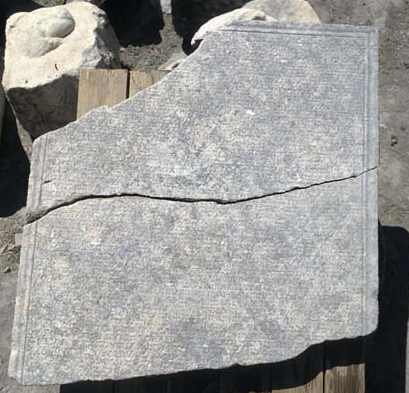
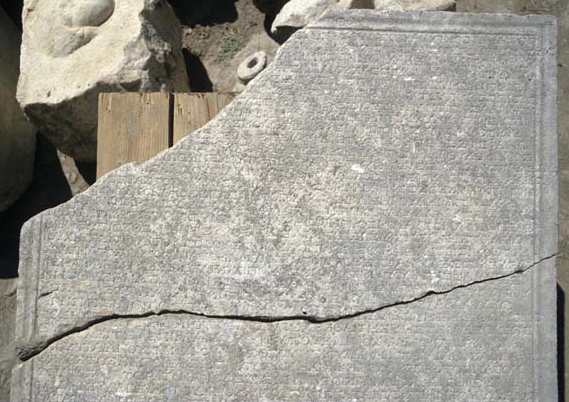
I
[ἐπὶ Κλαυδίας Παυλεινῆ]ς τὸ ((stop)) ((stop)) ( vac. 10)
[Αὐτοκράτωρ Καῖσαρ, θεοῦ Τραιανοῦ Παρθι]κ̣οῦ ὑὸς, θεοῦ Νέρουα υἱωνὸς, Τραιανὸς
[Ἁδριανὸς Σεβαστὸς ἀρχιερεὺς μέγιστ]ο̣ς δημαρχικῆς ἐξουσίας τὸ τρίτον ὕπατος τὸ γ
[Ἀφροδεισιέων τοῖς ἄρχουσι καὶ τῇ βο]υλῇ καὶ τῷ δήμῳ ( vac. 1) χαίρειν ( vac. 3) καὶ τῷ ψηφίσ-
5[ματι ὑμῶν ἐντυχὼν καὶ τῶν ὑμετέρων πρ]ε̣σβέων ἀκούσας περὶ τῶν χρηματικῶν δί-
[κων, συγχωρῶ ὑμεῖν εἰ μὲν Ἕλλην, Ἀφρο]δεισιεὺς φύσει ἢ τῶν παρ’ὑμεῖν πολει-
[τευομένων? τις ἐγκαλεῖται ὑφ’Ἑ]λ̣ληνος Ἀφροδεισιέως κατὰ τοὺς ὑμετέρους
[νόμους? καὶ παρ’ὑμῶν καθί?]σ̣τάσθαι τὰς δίκας εἰ δὲ τοὐνάντιον Ἕλλην πα-
[ρ’ἄλλης πόλεως, κατὰ Ῥωμ]αίων νόμους καὶ ἐν τῇ ἐπαρχείᾳ ( vac. 1)τοὺς μέντοι
10 [χρεώστας τῆς πόλεως ἢ βεβαι]ω̣τὰς ἢ ὅλως συνβεβληκότας τῷ δημοσίῳ ὑ-
[μῶν, παρ’ὑμεῖν τὴν δίκην ὑ]πέχειν ( vac. 2) ἐπεὶ δὲ στεφανοῦτε με στεφάνῳ
[χρυσῷἀπὸ?c. 2 λίτρ?]ῶν ἴστε ὅτι πα̣ρ̣ῃτησάμην αὐτὸν μὴ βουλόμενος
[ἐπιβαρεῖσθαιὑμετέρα]ν πόλιν ἐμοῦ γε ἕνεκα ( vac. 1) εὐτυχεῖτε((stop))
II[Αὐτοκράτωρ Καῖσαρ, θεοῦ Τραιανοῦ Παρθι]κ̣οῦ ὑὸς, θεοῦ Νέρουα υἱωνὸς, Τραιανὸς
[Ἁδριανὸς Σεβαστὸς ἀρχιερεὺς μέγιστ]ο̣ς δημαρχικῆς ἐξουσίας τὸ τρίτον ὕπατος τὸ γ
[Ἀφροδεισιέων τοῖς ἄρχουσι καὶ τῇ βο]υλῇ καὶ τῷ δήμῳ ( vac. 1) χαίρειν ( vac. 3) καὶ τῷ ψηφίσ-
5[ματι ὑμῶν ἐντυχὼν καὶ τῶν ὑμετέρων πρ]ε̣σβέων ἀκούσας περὶ τῶν χρηματικῶν δί-
[κων, συγχωρῶ ὑμεῖν εἰ μὲν Ἕλλην, Ἀφρο]δεισιεὺς φύσει ἢ τῶν παρ’ὑμεῖν πολει-
[τευομένων? τις ἐγκαλεῖται ὑφ’Ἑ]λ̣ληνος Ἀφροδεισιέως κατὰ τοὺς ὑμετέρους
[νόμους? καὶ παρ’ὑμῶν καθί?]σ̣τάσθαι τὰς δίκας εἰ δὲ τοὐνάντιον Ἕλλην πα-
[ρ’ἄλλης πόλεως, κατὰ Ῥωμ]αίων νόμους καὶ ἐν τῇ ἐπαρχείᾳ ( vac. 1)τοὺς μέντοι
10 [χρεώστας τῆς πόλεως ἢ βεβαι]ω̣τὰς ἢ ὅλως συνβεβληκότας τῷ δημοσίῳ ὑ-
[μῶν, παρ’ὑμεῖν τὴν δίκην ὑ]πέχειν ( vac. 2) ἐπεὶ δὲ στεφανοῦτε με στεφάνῳ
[χρυσῷἀπὸ?c. 2 λίτρ?]ῶν ἴστε ὅτι πα̣ρ̣ῃτησάμην αὐτὸν μὴ βουλόμενος
[ἐπιβαρεῖσθαιὑμετέρα]ν πόλιν ἐμοῦ γε ἕνεκα ( vac. 1) εὐτυχεῖτε((stop))
ἐπὶ Κλαυδίας Παυλεινῆς.
[Αὐτοκράτ]ω̣ρ̣ Κ̣α̣ῖσαρ, θεοῦ Τραιανοῦ Παρθικοῦ υἱὸς, θεοῦ Νέρουα υἱωνὸς Τραιανὸς
15[Ἁδριανὸ]ς Σεβαστὸς, ἀρχιερεὺς μέγιστος, δημαρχικῆς ἐξουσίας τὸ τρίτον
[ὕπατ]ο̣ς [τ]ὸ τρίτον, Ἀφροδεισιέων τοῖς ἄρχουσι καὶ τῇ βουλῇ καὶ τῷ δήμῳ
[χαί]ρειν ( vac. 1)τὴν μὲν ἐλευθερίαν καὶ αὐτονομίαν καὶ τὰ ἄλλα τὰ ὑπάρξαντα
ὑ̣μεῖν τὰ παρὰ τε τῆς συνκλήτου καὶ τῶν πρὸ ἐμοῦ Αὐτοκρατόρων, ἐβε-
βαίωσα προσθεν. ἐντευχθεὶς δὲ διὰ πρεσβείας περὶ τῆς τοῦ σιδη-
20ρου χρήσεως καὶ τοῦ τέλους τῶν ἥλων, καίπερ ἀμφισβητησίμου τοῦ
πράγματος ὄντος διὰ τὸ μὴ νῦν πρῶτον τοὺς τελώνας ἐπικεχειρη-
κέναι καὶ παρ’ ὑμῶν ἐγλέγειν ὅμως εἰδὼς τὴν πόλιν τά τε ἄλλα τει-
μῆς οὐσαν ἀξίαν, καὶ ἐξῃρημένην τοῦ τῆς ἐπαρχείας τύπου,
ἀπαλλάσσω αὐτὴν τοῦ τελέσματος καὶ γέγραπφα Κλαυδίῳ
25 Ἀγριππείνῷ τῷ ἐπιτρόπῳ μου, παρανγεῖλαι τῷ μεμισθωμέν[ῳ]
τὸ ἐν̣ Ἀ̣σ̣ί̣ᾳ̣ τοῦ σιδήρου τέλος ἀπέχεσθαι τῆς ὑμετέρας πόλεως.
εὐτυχεῖτε ((leaf))
III[Αὐτοκράτ]ω̣ρ̣ Κ̣α̣ῖσαρ, θεοῦ Τραιανοῦ Παρθικοῦ υἱὸς, θεοῦ Νέρουα υἱωνὸς Τραιανὸς
15[Ἁδριανὸ]ς Σεβαστὸς, ἀρχιερεὺς μέγιστος, δημαρχικῆς ἐξουσίας τὸ τρίτον
[ὕπατ]ο̣ς [τ]ὸ τρίτον, Ἀφροδεισιέων τοῖς ἄρχουσι καὶ τῇ βουλῇ καὶ τῷ δήμῳ
[χαί]ρειν ( vac. 1)τὴν μὲν ἐλευθερίαν καὶ αὐτονομίαν καὶ τὰ ἄλλα τὰ ὑπάρξαντα
ὑ̣μεῖν τὰ παρὰ τε τῆς συνκλήτου καὶ τῶν πρὸ ἐμοῦ Αὐτοκρατόρων, ἐβε-
βαίωσα προσθεν. ἐντευχθεὶς δὲ διὰ πρεσβείας περὶ τῆς τοῦ σιδη-
20ρου χρήσεως καὶ τοῦ τέλους τῶν ἥλων, καίπερ ἀμφισβητησίμου τοῦ
πράγματος ὄντος διὰ τὸ μὴ νῦν πρῶτον τοὺς τελώνας ἐπικεχειρη-
κέναι καὶ παρ’ ὑμῶν ἐγλέγειν ὅμως εἰδὼς τὴν πόλιν τά τε ἄλλα τει-
μῆς οὐσαν ἀξίαν, καὶ ἐξῃρημένην τοῦ τῆς ἐπαρχείας τύπου,
ἀπαλλάσσω αὐτὴν τοῦ τελέσματος καὶ γέγραπφα Κλαυδίῳ
25 Ἀγριππείνῷ τῷ ἐπιτρόπῳ μου, παρανγεῖλαι τῷ μεμισθωμέν[ῳ]
τὸ ἐν̣ Ἀ̣σ̣ί̣ᾳ̣ τοῦ σιδήρου τέλος ἀπέχεσθαι τῆς ὑμετέρας πόλεως.
εὐτυχεῖτε ((leaf))
ἐπὶ Κλαυδίου Ὑψικλέους((scroll)) ἥρωος Αὐτοκράτωρ Καῖσαρ,
[θ]εοῦ Τραιανοῦ Παρθικοῦ υἱὸς, θεοῦ Νέρουα υἱωνὸς, Τραιανὸς Ἁδριανὸς
Σεβαστὸς, ἀρχιερεὺς μέγιστος, δημαρχικῆς ἐξουσίας τὸ ἔνατον,
30 ὕπατος ( vac. 3) τὸ τρίτον. Ἀφροδεισιέων ( vac. 2) τοῖς ἄρχουσι καὶ τῇ βουλῇ καὶ
τῷ δήμῳ ( vac. 1)χαίρειν ((stop)) τοὺς πόρους οὓς ἀπετάξατε εἰς τὴν τοῦ ὕδατος
καταγωγὴν βεβαιῶ ((stop)) ἐπεὶ δὲ ἦσαν τινες πολεῖται ὑμέτεροι λέγον-
τες εἰς ἀρχιερωσύνην ἀδύνατοι ὄντες προβεβλῆσθαι ( vac. 1) ἀνέπεμψα αὐ-
τοὺς ἐφ’ ὑμᾶς ἐξετάσο̣ντας π{ρ}ότερον δυνατοι ὄντες λειτουργεῖν δια-
35δύονται, ἢ ἀληθὴ λέγουσιν. ( vac. 1)εἰ μέντοι φαίνοιντό τινες αὐτῶν εὐπορωτέ-
ροι, προτέρους ἐκεινοὺς ἀρχιερᾶσθαι δικαῖον ((stop)) συνχωρῶ ὑμεῖν παρὰ τῶν
ἀρχιερέων ἀντὶ μονομαχίων ἀργύριον λαμβάνειν καὶ οὐ συνχωρῶ μόνον
ἀλλὰ καὶ ἐπαινῶ τὴν γνώμην. οἱ αἱρεθησόμενοι ὑφ’ὑμῶν ἐπιμελη-
ταὶ τοῦ ὔδραγωγίου περὶ ὧν ἂν γνώμης δέονται καὶ συλλήψεως δυνή-
40σονται τῷ ἐπιτρόπῳ μου Πομπηίῳ Σεβήρῳ ἐντυγχάνειν, ᾧ κἀγω γέγραπ-
φα ( vac. 1) εὐτυχεῖτε ((scroll))
IV[θ]εοῦ Τραιανοῦ Παρθικοῦ υἱὸς, θεοῦ Νέρουα υἱωνὸς, Τραιανὸς Ἁδριανὸς
Σεβαστὸς, ἀρχιερεὺς μέγιστος, δημαρχικῆς ἐξουσίας τὸ ἔνατον,
30 ὕπατος ( vac. 3) τὸ τρίτον. Ἀφροδεισιέων ( vac. 2) τοῖς ἄρχουσι καὶ τῇ βουλῇ καὶ
τῷ δήμῳ ( vac. 1)χαίρειν ((stop)) τοὺς πόρους οὓς ἀπετάξατε εἰς τὴν τοῦ ὕδατος
καταγωγὴν βεβαιῶ ((stop)) ἐπεὶ δὲ ἦσαν τινες πολεῖται ὑμέτεροι λέγον-
τες εἰς ἀρχιερωσύνην ἀδύνατοι ὄντες προβεβλῆσθαι ( vac. 1) ἀνέπεμψα αὐ-
τοὺς ἐφ’ ὑμᾶς ἐξετάσο̣ντας π{ρ}ότερον δυνατοι ὄντες λειτουργεῖν δια-
35δύονται, ἢ ἀληθὴ λέγουσιν. ( vac. 1)εἰ μέντοι φαίνοιντό τινες αὐτῶν εὐπορωτέ-
ροι, προτέρους ἐκεινοὺς ἀρχιερᾶσθαι δικαῖον ((stop)) συνχωρῶ ὑμεῖν παρὰ τῶν
ἀρχιερέων ἀντὶ μονομαχίων ἀργύριον λαμβάνειν καὶ οὐ συνχωρῶ μόνον
ἀλλὰ καὶ ἐπαινῶ τὴν γνώμην. οἱ αἱρεθησόμενοι ὑφ’ὑμῶν ἐπιμελη-
ταὶ τοῦ ὔδραγωγίου περὶ ὧν ἂν γνώμης δέονται καὶ συλλήψεως δυνή-
40σονται τῷ ἐπιτρόπῳ μου Πομπηίῳ Σεβήρῳ ἐντυγχάνειν, ᾧ κἀγω γέγραπ-
φα ( vac. 1) εὐτυχεῖτε ((scroll))
ἐπὶ στεφανηφόρου Τιβερίου Κλαυδίου Ὅπλωνος υἱοῦ ( vac. 1) Ὑ-
ψικλέους ((scroll)) αὐτοκράτωρ Καῖσαρ, θεοῦ Τραιανοῦ Παρθικοῦ υἱὸς, θεο̣ῦ̣ Ν̣έ-
ρουα υἱωνὸς, Τραιανὸς Ἁδριανὸς Σεβαστὸς, ἀρχιερεὺς μέ[γιστος],
δημαρχικῆς ἐξουσίας τὸ η, ὕπατος τὸ γ, ( vac. 1)Ἀφροδεισιέ[ων τοῖς ἄρ-]
45χουσι καὶ τῇ βουλῇ καὶ τῷ δήμῳ( vac. 1) χαίρειν( vac. 1) ὡς ὑπε̣[c. 13] ΚΑ ἀθρόοι προσαγορεύσαντες ΜΕ[---]
ὕδατος καταγωγὴν τυχεῖν[---]
Διογένους ὃν πρεσβ̣[εύτην ---]
ὑμ̣ε̣τ̣ε̣ρ̣[---]
[------]
ψικλέους ((scroll)) αὐτοκράτωρ Καῖσαρ, θεοῦ Τραιανοῦ Παρθικοῦ υἱὸς, θεο̣ῦ̣ Ν̣έ-
ρουα υἱωνὸς, Τραιανὸς Ἁδριανὸς Σεβαστὸς, ἀρχιερεὺς μέ[γιστος],
δημαρχικῆς ἐξουσίας τὸ η, ὕπατος τὸ γ, ( vac. 1)Ἀφροδεισιέ[ων τοῖς ἄρ-]
45χουσι καὶ τῇ βουλῇ καὶ τῷ δήμῳ( vac. 1) χαίρειν( vac. 1) ὡς ὑπε̣[c. 13] ΚΑ ἀθρόοι προσαγορεύσαντες ΜΕ[---]
ὕδατος καταγωγὴν τυχεῖν[---]
Διογένους ὃν πρεσβ̣[εύτην ---]
ὑμ̣ε̣τ̣ε̣ρ̣[---]
[------]