Description: Fragment from the left side of a white marble block or statue base shaft, without edges (w: 0.42 × h: 0.34 × d: 0.43).
Text: Inscribed on one face.
Letters: Lines 1-3, 0.025; remainder, 0.02; dot for stop.
Date: Second to third centuries CE (lettering)
Findspot: Aphrodisias: City, North-East: found loose in a pile of stones to the north of the village not far from the water channel
Original location: Unknown
Last recorded location: Museum (1977)
Apparatus
2: Ε might be Σ.
5: An illegible graffito has been written in the central space, just above line 5.
English translation
Translation by: Joyce M. Reynolds
References to 'fallen' (line 5), 'new' (line 7)
Commentary
In the last few lines presumably something has fallen and been restored to new splendour? This could reflect restoratation after an earthquake. The object restored could have been a statue on this base.
Bibliography
Recorded: New York University expedition 68.273
Images
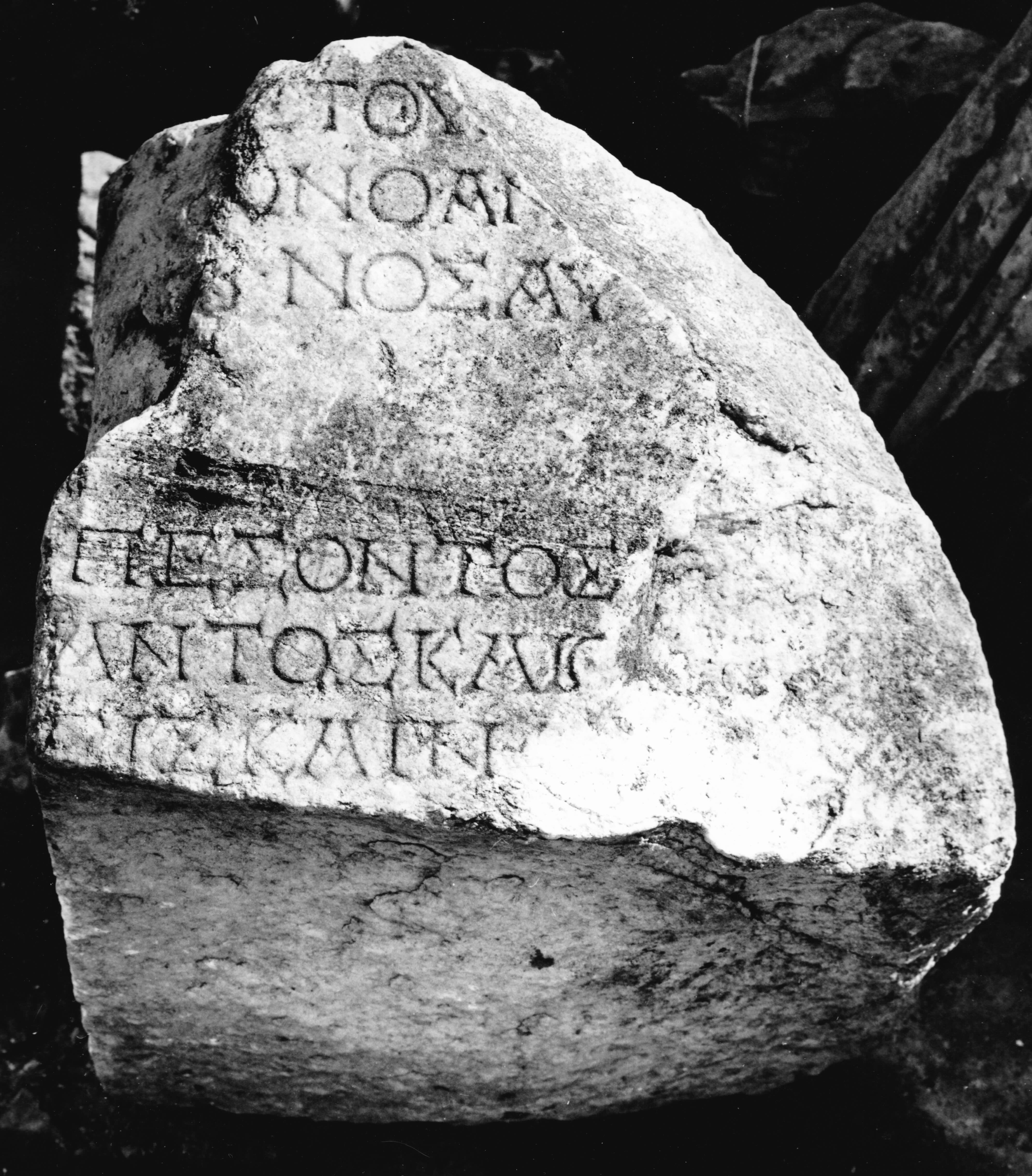
Fig. 1. Face (Mehmet Ali Döğenci, 1968)
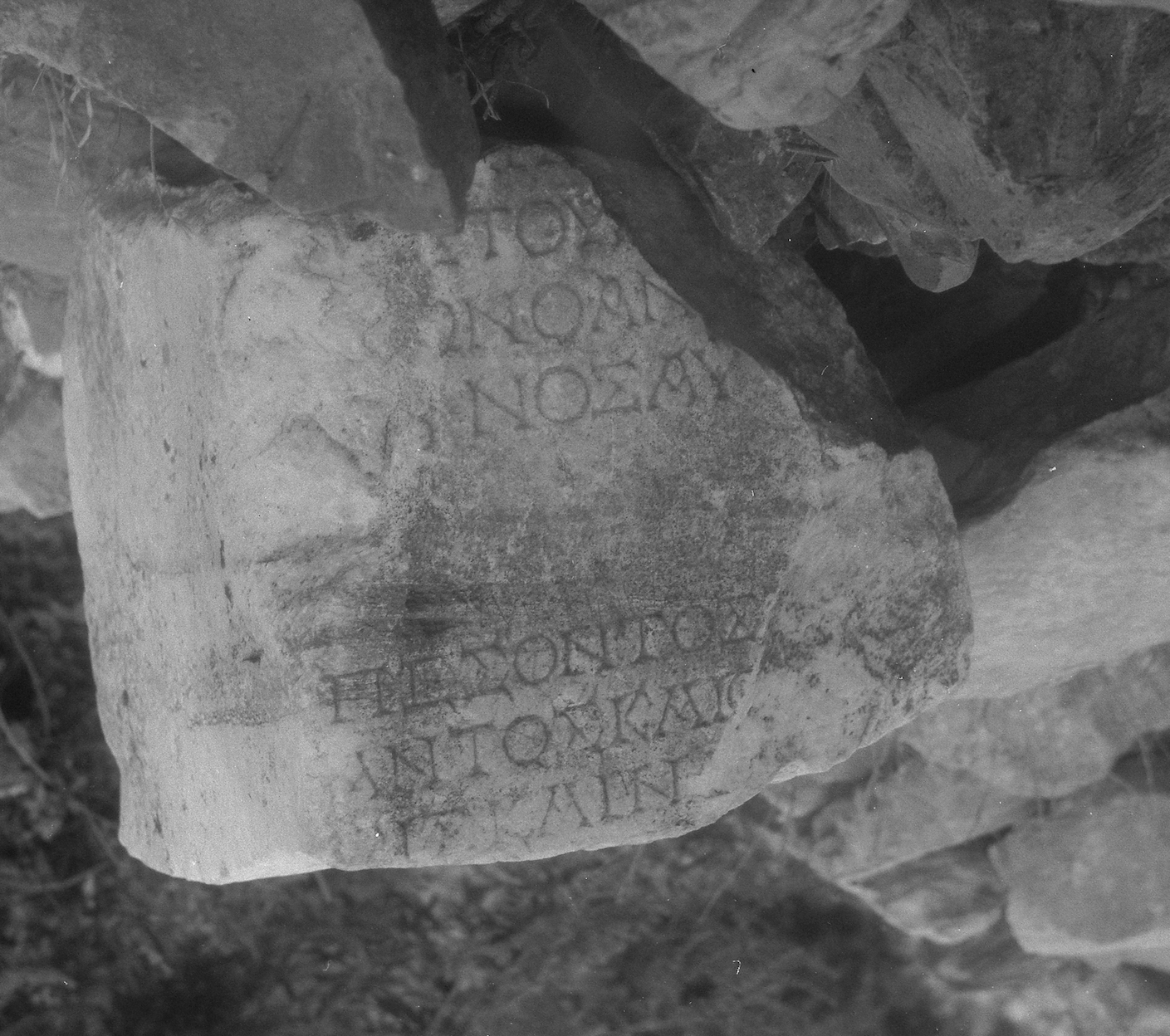
Fig. 2. Face (Reynolds, 1968)
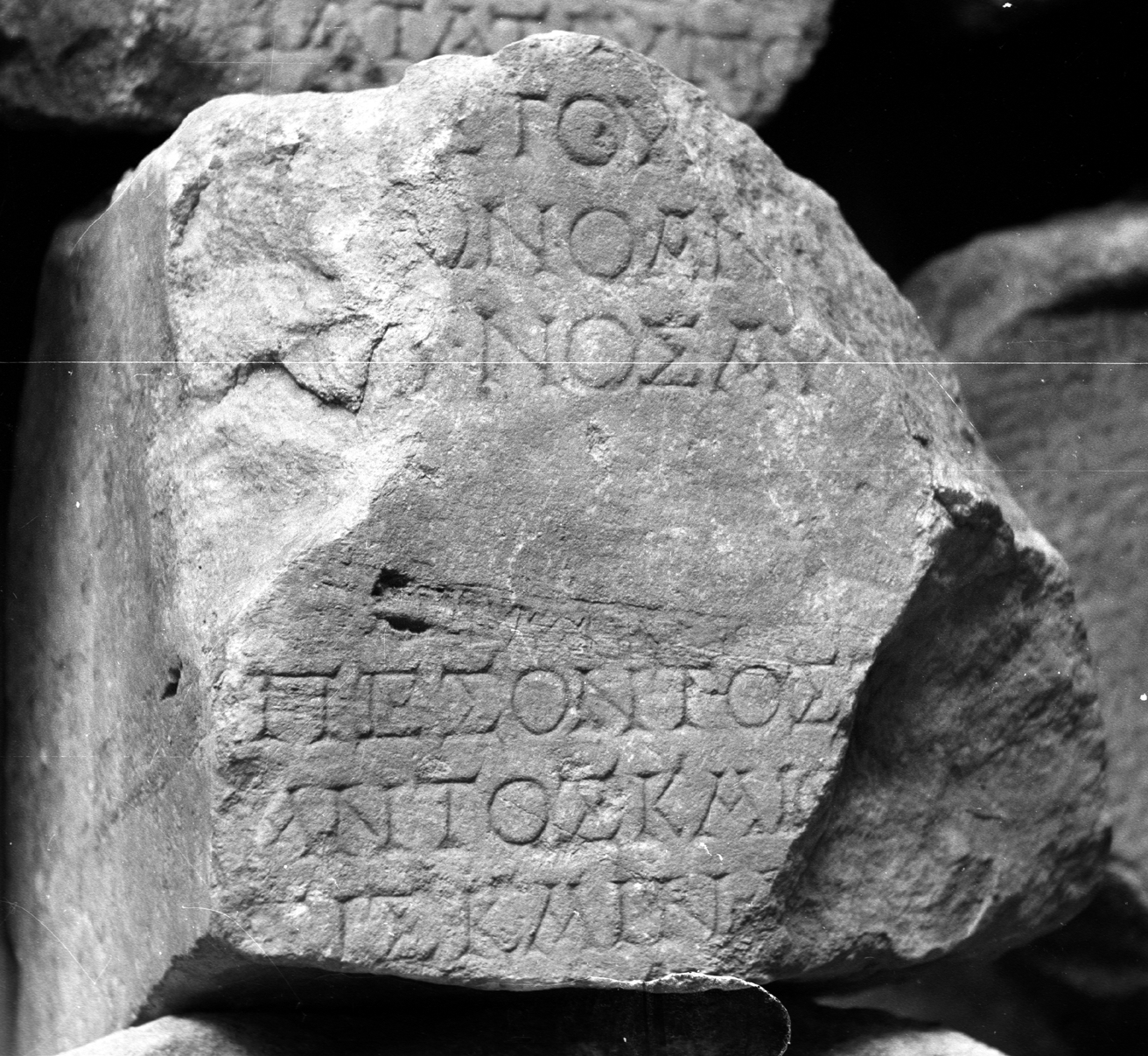
Fig. 3. Face (Mossman Roueché, 1977)