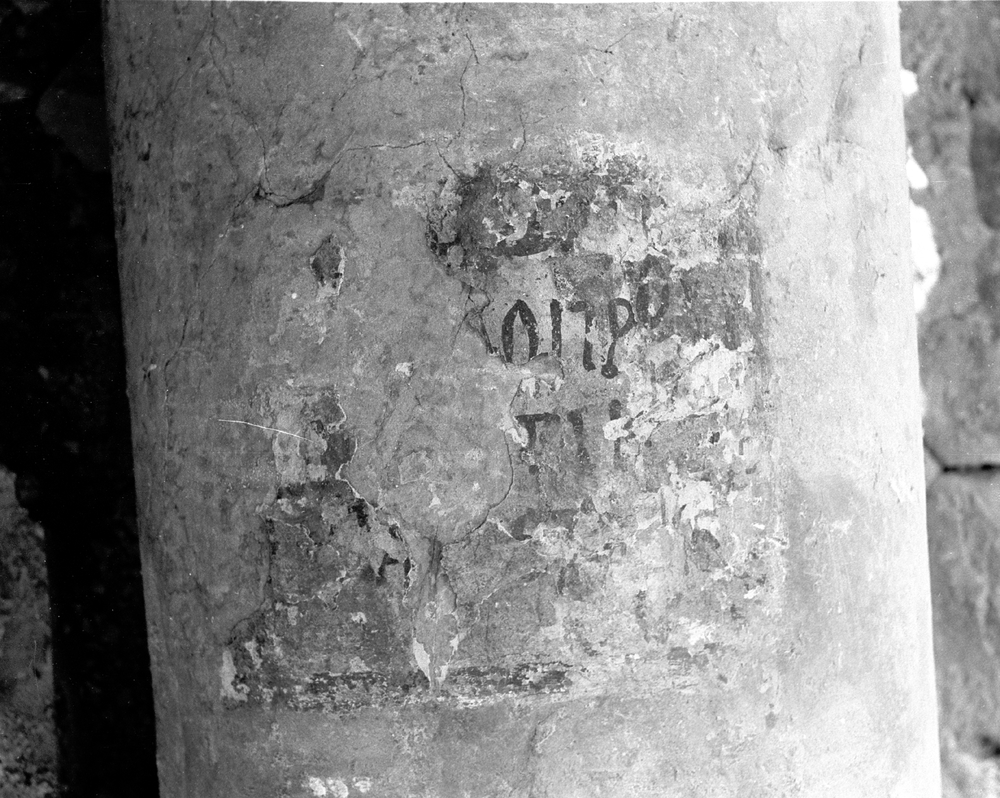
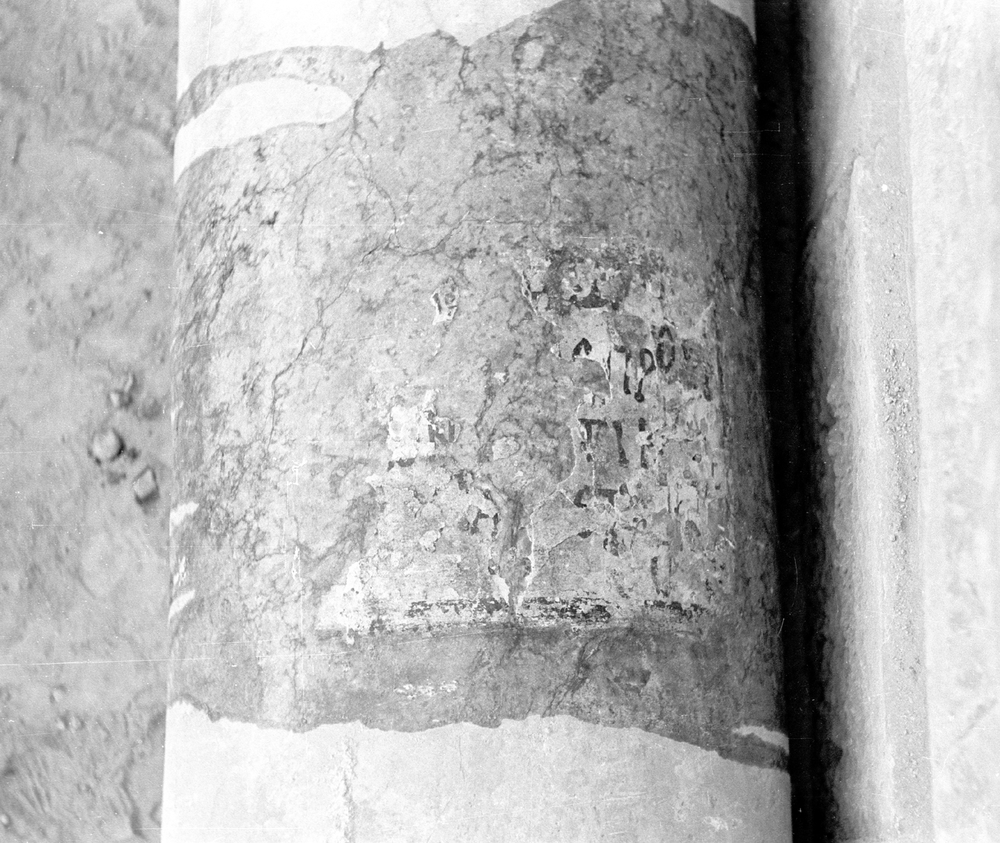
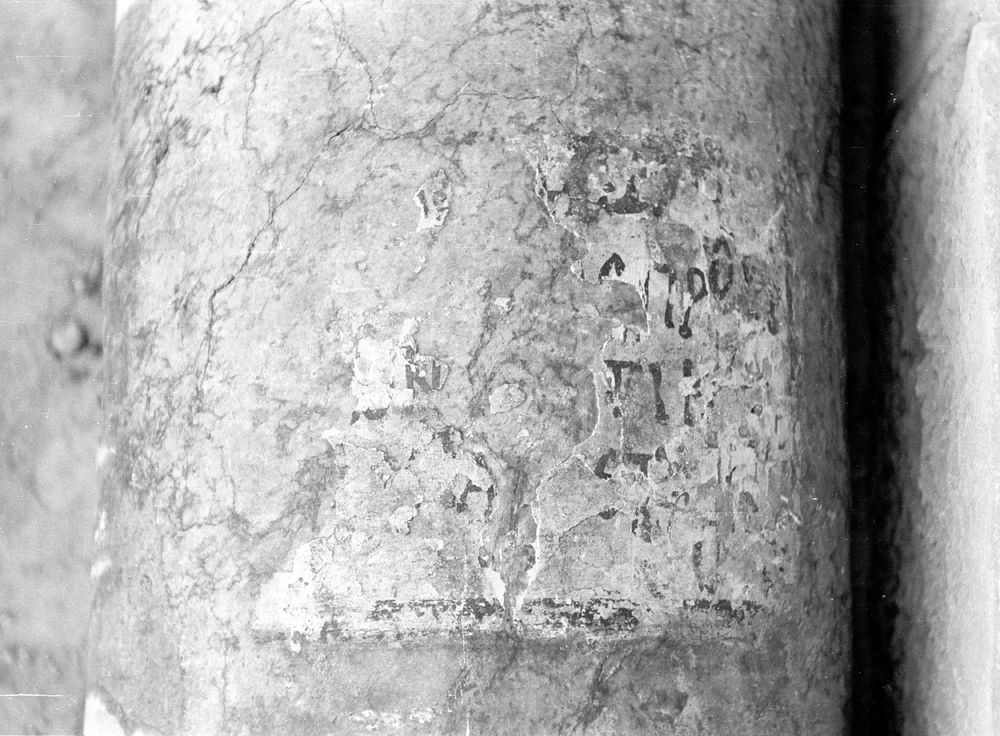
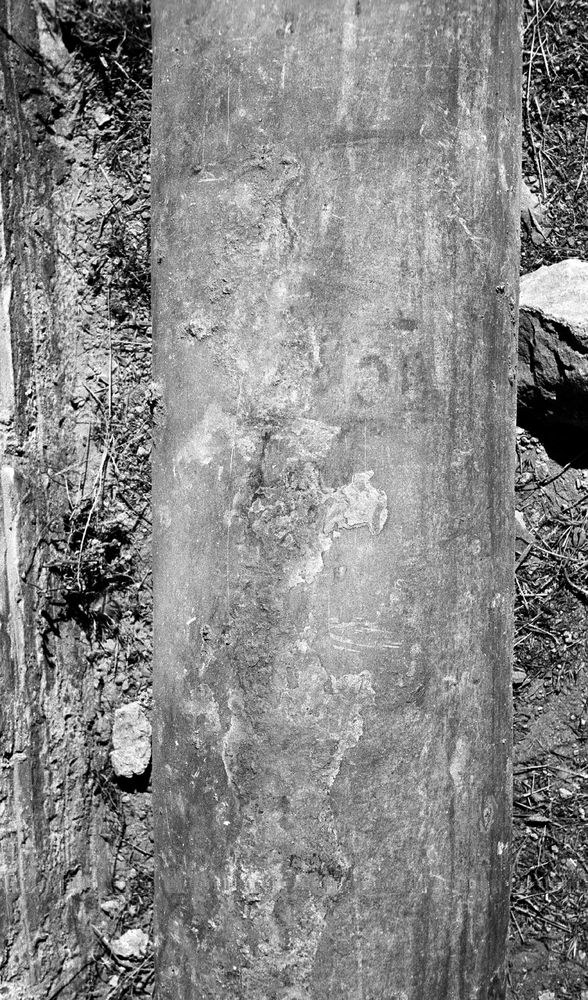
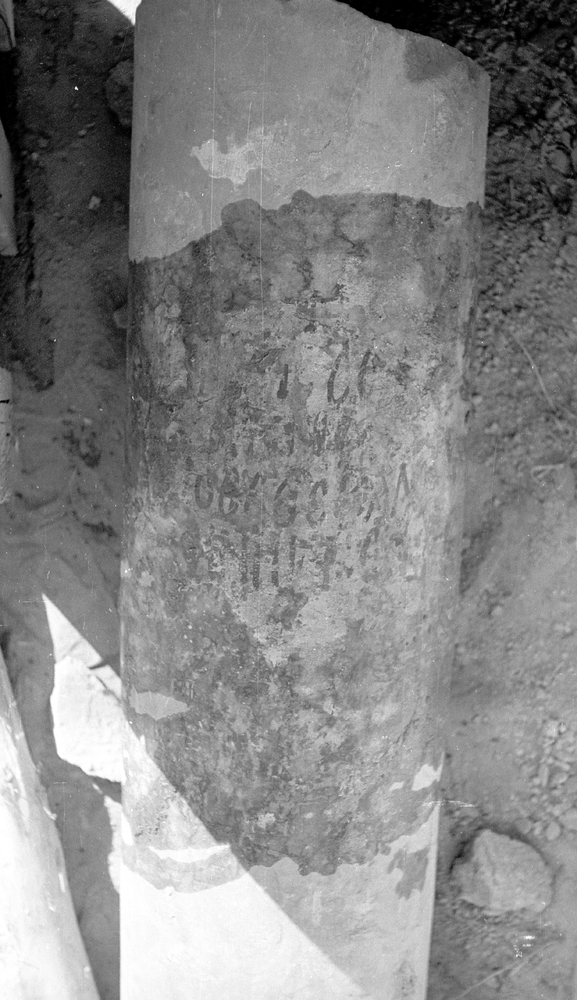
Description: Seven columns of blue marble, mostly broken at both ends. i, complete, h: 2.14 × diam: 0.54;
ii, broken at both ends, h: 1.42 × diam: 0.305;
iii, broken at both ends, h: 1.26 × diam: 0.315;
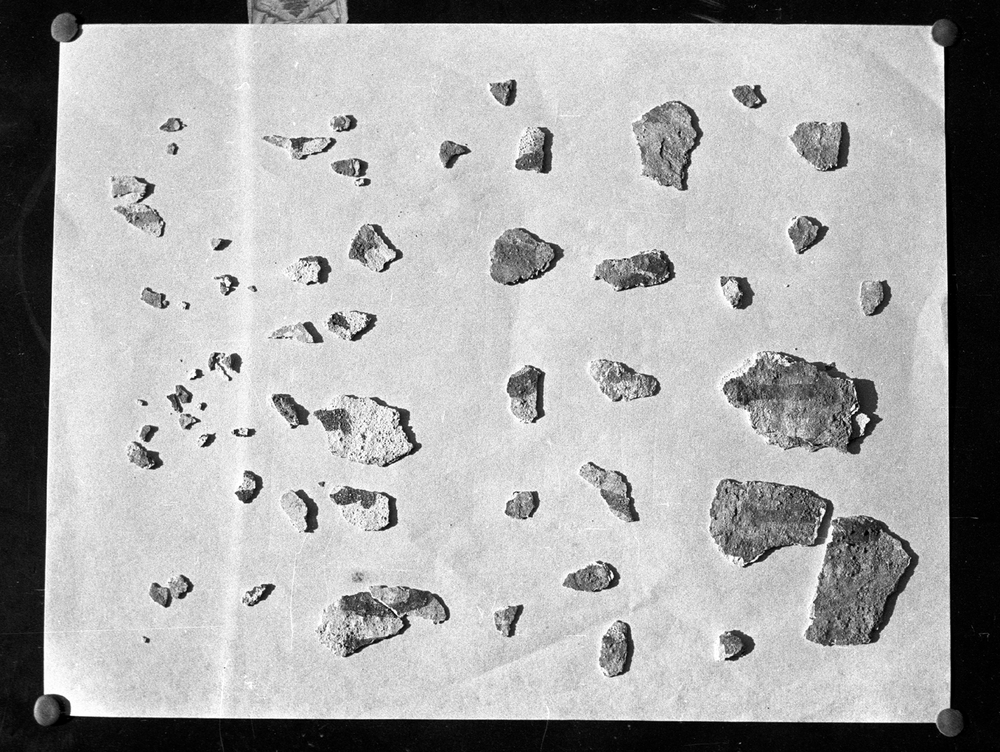
others all diam: 0.29-0.30. All showed traces of white plaster, apparently applied to form a panel.
Text: Painted in red on the plaster within a painted square. As
in 8.408 and 8.268, there
seem to be several layers of plaster and of script. Decipherment is
made more difficult by the condition of the surface after re-use in
the wall On only three of the columns could anything of substance be
discerned: the readings are fragmentary and unsatisfactory.
Letters: i.a: 0.03; 1.b: 0.04. ii: 0.04-0.05. iii: 0.045-0.05
Date: Fifth to sixth centuries CE (terminology)
Findspot: Aphrodisias:
Tetrastoon: reused in the Byzantine defence wall
built across the east side of the Theatre, in the stretch blocking the north parodos. There is no indication of original provenance;
but we know that materials for this wall were brought from as far away as the Sebasteion complex
Original location: Unknown
Last recorded location: On site.
Interpretive
Column i (On the lowest discernible layer of plaster there are traces of letters and a cross)
a: The second level
[---]ΗΛ̣[---]Ι̣ΑΣΝΙ̣
[μεγα]λοπρ(επεϲτατ-)
[---]Ω̣Ν̣[---]ΤΙΚ[---]
[πολ]λὰ [τὰ] ἔτ[η] b: The uppermost layer
[---]Ω̣Ν̣[---]Η(?)[---]
[---]Λ̣ΟΥΝ
Ο̣[---]
Ι̣Α[---]ΥΙ̣Ο̣
5[---]Ω̣ ii a: The lowest level b: The second level
[---]ΔΟ
[ - - - - - - - - - - ]
[---]ΧΟ
[------] c: The uppermost level
[---]Λ̣Ο
[---]Α
[ - - - - - - - - - - ]
Ο[---] iii a: The lowest level
[---] ((Cross))
[---]Μ[---]
[---]Ο[---]Ψ[---]
[---]Ο[---]
5[---]Ε b: The second, uppermost level
[---]Ι̣ΟΙ̣ ( vac. ) ΣΕ
[---]ΟΙΝΙ̣Ν̣Δ̣[---]
ὁ θεὸϲ καλο͂ς
[ϲε] ἤνηγκ̣εν
( vac. 1 line)
5πολλ[ὰ]
τὰ ἔ[τη]
[---]
[------]
Diplomatic
Column i (On the lowest discernible layer of plaster there are traces of letters and a cross)
a: The second level
[---]Η.[---].ΑΣΝ.
[....]ΛΟΠΡ
[---]..[---]ΤΙΚ[---]
[...]ΛΑ[..]ΕΤ[.] b: The uppermost layer
[---]..[---]Η[---]
[---].ΟΥΝ
.[---]
.Α[---]Υ..
5[---]. ii a: The lowest level b: The second level
[---]ΔΟ
[ - - - - - - - - - - ]
[---]ΧΟ
[------] c: The uppermost level
[---].Ο
[---]Α
[ - - - - - - - - - - ]
Ο[---] iii a: The lowest level
[---] †
[---]Μ[---]
[---]Ο[---]Ψ[---]
[---]Ο[---]
5[---]Ε b: The second, uppermost level
[---].Ο. ΣΕ
[---]ΟΙΝ...[---]
ΟΘΕΟϹΚΑΛΟΣ
[..]ΗΝΗΓ.ΕΝ
vacat
5ΠΟΛΛ[.]
ΤΑΕ[..]
[---]
[------]
English translation
Translation by: Charlotte M. Roueché
(i.a): . . . ?for] the magnificentissimus [ . . .] Many years!. (ii.a): Many years [ for . . . . (iii.b): . . . ] God has conveyed you well. Many years!
Bibliography
Recorded: New York University expedition during dismantling of the defence wall in 1976
Publication: Roueché, ALA 77 , whence McCabe, PHI, 1996 815, 816, 817, 818, 819, 815, 816, 820, 821 , ALA 2004 77, IAph2007 8.508.