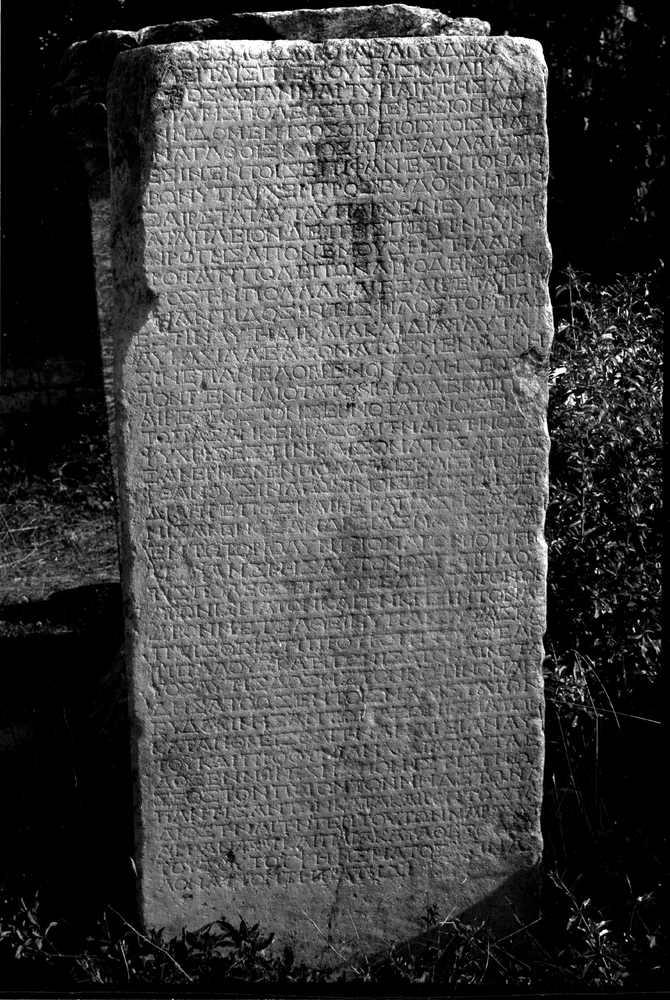
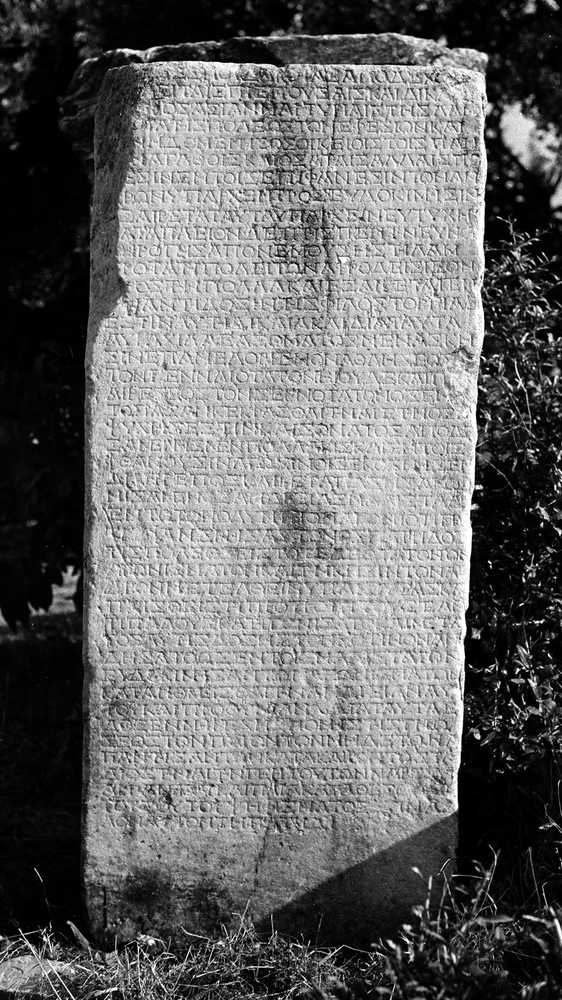
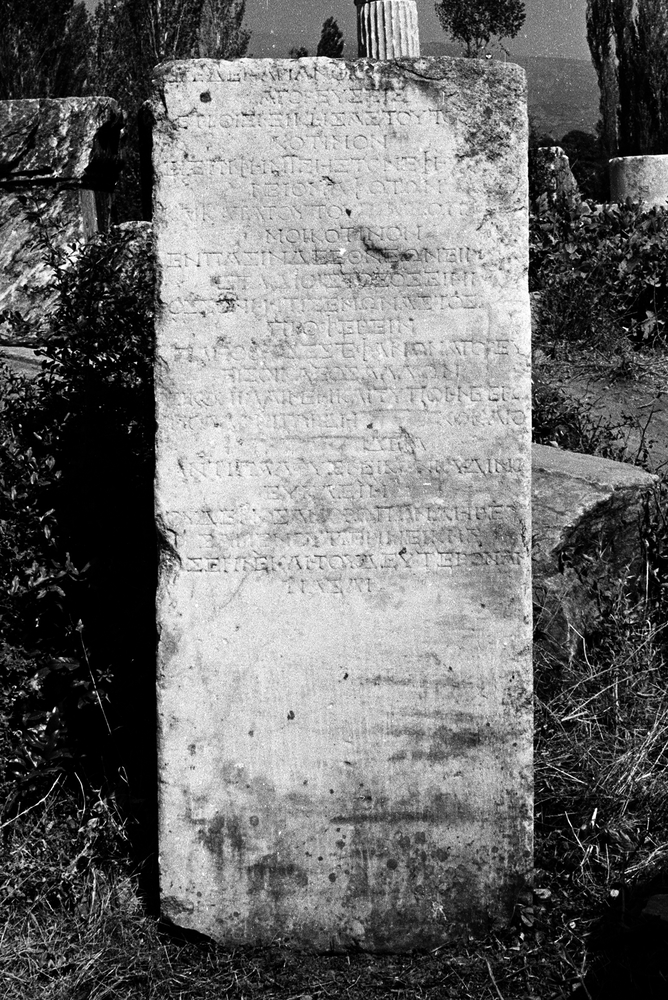
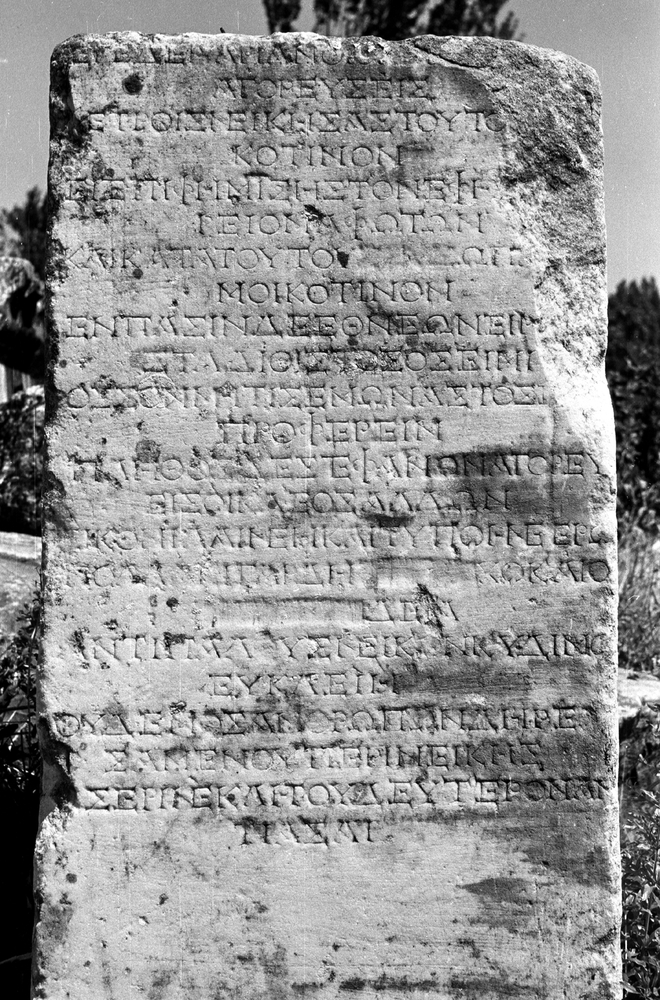
Description: A plain statue base shaft (w: 0.55 × h: 1.28 × d: 0.53) without moulding, chipped at edges but complete above and below.
Text:
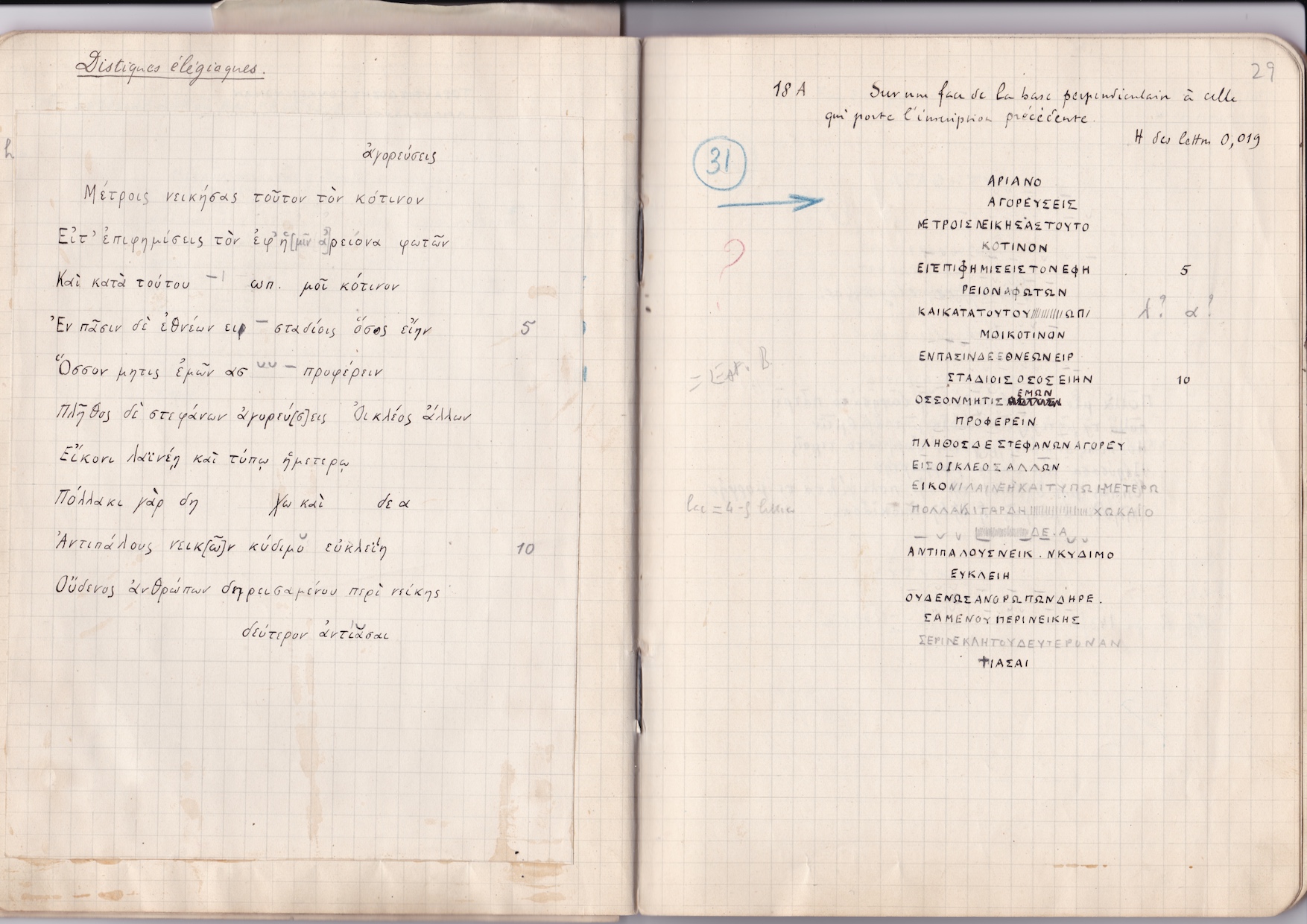
Inscribed on two adjoining faces, i to the right, ii to the left. The text of i must have begun on a crowning feature;
so perhaps did that of ii.
Letters: i. Letters standard second-third-century forms, av. 0.015. Apex above initial Θ, line 9.
Date: Third century, after 212 (nomenclature)
Findspot: Aphrodisias:
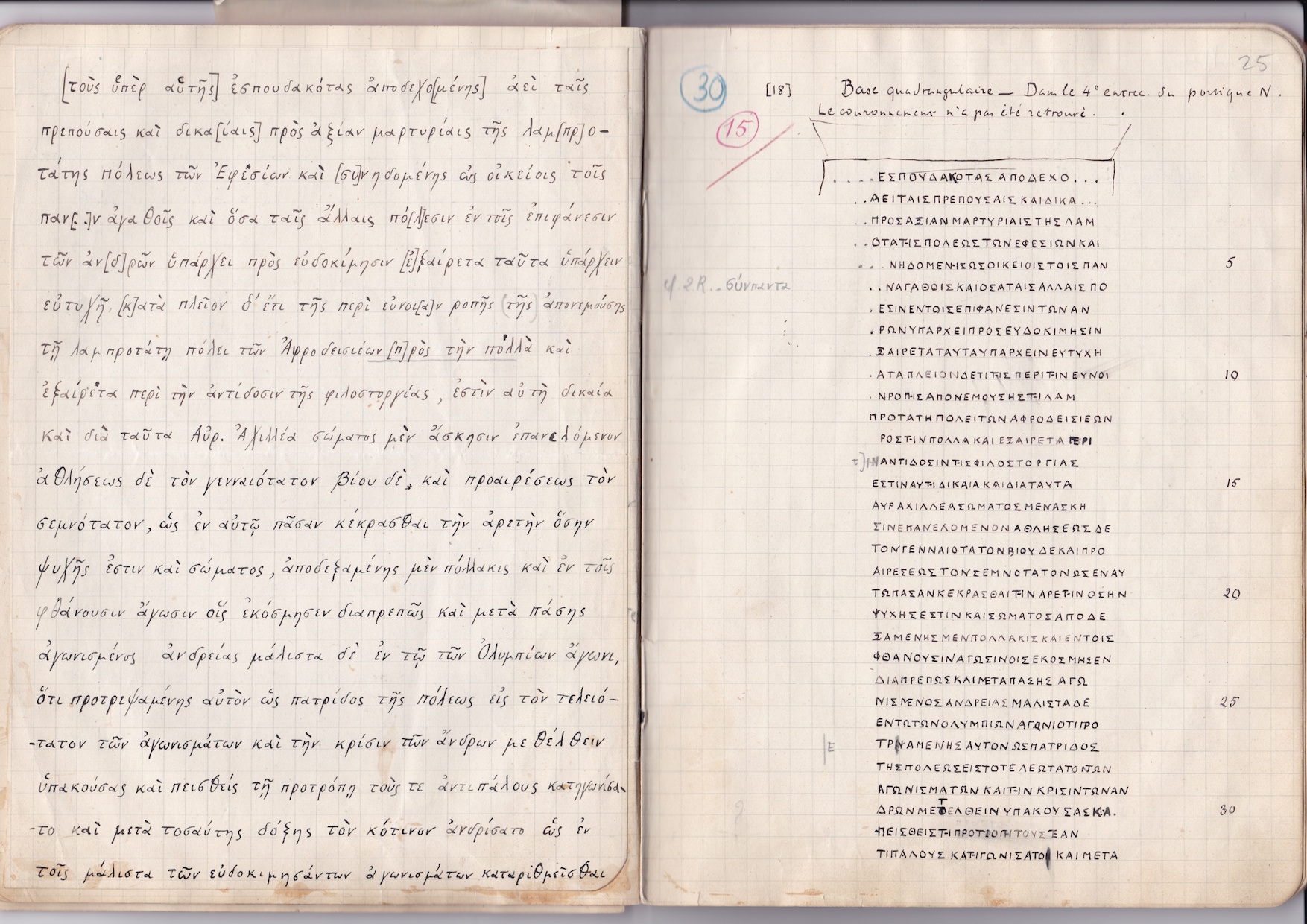
Hadrianic Baths, East Court: found 'dans le 3e' (corrected to 4e in fair copy)
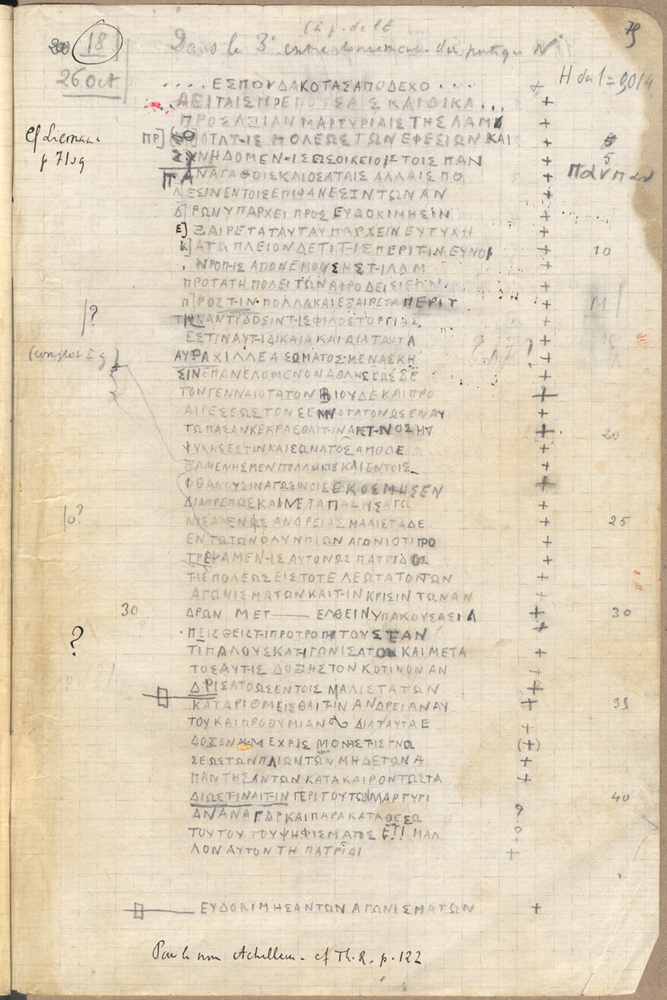
'entrec(olonnement) du portique nord'; 'Dans le 3e entrecolonnement du portique N(ord)' (Boulanger).
Original location: Hadrianic Baths, East Court
Last recorded location: Findspot
Interpretive
i
[------]
[---] ἐσπουδακότας ἀποδεχο[μέ-]
[νης] ἀεὶ ταῖς πρεπούσαις καὶ δικα[ί( vac. 2)?]
[αις] πρὸς ἀξίαν μαρτυρίαις τῆς λαμ-
[πρ]οτάτης πόλεως τῶν Ἐφεσίων καὶ ( vac. )
5 [συ]νηδομένης ὡς οἰκείοις τοῖς παν-
[τῶ]ν ἀγαθοῖς, καὶ ὅσα ταῖς ἄλλαις πο-
[λ]εσιν ἐν τοῖς ἐπιφανέσιν τῶν ἀν-
[δ]ρῶν ὑπάρχει πρὸς εὐδοκίμησιν
[ἐ]ξαίρετα ταῦτα ὑπάρχειν εὐτυχή-
10[μ]ατα πλεῖον δέ τι τῆς περὶ τὴν εὔνοι-
[α]ν ῥοπῆς ἀπονεμούσης τῇ λαμ-
π̣ροτάτῃ πόλει τῶν Ἀφροδεισιέων
[π]ρὸς τὴν πολλὰ καὶ ἐξαίρετα περὶ
[τ]ὴ̣ν̣ ἀντίδοσιν τῆς φιλοστοργίας
15 ἐστιν αὐτῇ δίκαια καὶ διὰ ταῦτα ( vac. 1)
Αὐρ(ήλιον) Ἀχιλλέα σώματος μὲν ἄσκη-
σιν ἐπανελόμενον ἀθλήσεως δὲ
τὸν γενναιότατον βίου δὲ καὶ προ-
αιρέσεως τὸν σεμνότατον ὡς ἐν αὐ-
20τῷ πᾶσαν κεκρᾶσθαι τὴν ἀρετὴν ὅσην
ψυχῆς ἐστιν καὶ σώματος ἀποδε-
ξαμένης μὲν πολλάκις καὶ ἐν τοῖς
φθάνουσιν ἀγῶσιν οἷς ἐκόσμησεν
διαπρεπῶς καὶ μετὰ πάσης ἀγω-
25νισάμενος ἀνδρείας μάλιστα δὲ
ἐν τῷ τῶν Ὀλυμπίων ἀγῶνι ὅτι προ̣-
τρεψαμένης αὐτὸν ὡς πατρίδος
τῆς πόλεως εἰς τὸ τελεώτατον τῶν
ἀγωνισμάτων καὶ τὴν κρίσιν τῶν ἀν-
30δρῶν μετελθεῖν ὑπακούσας κα[ὶ]
πεισθεὶς τῇ προτροπῇ τούς τε ἀν-
τιπάλους κατηγωνίσατο καὶ μετὰ
τοσαύτης δόξης τὸν κότινον ἀνε̣-
δήσατο ὡς ἐν τοῖς μάλιστα τῶν
35 εὐδοκιμησάντων ἀγωνισμάτων
καταριθμεῖσθαι τὴν ἀνδρείαν αὐ-
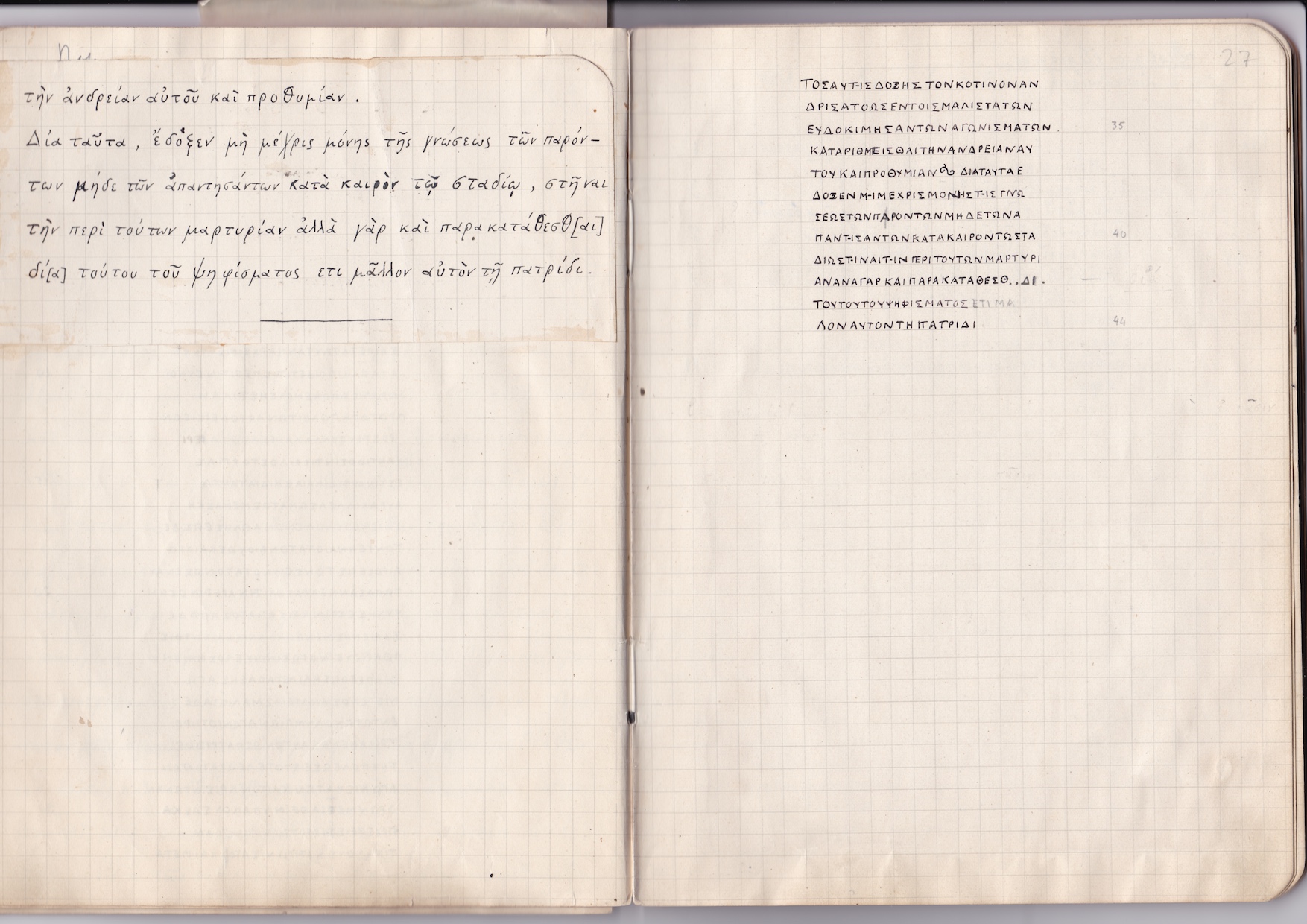
τοῦ καὶ προθυμίαν ((scroll)) διὰ ταῦτα ἔ-
δοξεν μὴ μέχρις μόνης τῆς γνώ-
σεως τῶν παρόντων μηδὲ τῶν ἀ-
40παντησάντων κατὰ καιρὸν τῷ στα-
δίῳ στῆναι τὴν περὶ τούτων μαρτυρί-
αν ἀ[λλ]ὰ γὰρ καὶ παρακαταθέσθ[αι] δι[ὰ]
τούτου τοῦ ψηφίσματος ἔτι μᾶ[λ-]
λον αὐτὸν τῇ πατρίδι ii
[------]
[εἴτε μὲν---] |
[------] |
εἴτ̣ε δὲ Βαριανοῖ̣ο̣ Ι̣Ι̣+Ο̣ [c. 7] | ( vac. 6) ἀγορεύσεις ( vac. 6) |
μέτροις νεικήσας τοῦτο[ν ἔχω] | ( vac. 7) κότινον ( vac. 7) |
(5) εἴτ’ ἐπιφημίξῃς τὸν ἔφη[βον Ἀ-]|( vac. 6)ρείονα φωτῶν ( vac. 4) |
καὶ κατὰ τούτου ⟦Ζεύ⟧ς̣ ὤπα̣[σε] | ( vac. 6) μοι κότινον ( vac. 6) |
ἐν πᾶσιν δὲ ἐθνέων ΕΙΡ[..] | (10) ( vac. ) σταδίοις τόσος εἰμί [( vac. 2)] |
ὅσσον μήτις ἐμῶν ἀστὸς ἔ[φυ] | ( vac. 6) προφέρειν ( vac. 6) |
πλῆθος δὲ στεφάνων ἀγορεύ|( vac. 4)ει σοι κλέος ἄλλων ( vac. 5) |
(15) εἰκόνι λαινέῃ καὶ τύπῳ ἡμετέρῳ |
πόλλακ̣ι̣ γὰρ δὴ ⟦Πύθια ἔ⟧χω καὶ Ὀ|( vac. 5)⟦λύμπια⟧ δεῖα ( vac. 7) |
( vac. 1) ἀντιπάλους νεικῶν κυδίμ⸢ῳ⸣ | ( vac. 6) εὐκλείῃ ( vac. 8) |
(20) οὐδενὸς ἀνθρώπων δηρει̣|( vac. 2)σαμένου περὶ νείκης ( vac. )
[ε]ἰ̣ς ἔριν ἐκλήτου δεύτερον ἀν|( vac. 8)τιάσαι( vac. 9)
Diplomatic
i
[------]
[---]ΕΣΠΟΥΔΑΚΟΤΑΣΑΠΟΔΕΧΟ[..-]
[...]ΑΕΙΤΑΙΣΠΡΕΠΟΥΣΑΙΣΚΑΙΔΙΚΑ[...]
[...]ΠΡΟΣΑΞΙΑΝΜΑΡΤΥΡΙΑΙΣΤΗΣΛΑΜ
[..]ΟΤΑΤΗΣΠΟΛΕΩΣΤΩΝΕΦΕΣΙΩΝΚΑΙ
5[..]ΝΗΔΟΜΕΝΗΣΩΣΟΙΚΕΙΟΙΣΤΟΙΣΠΑΝ
[..]ΝΑΓΑΘΟΙΣΚΑΙΟΣΑΤΑΙΣΑΛΛΑΙΣΠΟ
[.]ΕΣΙΝΕΝΤΟΙΣΕΠΙΦΑΝΕΣΙΝΤΩΝΑΝ
[.]ΡΩΝΥΠΑΡΧΕΙΠΡΟΣΕΥΔΟΚΙΜΗΣΙΝ
[.]ΞΑΙΡΕΤΑΤΑΥΤΑΥΠΑΡΧΕΙΝΕΥΤΥΧΗ
10[.]ΑΤΑΠΛΕΙΟΝΔΕΤΙΤΗΣΠΕΡΙΤΗΝΕΥΝΟΙ
[.]ΝΡΟΠΗΣΑΠΟΝΕΜΟΥΣΗΣΤΗΛΑΜ
.ΡΟΤΑΤΗΠΟΛΕΙΤΩΝΑΦΡΟΔΕΙΣΙΕΩΝ
[.]ΡΟΣΤΗΝΠΟΛΛΑΚΑΙΕΞΑΙΡΕΤΑΠΕΡΙ
[.]..ΑΝΤΙΔΟΣΙΝΤΗΣΦΙΛΟΣΤΟΡΓΙΑΣ
15ΕΣΤΙΝΑΥΤΗΔΙΚΑΙΑΚΑΙΔΙΑΤΑΥΤΑ
ΑΥΡΑΧΙΛΛΕΑΣΩΜΑΤΟΣΜΕΝΑΣΚΗ
ΣΙΝΕΠΑΝΕΛΟΜΕΝΟΝΑΘΛΗΣΕΩΣΔΕ
ΤΟΝΓΕΝΝΑΙΟΤΑΤΟΝΒΙΟΥΔΕΚΑΙΠΡΟ
ΑΙΡΕΣΕΩΣΤΟΝΣΕΜΝΟΤΑΤΟΝΩΣΕΝΑΥ
20ΤΩΠΑΣΑΝΚΕΚΡΑΣΘΑΙΤΗΝΑΡΕΤΗΝΟΣΗΝ
ΨΥΧΗΣΕΣΤΙΝΚΑΙΣΩΜΑΤΟΣΑΠΟΔΕ
ΞΑΜΕΝΗΣΜΕΝΠΟΛΛΑΚΙΣΚΑΙΕΝΤΟΙΣ
ΦΘΑΝΟΥΣΙΝΑΓΩΣΙΝΟΙΣΕΚΟΣΜΗΣΕΝ
ΔΙΑΠΡΕΠΩΣΚΑΙΜΕΤΑΠΑΣΗΣΑΓΩ
25ΝΙΣΑΜΕΝΟΣΑΝΔΡΕΙΑΣΜΑΛΙΣΤΑΔΕ
ΕΝΤΩΤΩΝΟΛΥΜΠΙΩΝΑΓΩΝΙΟΤΙΠΡ.
ΤΡΕΨΑΜΕΝΗΣΑΥΤΟΝΩΣΠΑΤΡΙΔΟΣ
ΤΗΣΠΟΛΕΩΣΕΙΣΤΟΤΕΛΕΩΤΑΤΟΝΤΩΝ
ΑΓΩΝΙΣΜΑΤΩΝΚΑΙΤΗΝΚΡΙΣΙΝΤΩΝΑΝ
30ΔΡΩΝΜΕΤΕΛΘΕΙΝΥΠΑΚΟΥΣΑΣΚΑ[.]
ΠΕΙΣΘΕΙΣΤΗΠΡΟΤΡΟΠΗΤΟΥΣΤΕΑΝ
ΤΙΠΑΛΟΥΣΚΑΤΗΓΩΝΙΣΑΤΟΚΑΙΜΕΤΑ
ΤΟΣΑΥΤΗΣΔΟΞΗΣΤΟΝΚΟΤΙΝΟΝΑΝ.
ΔΗΣΑΤΟΩΣΕΝΤΟΙΣΜΑΛΙΣΤΑΤΩΝ
35ΕΥΔΟΚΙΜΗΣΑΝΤΩΝΑΓΩΝΙΣΜΑΤΩΝ
ΚΑΤΑΡΙΘΜΕΙΣΘΑΙΤΗΝΑΝΔΡΕΙΑΝΑΥ
ΤΟΥΚΑΙΠΡΟΘΥΜΙΑΝ ΔΙΑΤΑΥΤΑΕ
ΔΟΞΕΝΜΗΜΕΧΡΙΣΜΟΝΗΣΤΗΣΓΝΩ
ΣΕΩΣΤΩΝΠΑΡΟΝΤΩΝΜΗΔΕΤΩΝΑ
40ΠΑΝΤΗΣΑΝΤΩΝΚΑΤΑΚΑΙΡΟΝΤΩΣΤΑ
ΔΙΩΣΤΗΝΑΙΤΗΝΠΕΡΙΤΟΥΤΩΝΜΑΡΤΥΡΙ
ΑΝΑ[..]ΑΓΑΡΚΑΙΠΑΡΑΚΑΤΑΘΕΣΘ[..]ΔΙ[.]
ΤΟΥΤΟΥΤΟΥΨΗΦΙΣΜΑΤΟΣΕΤΙΜΑ[.-]
ΛΟΝΑΥΤΟΝΤΗΠΑΤΡΙΔΙ ii
[------]
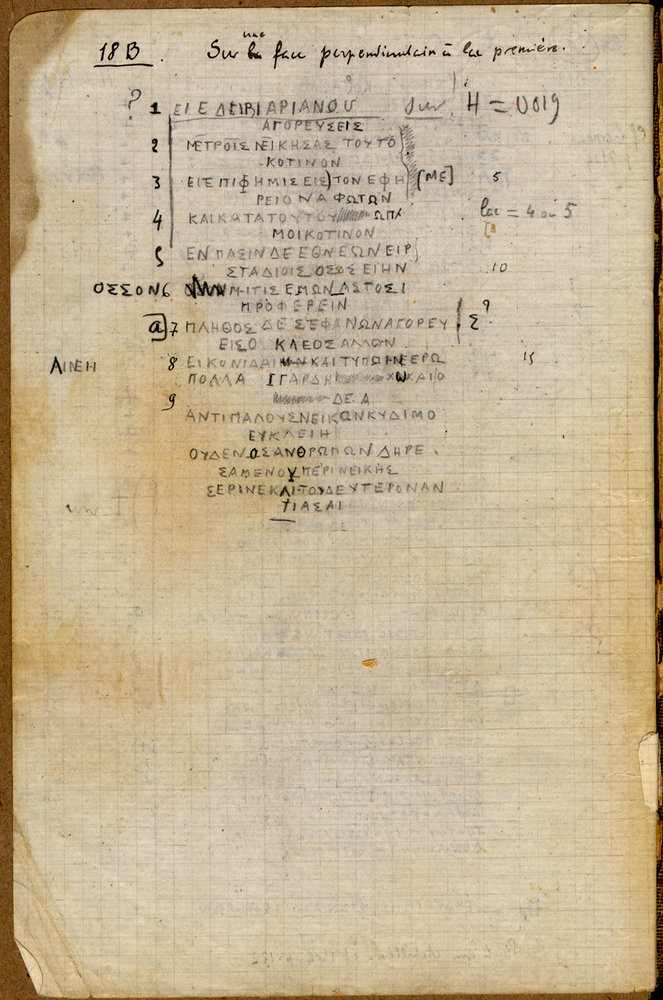
[.......---] |
[------] |
ΕΙ.ΕΔΕΒΑΡΙΑΝΟ....·.[·······] | ΑΓΟΡΕΥΣΕΙΣ |
ΜΕΤΡΟΙΣΝΕΙΚΗΣΑΣΤΟΥΤΟ[....] | ΚΟΤΙΝΟΝ |
(5) ΕΙΤΕΠΙΦΗΜΙΞΗΣΤΟΝΕΦΗ[....-]| ΡΕΙΟΝΑΦΩΤΩΝ |
ΚΑΙΚΑΤΑΤΟΥΤΟΥ⟦ΖΕΥ⟧.ΩΠ.[..] | ΜΟΙΚΟΤΙΝΟΝ |
ΕΝΠΑΣΙΝΔΕΕΘΝΕΩΝΕΙΡ[··] | (10) ΣΤΑΔΙΟΙΣΤΟΣΟΣΕΙΜΙ[..] |
ΟΣΣΟΝΜΗΤΙΣΕΜΩΝΑΣΤΟΣΕ[..] | ΠΡΟΦΕΡΕΙΝ |
ΠΛΗΘΟΣΔΕΣΤΕΦΑΝΩΝΑΓΟΡΕΥ| ΕΙΣΟΙΚΛΕΟΣΑΛΛΩΝ |
(15) ΕΙΚΟΝΙΛΑΙΝΕΗΚΑΙΤΥΠΩΗΜΕΤΕΡΩ |
ΠΟΛΛΑ..ΓΑΡΔΗ⟦ΠΥΘΙΑΕ⟧ΧΩΚΑΙΟ| ⟦ΛΥΜΠΙΑ⟧ΔΕΙΑ |
ΑΝΤΙΠΑΛΟΥΣΝΕΙΚΩΝΚΥΔΙΜ | ΕΥΚΛΕΙΗ |
(20) ΟΥΔΕΝΟΣΑΝΘΡΩΠΩΝΔΗΡΕ.| ΣΑΜΕΝΟΥΠΕΡΙΝΕΙΚΗΣ
[.].ΣΕΡΙΝΕΚΛΗΤΟΥΔΕΥΤΕΡΟΝΑΝ| ΤΙΑΣΑΙ
Apparatus
The location, 2e entrée IAph2007, corrected by Fabienne Marchand
i.5-6: πάν//[πα]ν Robert, 1939; πάν//[τω]ν Merkelbach, 1974, Wankel, 1979, Jones, 1981
i.9-10: εὐτυχῆ // [κ]ατὰ Robert, 1939, Merkelbach, 1974, Wankel, 1979; εὐτυχή//[μ]ατα Jones, 1981
i.16-17: ΑΣΚΗΣΙΝ//ΕΠΑ Robert, 1939, Merkelbach, 1974, Wankel, 1979
i.42: ΑΝΑ B; ἀλλὰ Robert, 1939, Merkelbach, 1974, Wankel, 1979; ἅμα Jones, 1981; ? ἀνὰ ἔαρ Ebert, 1981
ii: The supplements are those of Jones, unless stated.
ii.0a: [εἴτε μὲν---] Merkelbach, 1982, Merkelbach and Stauber, 1998
ii.3: μετρ'οἷς Merkelbach, 1982 || ἔφη[βον ἀ]ρείονα Jones, 1981; or possibly ἔφη[βον Ἀ]ρείονα Jones, 1981; Ἔφη[βον ἀ]ρείονα Ebert, 1981; ἔφη [μεγ’ ἀ]ρείονα Merkelbach, 1982; ἔφη[μεν ἀ]ρείονα Merkelbach and Stauber, 1998
ii.9: εἴρ[ου] Jones, 1981; εἴρ[ης] (from εἴρη, 'agora') Merkelbach, 1982; εἱρ[οῖς] (for ἱερ[οῖς]) Ebert, 1981, Merkelbach and Stauber, 1998
ii.11: Jones suggested ἔ[φυ as a possibility, but preferred ἔ[φη; ἐ[ρεῖ] Merkelbach, 1982, Merkelbach and Stauber, 1998; ἔ[χει] Ebert, 1981
ii.13: Jones, working from a squeeze, could not know that there is no room for another letter after Υ: this therefore imposes the
reading ἀγορεύει, which is assumed by Ebert.
ii.18: ΚΥΔΙΜΟ; κύδιμο<ς> Jones, 1981, Merkelbach, 1982, Merkelbach and Stauber, 1998; κυδίμ Ebert, 1981; there is no room for a further letter at the end; either a final sigma was omitted, giving a nominative, or the omicron
is a mistake for omega, giving the dative.
ii.22: [Ω]Σ Jones, 1981; [ε]ἰς Ebert, 1981, Merkelbach, 1982, Merkelbach and Stauber, 1998 There seem to be traces of an upright before Σ
English translation
Translation source: Jones, 1981
(i): Whereas) the most illustrious city of the Ephesians in every case honors those who have shown zeal with the testimonies
that are fitting and appropriate to their worth; and whereas it rejoices in the advantages of all people as if they were its
own, (considering that) what other cities have by way of distinguished men are especial blessings with regard to good repute;
and whereas it allots a particular degree of inclination to goodwill to the most illustrious city of Aphrodisias, with which
it is on terms tending to the interchange of affection; and whereas because of this it has often honored Aurelius Achilles,
who has undertaken the training of the body, and is most distinguished in athletics, and yet most irreproachable in his manner
of life and his behaviour, so that all existing spiritual and physical excellence is combined in him, both in past contests
which he adorned by competing conspicuously and with all courage, and especially in the competition of the Olympic games,
where, when the city urged him as if it were his ancestral one to proceed to the most advanced of contests and the category
of men, consenting and being persuaded by the encouragement he defeated his opponents and bound on the crown of wild olive
with such glory that his courage and zeal were counted among the most reputed of contests; For these reasons it seemed right
that the testimony of these matters should not be confined merely to the knowledge of those attending and those who were present
in the stadium on the occasion, for moreover he should be still further commended to his ancestral city by means of this decree
(ii): .... And if you wish to proclaim ... of Varianus ... I defeated him and hold the crown of olive; or if you wish to extol
the youth (Arion?) superior to grown men, against him too Zeus gave me the olive. In all the stadia of the nations ... I am
as great as none of my compatriots (ever) claimed to excel (?); and the number of crowns . . . of others (?) to the stone
portrait, my image. For often have I won the Pythia and the divine Olympia, defeating my rivals, glorious in repute, with
no man contesting my victory so as to confront a second time a contest with him against whom he has appealed (?)
English translation
Translation source: Roueché, PPA
(i): [ - - ] since the most splendid city of the Ephesians always welcomes those who have shown zeal with testimonies that are
fitting and just for their worth, and takes a share of pleasure in the advantages of all (men) as if they were her own, and
(since she considers that) whatever outstanding (advantages) accrue to the good reputation of other cities from distinguished
men, these are matters of (?general) good fortune; (10) and since she assigns an especial portion of her inclination towards
goodwill to the most splendid city of the Aphrodisians, towards which she has many and outstanding justifications for the
exchange of affection. For these reasons, (the city) has welcomed Aurelius Achilles - - who has both undertaken the training
of the body, and is also most noble in training, and most dignified in his way of life and his conduct, so that in him (20)
all virtue of body and soul is blended - - (has welcomed him) often, both in previous contests, which he adorned, having competed
impressively and with all courage, and especially in the contest of the Olympia, because, when the city encouraged him - -
as if it were his own fatherland - - to proceed to the ultimate competition, and to the category of men (30), he listened,
and was persuaded by the encouragement, and defeated his opponents, and bound on the (crown of) olive with such glory that
his (?display of) courage and eagerness are to be numbered among the most distinguished of contests. For these reasons it
was resolved that the testimony about these events should not extend only as far as the knowledge of those who were present
and (40) happened to be in the stadium at the time, but by means of this decree he should be commended even more to his fatherland.
(ii): [?a couplet naming Achilles] but if you proclaim [?the prowess] of Varianus in verse, I hold the olive having defeated him;
or if you praise the ephebe Arion, (superior) to grown men, against him too Zeus granted me the olive (scil. wreath). In all the stadia of the nations [ ?ask] - - I am as great as none of my fellow-citizens [was able to] surpass.
ι The throng of other crowns proclaims to you my fame, by means of (?or in) a stone image and my likeness. For I often have Pythia, and divine Olympia, defeating (scil. my) rivals with glorious fame, while none of the men who have struggled (scil. with me) for victory has been summoned to confront a second contest (?).
German translation
Translation source: Merkelbach and Stauber, 1998
(ii): (. . . ob du den Athleten X nennst . . . ) oder ob du von der gewalt des Varianus redesr: durch Abstand-Halten habe ich
diese Kranz aus ölbaumblättern gewonnen; oder ob du rühmend nennst ihn, den wir den besten der Männer mannten: Auch gegen
i9hn hat Zeus mit den Kranz gegeben. Auf allen heiligen Sportplätzen der Völker bin ich ein solcher, dass kein Bürger meiner
Vaterstadt sagen wird, es gäbe einen Trefflicheren. Die Menge der übrigen Kränze sagt dir meinen Ruhm mit dem steinern Standbild
und meiner Figur; denn oft war ich Sieger bei den Pythien und den olympischen Zeusspeilen, indem ich die Gegner besiegte,
glänzend im Ruhm, und keiner der Menschen, dir mit mir um den Sieg gekämpft hatte, hat es gewagt, zum zweitenmal gegen mich
in einem Revanchekampf aufzutreten.
French translation
Translation source: Strasser, 2021
(ii): - - - ou si tu parles de la force - - - de Varianus, (sache que) grâce à ma prudence, j’ai remporté cette couronne d’olivier;
ou si tu nommes l’éphèbe Arion (meilleur) d’entre les mortels, contre lui aussi Zeus m’a décerné la couronne d’olivier. Sur
tous les stades sacrés des ethnè, je suis celui dont aucun citoyen de ma patrie ne pourra dire qu’il a un égal. La multitude
de mes autres couronnes proclame ma gloire, avec ma statue de pierre et mon portrait. Car maintes fois j’ai remporté les Pythia
et les Olympia de Zeus en venant à bout de mes adversaires avec une gloire éclatante, et aucun de ceux qui ont combattu contre
moi pour la couronne n’a osé me provoquer pour une revanche dans un second combat.
Bibliography
Recorded: Boulanger, notebooks, 26 October 1913, A, 75-6, no. 18, whence B, 25-29, no. 18; J. and L. Robert, 1946 Notebook 40 (1946) (ii); New York University expedition
Publication: i: Robert, 1939, whence Merkelbach, 1974, Wankel, 1979 12; i and ii: Jones, 1981, whence Robert, Bulletin Épigraphique 1982.358, Ebert, 1981, Robert, Bulletin Épigraphique 1984.410, 1984.411; i: SEG 31.903 , SEG 34.1045, McCabe, PHI, 1996 11 ii: Merkelbach, 1982; SEG 31.904, McCabe, PHI, 1996 396; Roueché, PPA 72 with further comments from Jones, whence PHI PPAphr 72, Smith, 2006 H.252 (listed), Smith, 2007 B 2, Merkelbach and Stauber, 1998 02/09/27 ; IAph2007 5.214, whence Strasser, 2021 147.